Home Blog Page 55

Yes, We Are Table Toppers, But Are We Playing Like Champs!

0

Our National team, riding on a tsunami of patriotic support from the cricket crazy fans, has expectedly steamrolled into the semi-finals of the ICC World Cup 2019 in England-Wales, and emerged table toppers at that, with just a single loss, to hosts England. National sentiment would overwhelmingly back the Men in Blue to lift a third World Cup and place India closer to the Kangaroos’ all time record of five titles. But the euphoria across the country apart, are we confident enough to believe that we are playing like champions!

As an avid club level cricketer of yore and a keen follower of the game for close to five decades, I would tend to disagree, going by the ground realities of the team’s performance thus far in the tournament, despite the patriot in me wishfully believing otherwise.

India has progressed to this stage, powered among other things by the consistent brilliance and grit shown by a few key players, and not so much on the strength of being an overall better side. Going into the semi-finals, we are yet to strike a balance in the team vis-a-vis our batting and bowling units.

India went into the tournament with concerns only over an unsettled number four position in the batting order, which otherwise looked rock solid. The core of the bowling unit, comprising medium pacers Bhuvneshwar Kumar and Jasprit Bumrah, considered the kings of accuracy, variation and death bowling, and wicket-taking wrist spinner duo of Yuzvendra Chahal and Kuldeep Yadav, also seemed capable of demolishing any batting line-up.

But going by the team’s performance thus far, the formidable Indian batting top order has once again proved its mettle, despite the further setback of losing the inform Shikhar Dhawan so early on in the tournament. The ‘hitman’ Rohit Sharma is dominating the opposition bowling attacks, arguably as never before, skipper Virat Kohli is a pillar of strength as always despite the fans’ apparent disappointment at him not scoring a century, and KL Rahul is beginning to prove true to the trust reposed in him by the team management. Hardik in the middle order has also done his fair bit and looks set to hit peak form when it will matter the most.

The experimentation in the middle order, which is continuing right up to the semi-final stage and the topic of some criticism, is, therefore, not that much of an issue considering that the top order is firing from all cylinders, and, though late in the day, induction of Rishab Pant has added that extra power punch to the batting order.

The main cause of worry going into the elimination round is lacklustre performance of India’s bowling unit.

Though the team management can take heart in mystery man Jasprit Bumrah being among the top wicket takers in this World Cup, and the Hardik Pandya proving effective with his subtle variations of pace and bounce, the current form of the other bowlers is a cause for serious concern.

Injury-hit Bhuvneshwar Kumar appears to have completely lost his touch, and apart from not being able to take wickets, he is going for too many runs. Mohammed Shami, who replaced him in a couple of matches, displayed his wicket-taking skills to good effect but again went for a lot of runs in the death overs.

The biggest worry for the team, however, is the lack of form of the two wrist spinners. High hopes had been placed on the duo to put the brakes in the middle of the opposition innings by knocking off a few wickets, but sadly, these have been belied. While spinners in most other teams appear to have adjusted well to the unresponsive and two-paced English wickets for the World Cup with their subtle variations, Chahal and Kuldeep have proved completely ineffective. Given the only chance in the tournament, against Sri Lanka, Ravinder Jadeja, however reminded the team management that his services are invaluable and cannot be ignored.

Given such a scenario, playing just five bowlers, in order to strengthen the batting line-up, has not gone well with former greats of the game. They feel that it’s too much of a risk going into the semi-final stage against the best teams in the world.

Despite relegating Australia to the second spot on the points table by an unexpected turn of events, India needs to bolster its bowling options if it  is to lift the cup. The team cannot afford to get into a situation where the opposition batsmen are successful in targeting one, or even two bowlers, as was witnessed in the game against England. The depth of the Indian bowling attack was thoroughly exposed in the match, resulting in a comprehensive loss, the only one for the team in the tournament.

Hinting at the Indian bowling lacking depth going into the most competitive stage of the tournament, England batting great Kevin Pietersen has favoured playing another bowler in Mohammed Shami. He believes that confident of their top order, and a reasonably sound middle order, the team can afford to drop Dinesh Karthik for the semi-final clash with New Zealand.

Feared West Indies pacer of old Ian Bishop has talked about teams in the last four needing to strike a balance between the pacers, who have without doubt dominated this edition of the World Cup, and good spinners, who have complimented the pacers by putting the brakes on the opposition batsmen despite not taking too many wickets.

If India play six bowlers, and include Shami, then they have two options – either to go with four pacers and two spinners, or an equal number of pacers and spinners. In the first scenario either Chahal, or Kuldeep, sits out, since Jadeja has been able to prove a point in the only chance he was given, the last league game against Sri Lanka. He also brings some more solidity to the middle order, apart from electrifying the team’s fielding performance. Choosing a 3-3 combination would obviously mean Bhuvneshwar Kumar’s exit, for sadly being completely out of sorts.

Irrespective of winning or losing the toss, or batting or bowling first, a strong and emphatic beginning is the key for India going into a do-or-die situation. The Men in Blue have had a chequered record against the Black Caps, with a 10-match lead head to head in one-day internationals, and trailing by a single match in ICC World Cups.

For this to happen, both Rohit Sharma and KL Rahul have to safely see off the cracking opening spell of left arm pacer Trent Boult, who has a particularly good record of taking early wickets against India. In the batting department Ross Taylor is the man to target considering the punishing mood he has been seen in against Indian bowlers, particularly spinners, in recent face offs between the two sides. This is not to say that taking early wickets is not important, given the hitting power of the Kiwi opening batsmen.

New Zealand outclassed India in the warm up match in preparation for this World Cup with Boult being the wrecker-in-chief. The league fixture between the two was washed out due to rain.   

Indian top order batsmen have done extremely well in planning their innings well, preferring to study the effects of the conditions for a few overs before unleashing their free-flowing stroke play. They have also not gone berserk with their hitting and gifting away their wickets in the process. No wonder India has the lowest dismissals in Power Play 1 among all teams, ahead of Australia, in this World Cup.

India go into the semi-final as favourites to win, but they will have to play out of their skins to beat the spirited Kiwis. The thousands of Indian fans, who far outnumber those of the rival team at any venue, and vociferously root for the Men in Blue, will continue to add that extra punch to the team campaign for the cup.

So guys, let’s start generating a Blue tsunami to psychologically drown the Kiwis even before their campaign begins on Tuesday ….. India! India!

Landlocked Northe States To Benefit From Greater Connectivity Thrust : CII

0

The landlocked northe states are expected to benefit immensely from the government’s promise of greater thrust to connectivity made by Finance Minister Nirmala Sitharaman in the Union Budget 2019, CII Northe Region Chairman and CMD of Jakson Engineers Ltd. Sameer Gupta opined on Friday.

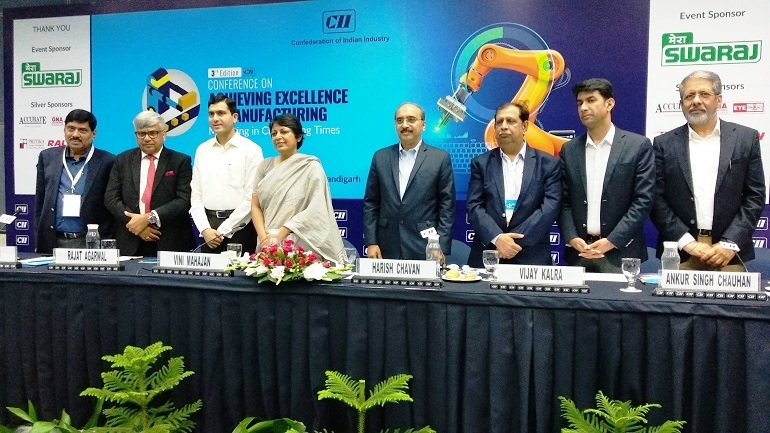
Interacting with the news media after a Union Budget viewing session organised in the CII Northe Region headquarters in Chandigarh, he said greater connectivity will further ease the movement of goods and people, thereby boosting competitiveness of economic activity in the region. 

Photo By : Life In Chandigarh

Since northe region contributes one-third to the national agri-GDP, initiatives like zero budget farming, extension of interest subvention of 2% to fisheries and animal husbandry etc. can be expected to provide a much needed boost to the agri-sector in line with the government’s promise of doubling farmers’ incomes.

Pointing out that the budget reflects a long term view with focus on sustainable development, Gupta termed it as “inclusive, balanced and pragmatic.”  

Noting with satisfaction the Union finance minister’s assertion that the Indian economy had grown from 1.85 trillion US $ in 2013-2014 to 2.70 Tn US $ by the end of the 2018-19 financial year, and is expected to cross the 3 Tn mark this year, he expressed confidence that the country will be able to achieve its target of becoming the third largest economy in the world in the next few years by climbing the 5 Tn US $ summit.

The CII Northe Region chairman also welcomed the Union Budget giving due attention to all major aspects of the economy including enhancing farmers’ incomes, infra development, rural and urban development, empowering youth and women, boosting start-ups and entrepreneurship, financial and banking sector reforms, leveraging the growth of MSMEs for greater employment generation, faster adoption of latest technologies like in electric vehicles, etc. He appreciated the government for incorporating many of the recommendations made by CII.

Gupta complimented the finance minister for the announcement to set up an Online Payment Platform to address the issue of delayed payment to MSME traders. In line with the CII’s recommendations, personal IT exemption has been maintained at Rs 5 lakh, and lower corporate tax slab of 25% has been extended to companies with a turnover of Rs 400 crore from Rs 250 crore earlier, though the CII had recommended it be raised to Rs 500 crore turnover.  Promoting foreign direct investment (FDI) by opening up the aviation, insurance, AVGC (animation, visual effects, gaming and comics) and media sector, etc are expected to boost inflows in the country, making it one of the prime investment destinations, he added.

Sanjay Khurana, Chairman, CII Regional Committee on SMEs and whole time Director Baddi Foils Pvt. Ltd., particularly welcomed the promise in the budget of facilitating the smooth flow of credit to MSMEs.

Commenting on the proposed government push to boost entrepreneurship and start-ups, Dinesh Dua, Chairman, CII Regional Committee on Entrepreneurship & Start-ups and CEO & whole time Director, Nectar Lifesciences Ltd., said it is expected to create a huge space for job creation and mitigate the problem of unemployment to a large extent. He said India ranked only second in the world to USA in the number of entrepreneurs and start-ups, but, considering the size of the country’s population, the 18,000-odd start-ups were not enough. We need to take this figure to at least 50,000, he asserted.

Harish Chavan, Chairman, CII Punjab State and CEO Mahindra & Mahindra Ltd (Swaraj Division), while hailing the underlining theme of ‘Gaon, Gareeb Aur Kisan’ in the budget, highlighted transforming of the rural infrastructure, agricultural diversification, focus on fisheries, cattle feed and milk, creation of 10,000-plus farm producer organisations (FPOs), and ease of doing business and living for farmers as some of the unique features announced by the finance minister.

Expressing his views, Sarvjeet Singh Virk, Chairman, CII Chandigarh Council, and MD, Finvasia India Pvt. Ltd., said the budget appears to ensure more participation by retailers in the economy and also enhances the scope of institutional development by provisioning more FDI. He also appreciated the housing development schemes saying these perfectly fit a C-I-C (credit, investments and consumption) model.

In Rush For Mode Tech, Traditional Wisdom Should Not Be Ignored: Ajay Vir Jakhar

0

Calls for reviving the multiple village level and other bigger water bodies to improve harvesting of rain water and recharging the fast depleting ground water levels, and inclusion of innovative practices of doing profitable farming in our school education curricula to wean back the youth to agriculture, marked the culmination ceremony of the 2nd edition of the Innovative Farmers’ Meets organised by CII across the northe states of Punjab, Haryana and Uttar Pradesh.

Participating in the deliberations at the CII Northe India headquarters in Chandigarh on Wednesday, progressive farmers, industry leaders and heads of various prominent agriculture and related institutions made an impassioned appeal for conserving and protecting various sources of water, which, it was felt, will be the single largest limiting factor for the future of agriculture in India.

Photos By : Life In Chandigarh

In his address, Punjab State Farmers’ and Farm Workers’ Commission Chairman Ajay Vir Jakhar emphasised that in the mad rush for adopting mode technologies, the traditional best practices of farming should not be ignored if we are to achieve sustainability in agriculture. He called upon National industry bodies like CII, which, in his opinion, exerted a much more powerful influence on framing government policies than farmers’ bodies, to show greater commitment in espousing the cause of the farming community in terms of framing pragmatic policies and programmes to make agriculture more sustainable and profitable for its practitioners.

Informing the gathering that his commission had recently undertaken a study on quality of groundwater and salinity of underground aquifers, he said since the aquifers of Punjab and Haryana are interlinked, the CII on its own should study which of the industries are polluting the groundwater and underground aquifers and initiate corrective measures accordingly.

Reminding the participants of the age old Hindi saying “Uttam kheti madhyam bann, nishidh chhaakri bheekh nidaan (meaning that agriculture is the best work, business or trade is medium, job is forbidden and begging is the worst work)”,  Haryana State Co-op Supply and Marketing Federation (HAFED) Chairman Subhash Chander Katyal called for thinking up new ideas to awaken the youth to the importance of pursuing agriculture as a profession and making it profitable by incorporating innovative practices and technologies.

Calling on the progressive farmers to become harbingers of change in agricultural practices, Punjab Commissioner – Agriculture Balwinder Singh Sidhu said, since farmers were known to follow by example the progressive farmers had a big role to play in weaning them away from the vicious wheat-paddy cycle. Pointing out that though other sectors of the economy are also culprits in the massive plundering of scarce water resources, but since agriculture is the biggest consumer of water, it naturally takes the lion’s share of the blame, he said, therefore, it becomes our greater responsibility to take steps to rationalise the use of water to safeguard our future generations.

Dr Gurbachan Singh, Founder Chairman of the Haryana based Dr Gurbachan Singh Foundation for Research, Education and Development (GSFRED) argued that the government must stop forthwith all measures which continued to encourage cultivation of water guzzling paddy. He gave the example of subsidy continuing to be paid to rice shellers and futile heavy investment being planned for utilisation of ‘parali’ (stubble) to prevent stubble burning by farmers, when it is a widely accepted fact that paddy cultivation is an unsustainable activity and has a bleak future . “By these measures you are not helping the cause of diversification of crops,” he asserted.

Giving example of his own farms, Dr Gurbachan Singh said stubble can be gainfully used as a mulching agent and for improving the health of the soil. Advocating integrated farming (combination of crops grown simultaneously) for improving the lot of the small farmers (with 5 acres or less of land holding), who form 85% of the total farming community, he called upon farmers to form small cooperatives to practise collective farming and direct marketing of their produce to get remunerative prices in lucrative markets. Maize, cotton, pulses, horticulture, dairy, fisheries, etc are good alternatives to wheat and rice, and farmers can pursue them for greater profits, he added.

He also advocated that the government promote setting up specific agriculture based industry suitable for respective ecological zones to discourage cultivation of specific crops which are not suitable for particular ecological zones.

The former Chairman of the Agricultural Scientist Recruitment Board (ASRB), as also Agriculture Commissioner, Govt. of India, and Director of Central Soil Salinity Research Institute (CSSRI) Karnal, showed slides of his farms and shared how he was encouraging farm visits by school students to get them a feel of farming, and how it can be adopted as a clean and rewarding profession with a healthy mix of best traditional and mode farm practices.

CII Punjab State Council Chairman and CEO Mahindra & Mahindra (Swaraj Division) Harish Chavan while welcoming the participants, said the primary purpose behind the series of interactions with progressive farmers in the three Northe states was farmers’ welfare, along with propelling industrial growth and boosting GDP of the nation.

 In a power point presentation, CII Director Dr Rajesh Kapoor took the participants through the entire series of interactions under the 2nd edition of the initiative, which involved 9 sessions at different locations and the final culmination ceremony. More than 5,000 farmers participated, and 20-plus corporate organisations supported the cause, he claimed.


Now Get Highly Subsidised Meds At JanMed Store; Free For Poor & Needy

0

An initiative, similar to the government-run Pradhan Mantri Bhartiya Jan Aushadhi Kendras, to provide medicines at highly subsidised rates, has been launched from Chandigarh with an aim to spread it across the country. The first JanMed store was opened this week in a Sector 44-D booth by the recently formed Sarva Rithu Seva Foundation, inspired by the Sri Sathya Sai Seva Organisation.

The store will provide all kinds of generic and other medicines, including cancer injections and heart stents, at discounts ranging from 15% to 80%. BPL families and other needy people will get these medicines absolutely free of cost.

Photos By : Life In Chandigarh

Declaring the launch of the initiative at a city hotel on Sunday, the two directors of the foundation, Dr Saajan Sharma, an entrepreneur from Patti in Punjab who has been associated with the Sai Seva organisation since childhood, and Arun Hooda, a youth leader, said besides the medical field, the foundation will also work pan India in the area of education and service, for which three separate wings have been formed.

The foundation has plans to open 50 JanMed stores across the country within a year and will also organise regular medical and blood donation camps.

In the field of education, the foundation has already tied up with Lovely Professional University to support the education and fee of two deserving students to the extent of Rs 12 lakh. Ten girls have also been identified in Chandigarh under ‘sukanya’ initiative to provide them financial support to the extent of Rs 3,000 each for their studies. The education wing will also help educational institutions in imparting human values-based education.

Among the services to be provided by the foundation are Free Food Canteens, the first of which in New Delhi will provide free healthy food once a month to at least 1,000 poor and hungry people. In rest of the 50 places where these canteens are to be opened, the free serving of healthy food will be done once a week. This wing will also help create suitable job opportunities for the physically challenged and the poor.

Speaking to LifeInChandigarh.com Saajan said the JanMed stores in due course are going to install automatic dispensing machines for children’s diapers and women’s sanitary pads. These will not cost more than Rs 5 apiece. Off course, these will be provided free of cost to the poor and the needy. Wheelchairs and other medical aids will also be added as we go along, he added.

To start with the foundation plans to spend Rs 1.5 crore on its activities.

Addressing the gathering, ardent Sri Sathya Sai follower and Chandigarh BJP President Sanjay Tandon, while listing out various free of cost public services being provided by the Seva Organisation, especially in the field of education, health and human values, lauded the foundation’s initiative in making the affordable medicines concept more accessible by opening stores in the marketplaces. This will be of great help to the common man since the government facilities remain confined to the big hospitals in the city like PGI, GMCH-32 and GMSH-16.

Praheed Kaur, daughter of former Punjab Chief Minister Prakash Singh Badal and wife of former Punjab cabinet minister Adesh Pratap Singh Kairon, also graced the occasion.

LifeInChandigarh.com wishes Sarva Rithu Seva Foundation all the very best in its philanthropic endeavours! 

Its Not Cool! Shed Stubbo Fat, Overlapping Skin Bags!

0

Close your eyes to excessive weight and obesity at your own risk. That’s the message coming loud and clear from the medical fraternity, which has conclusively linked this extra baggage, being carried by an alarmingly increasing population, to enhanced risk of suffering from life-threatening non communicable diseases like diabetes, hypertension, and even cancer. So it’s not cool to be the way you are, as some extra size activists would make us believe! Get cracking, and shed that extra burden of fat on your vital organs!

Doctors point out that there are two types of ‘fatty’ conditions – one moderately excessive, but stubbo fat in certain parts of your body, which spoils your aesthetics, and the other hugely excessive, leading to uncomfortably overlapping skin bags. Undoubtedly, both are detrimental to your overall health and need to be tackled in right earnest. But quick-fix solutions can be counterproductive, and medically advisable way to go about it is slow and steady!

Photos By : Life In Chandigarh

Speaking to LifeInChandigarh.com on the subject, Prof (Dr) Anil Bhansali, head of Department of Endocrinology at the premier healthcare and medical education institute PGI Chandigarh, is emphatic while maintaining that having a BMI (body mass index), which is calculated by dividing your weight in kg by your height in metres square, is a reasonably good indicator for us to decide whether we need to shed weight or not. For Asian population, BMI between 19 and 25 is considered normal while 25-29 is overweight and 30 and above is obese or very obese.

Even a one-year-old can have obesity. The right approach is to tackle the issue at the overweight stage, instead of waiting for it to progress to obesity. Studies have shown that children who are overweight when they start school, are far more likely to be obese by the time they become teenagers.

Obesity is a medical condition doctors would not like anyone to get into, because people who have it become more susceptible to catching infection and developing non communicable diseases like type 2 diabetes, hypertension, cardiovascular diseases, problems of the joints, and cancer.

Information gathered by LifeInChandigarh.com from various authoritative health sector sources is conclusive that while the best recourse to shed those extra kilos is dietary control and workouts running in tandem, but there are apparently not many takers for this ideal option because of lack of will, or even patience, to go through the highly demanding routine.

There are a few non-surgical techniques like Cryolipolysis, Ultrasound Fat Blasting and patented CoolSculpting which take care of your stubbo fat bulges, for example in the thigh, abdomen and flank, bra fat, back fat and underneath the buttocks and upper arm, without having to resort to dietary control and workouts, but their benefits are confined to improving your aesthetics rather than reducing your weight and improving your health condition on account of being overweight or obese.

For removing hugely excessive amounts of fat and skin flab, there are surgical techniques like Liposuction and Tummy Tuck, which are performed by plastic surgeons, and which, with major advancements over the last few years, have become much safer.

However, an emerging trend is towards performing Bariatric surgery, in which broadly speaking the size of your stomach is reduced, resulting in less craving for food. It is also considered to be beneficial for controlling diabetes. Dr Bhansali also rates Bariatric surgery as possibly the safest and most effective solution for weight loss.

Cryolipolysis

Dr Sunny Bawa, who has been practicing Cryolipolysis and Ultrasound Fat Blasting in Chandigarh for the last 11 years, during which he has handled thousands of cases, says people are increasingly wanting to look their best in public along with maintaining physical and mental well being. “Cryolipolysis is a convenient technology which uses controlled cooling to freeze and eliminate fat cells without surgery or downtime for recovery. Similarly Ultrasound Fat Blasting technology is used to eliminate stubbo fat bulges and is very effective with a little dietary control,” he adds.

Men and women in their 20s and 30s come to this doctor, who is also a fitness, martial arts and adventure freak, for pure aesthetics, while the older lot in the age bracket 40-60 start coming in after their physicians raise health concerns over their excessive fat.

Dr Bawa, who shares the multi-centre weight loss and spa brand Nidsun with his Delhi-based sister Nidhi Mohan Kamal, herself a food scientist and well known fitness expert, cites several examples of overweight or obese patients overcoming their fat-related medical complications with the help of their fat reduction techniques. One striking example he gives is of a 38-year-old woman who came complaining of infertility and eventually conceived after shedding 20 kg weight at their Chandigarh centre.

CoolSculpting

Husband-wife doctor duo Dr KM Kapoor and Dr Puneet Kapoor have recently added a latest  patented Cryolipolysis non surgical US technology christened CoolSculpting for fat loss to their portfolio of invasive techniques like Liposuction at their well known age reversal clinic and medispa AntiClock.

Says Puneet Kapoor, “for the past many years, our clients had been asking for a non-surgical alternative to Liposuction. So a year ago we brought in the most technologically advanced ‘Advantage’ series of applicators using the controlled fat freezing technique. By this method, the stubbo and noticeable bulges in the most fat-prone areas of the body, that are pinchable or grabable, are frozen to minus-10 or minus-11 degrees celsius after gripping them with suction in the specially designed cups of the applicators.

“The extreme cold sensitive fat cells in the targetted area, which get damaged, eventually die and within a couple of months are filtered out permanently as waste by the body’s lymphatic system, giving that part of the body a sculpted look. The rest of the tissues like nerves and muscles in the targeted area remain unaffected. The skin is protected during the procedure with a patented gel pad. With the advanced CoolSculpting Advantage series this procedure ideally takes not more than 35 minutes with minimal unease or discomfort to the client. “Most of our clients watch their favourite shows on Netflix, surf the Net, read a book, sip tea or just take a nap,” Dr Puneet shares.

The CoolSculpting procedure will not help you lose weight. However, it will definitely help you lose that unwanted fat and look slimmer in your clothes. Ideal candidates for this treatment are men and women who weigh not more than 15 kgs over and above their ideal body weight (BMI). The ideal age group for this procedure is 25-45 years when skin tone is good. In higher age group the skin begins to sag in the targeted area.

 “We are perhaps the only centre in this region to have two of the CoolSculpting Advantage series machines, so we can run them simultaneously on a client to cut down on time required for the procedure. Most patients need only one sitting. The cost depends on how many applicators are deployed on a patient. Each applicator costs around Rs 33,000 and 4-6 applicators are usually deployed in a single sitting.”

Liposuction & Tummy Tuck

Speaking about the surgical options of fat loss, well known plastic surgeon Dr KM Kapoor, who has performed 1,000-plus such procedures, most at Fortis Hospital Mohali, says, “with greater awareness and availability of advanced facilities over the past 5-10 years, the outcomes of surgical techniques like Liposuction and Tummy Tuck (Abdominoplasty) have vastly improved. These are generally safe surgeries provided these are done in a proper setup.”

Liposuction involves puncturing of the target area and sucking out the fat from under the skin using a special Liposuction cannula. Generally it is performed on ballooning bellies, thighs and buttocks or on female-like male chest. In Tummy Tuck or Abdominoplasty, excessively sagging skin around the naval area after liposuction is removed superficially without touching the vital organs and then sewn up again. Liposuction can cost anything between Rs 70,000-Rs 80,000, while charges for Tummy Tuck can be upwards of Rs 2 lakh.

Dr Kapoor remembers two typical cases he handed during his long practice – one of a 180 kg man, whose weight reduced to 130 kg with liposuction and further to 115 kg within weeks, and second of a 13-year-old obese school boy who had developed breasts equivalent to the size of a normal adult woman and which had become a subject for constant teasing by his friends. Liposuction and gland removal restored the boy’s normal life, Dr KM Kapoor adds.

Bariatric Surgery

Coming to Bariatric surgery, possibly the safest and most effective solution for weight loss and which also helps control diabetes, Dr Amit Garg, a young Bariatric surgeon practising in Fortis Hospital Mohali, says “among Asian population, a fit case for getting Bariatric surgery done is a person with a BMI of 32 or above with diabetes or hypertension, obstructive sleep apnea, knee problem, or knee arthritis.

Another fit case for Bariatric surgery is a person with a BMI of 32 or above and who has start medication for diabetes, but his or her blood sugar levels are not going down.

He points out that in the UK, from where he received his initial training in Bariatric surgery, national health coverage standard guidelines straightaway recommend Bariatric surgery for a person with a BMI of 37 or more and is a diabetic. The problem in India is that once you are diagnosed with diabetes, you are immediately put on medication without going into the cause of the disease, whether pancreas are working fine or not.

Governments and individuals have to weigh the costs and advantages of Bariatric surgery against the expenditure on treatment of diabetes through medication and the dangers associated with the ailment like turning blind, kidney failure or diabetic foot. By adopting a pragmatic approach and laying down standard guidelines, UK has been able to bring down expenditure of treating diabetes to one-third, he asserts.

Pragmatic Ranking Strategies Must In New Natl. Edu. Policy For Global Positioning: VC PK Khosla

0

The National Education Policy being finalised by the central government needs to urgently incorporate pragmatic strategies for ranking the Indian universities and other degree-providing educational institutions in order to prepare them for a place in the top universities of the world, feels Prof PK Khosla, Founder and Vice Chancellor of Himachal Pradesh based Shoolini University, which has been able to stamp its place among the top research and innovation oriented private universities in the country.

“China has shown the way by incorporating this as an integral part of its National Education policy and reaping rich dividends over the past few decades. And, fears that universities and institutions of higher learning from the land of the Dragon are set to capture a bulk of the worldwide top rankings in the near future are not exactly unfounded. It’s high time, India took some concerted action to capture lost ground,” Prof. Khosla, an internationally recognised genetics expert, shared with lifeinchandigarh.com after a media interaction to highlight the 10 years achievements of the university, incepted in 2009.

(From left to right) Mrs. Saroj Khosla, President, Foundation for Life Sciences & Business Management, Prof. PK Khosla, Founder & Vice Chancellor, Mrs. Nishtha Anand, Trustee of the Foundation, and Dr Saurabh Kulshreshtha, Dean, Research & Development. 

Photos By : Life In Chandigarh

Pointing out that younger institutions – those established over the past decade or so – were in fact performing better in research output than the well established ones, he made out a case for funding of institutions on merit rather than on perceptions. “We are among the top six institutions in India in the sphere of citational research along with IITs Ropar, Indore and Hyderabad, Jan Shikshan Sansthan (JSS) Pune and Indian Institute of Science Education & Research (IISER) Pune as these institutions meet the criteria for weighted citation index, which carries 30% marks in the benchmark Times Higher Education (THE) for global rankings,” he informed, and asserted that they deserve adequate funding and support from various funding agencies to excel further.

A handout shared with the media claimed that the Himachal Pradesh-based Shoolini University, which has one of the most scenic and eco friendly campuses, has been ranked in the top 15% of the 900-odd universities by the National Institutional Ranking Framework (NIRF) for the last three consecutive years and is now making its presence felt on the world stage.

A panoramic view of the sprawling Shoolini University campus in Solan district of Himachal Pradesh

As per independent and authentic international data released by Scopus, the largest abstract and citation database of peer-reviewed literature from scientific journals, books and conference proceedings, through SciVal, which offers quick and easy access to research performance of more than 14,000 research institutions and their associated researchers from more than 230 nations worldwide, Shoolini University has performed better than the global average of top 10 global universities on at least three parameters.

In percentage of International collaborations the university has received a score of 54.7 as against 19.3 given on an average to the top 10 Indian universities (as per NIRF 2019) and 50.3 on an average bagged by top 10 world universities (as per THE).

In percentage of papers published in the top 1% of the most cited publications worldwide, Shoolini University has got a score of 8, as against the National average of 1.1 and the worldwide average of 4.4 points.

Similarly, in percentage of papers published in the top 10% of the most cited publications worldwide, the Himachal Pradesh-based varsity has come out tops with 31.9 points against the National average of 11.6 and worldwide average of 27.2 points.

These brand building embellishments apart, the university still has long way to go to  fulfil its Founder and Vice Chancellor Prof PK Khosla’s dream of seeing Shoolini University in the top 200 world rankings by the year 2022. “Because we are not a very big university and are very young, we are lagging behind on the parameter of perception, where the established institutions enjoy a huge advantage. We are working hard to reach out to all stakeholders to make some headway in this regard,” is how Prof Khosla sums up, exuding confidence that the university is on course to find its place in the Sun.

Among its other strengths, Shoolini University claims that it is already among the top five patent filers in the country, ahead of many reputed universities, and has achieved 100% placement in several disciplines. The average of annual packages offered to final year students by top Indian companies and multi-national corporations has been Rs 5-6 lakh and the highest package of Rs 15 lakh CTC has been bagged by Aashish Saini from an MNC, Hilti. 

The university’s Management programme, which has been ranked 65th in the country as per NIRF rankings done by Union Human Resources Ministry, has recorded 100% placements while Pharmacy, ranked 39th in the country, can boast of a placement of 92% of final year students, as per university claims. Following are the placement figures provided by the university for some of its other academic programmes: M.Sc. (Chemistry) 100%, Computer Science & Engineering 100%, Bio Engineering 85%, B.Tech. (Mechanical) 88%, B.Tech (Electrical & Electronics) 75% and B.Tech. (Civil) 90%.

LifeInChandigarh.com wishes all the best to Shoolini University, one of the very few universities run by esteemed academicians with a worldview! 

Now Your Lube Change Is Childs Play, At No Extra Cost

0

Next time you need to get your engine oil changed, you need not spend extra on a mechanic’s labour charges or compromise with a dealership for higher lube cost. Automatic lube change machines, based on vacuum suction technology, officially launched at select petrol dealerships of Indian Oil Corporation Limited (IOCL) across Chandigarh tricity on Monday, provide this facility free of service cost to the customers.

The entire process of draining the oil chamber down to the last drop of the polluted oil, and filling fresh oil, is done even before you realise it, is drip free and you can see the quality and quantity of the used oil drained and the fresh oil being pumped in right before your eyes. You just need to buy the specially formulated high-performance Servo lubricants, matching the specific requirements of your vehicle, from the petrol dealers with whom these machines are installed.

Photos By : Life In Chandigarh

Inaugurating the new ‘ServoExpress’ facility at one of the busiest IOCL retail outlet Sukhna Automobiles in Sector 28-C, company’s Executive Director – Punjab State Office Sujoy Choudhary said the facility had been simultaneously launched at four other IOCL petrol outlets – company owned company operated outlet in Sector 33-D, Kapoor Service Station, Sector 21-D, Mohali Filling Station, Mohali and Amalia Petro Point in Sector 50-D.

Among other senior company officials present were Chief General Manager –Retail Sales Amarendra Kumar and General Manager – Lubes Supriyo Ghoshal.

IOCL plans to roll out the ServoExpress facility at 300 of its retail outlets across Punjab, Himachal Pradesh and Jammu & Kashmir.

Interacting with LifeInChandgiarh.com, Choudhary said the machine, developed by one of the company’s own dealers in Madhya Pradesh Kishore Chhabra, brought to the table a win-win situation for both the vehicle owners as well as the petrol dealers. “To a customer it brings a most transparent process of oil change, that too free of any service charges. To a petrol dealer it brings a golden opportunity to increase his lube business.”

“We have started an awareness drive both for our valued customers as well as the dealers to convince them about the immense benefits of the ServoExpress facility and we are confident that it is going to gather popularity,” Choudhary added.

The machine costs approximately Rs 30,000 and its running cost is next to negligible. It can handle 100 two-wheelers and four wheelers per day and its lifespan is between 7-10 years. As an incentive to increase its lube sales, IOCL is offering this machine free of cost to its dealers who commit to a certain volume of lube orders from the company.

Plastic Is Life, Lets Innovate To Realise The Dream Of A Plastic Waste-Free World

0

Plastic has become such an integral part of our lives that we can no longer just say no to it. So much so that it appears impossible to even image a world without plastic because of its unmatched convenience, being light weight and highly durable. What looks plausible is for manufacturers to innovatively manufacture plastic which minimises its environmental costs, for the governments at National, regional and municipal levels to ensure efficient collection, management and recycling of plastic waste, and for the end users to stop littering it to realise the dream of a plastic waste-free world.

This message came out loud and clear during a daylong seminar on “Sustainability Of Polymer (Plastic) Industry With Focus On Perception Management, Plasticulture And Packaging” with the theme “Future Of Polymer (Plastic) Industry” organised at Hotel Mountview in Chandigarh recently (June 4).  Leaders from the industry and various industry associations actively participated in the meet, though indulgence from the invited academia, farmers, civil society and media was reduced to mere tokenism.

Photos By : Life In Chandigarh

The seminar was jointly organised by Indian Chemical Council (ICC), an apex body representing the Indian chemicals and petrochemicals industry, and the Department of Chemicals and Petro Chemicals, Government of India. 

Despite its various shortcomings, the seminar proved to be quite meaningful and fruitful. The proceedings were wrapped up succinctly by Kumaresh C. Misra, Director ICC, when he remarked: “Just because we cannot be responsible (in collecting, managing, recycling and reusing plastic waste) we cannot say no to plastic, because plastic in this fast-paced world is life. And, we can be sure that life is going to become much easier and better with the continued and newer use of plastic, the only condition being that that we need to ensure its more responsible use.”

Striking an optimistic note on worldwide research under way to tackle the seemingly insurmountable problem of plastic waste, and countering the public perception of plastic spelling trouble for the very existence of life on this planet, Rajesh Gauba, Vice President of Reliance Industries Limited, informed the gathering that the problem of plastic waste will be a thing of the past in the next 5-10 years when chemical recycling of waste becomes a reality.

Emphasising that all possible alternatives to plastic, like paper, glass, aluminium and tin, are going to prove far more expensive and much less versatile than plastic, and are estimated to lead to far greater environmental costs in the long run, he asserted that it would be better to debate on managing plastic waste better rather than on finding alternatives to plastic.

Opportunities For Recycling Industry

There were suggestions aplenty on creating a sustainable and independent industry for recycling of plastic waste, in which all stake holders, including manufacturers, end users and urban and rural local bodies, are involved. An eco system needs to be established in which this parallel industry can run profitably, it was stressed.

In this context, Atin Chaudhuri, handling Corporate Technical Services for flexible packaging and packaging solutions major Huhtamaki PPL, informed the gathering that his company is ready with new age primary packaging for a host of products like coffee, hydrated soups, personal care items, chocolates and jams, etc, which uses polyolefins of the same family to the extent of 90%. Recyclers can extract plastic to the extent of 70% from these packages, which will give a major boost to the industry, he claimed.

Greener Solutions

Rajesh Marwaha, Head-International Business, India Glycols Ltd (IGL), informed the gathering that bio-MEG, a 100% green substitute for crude oil based conventional MEG (monoethylene glycol), an important raw material for manufacturing polyethylene terephthalate (PET) used in making plastic bottles, is now increasingly becoming prevalent globally, especially with big corporations.

Though bio-MEG is also non biodegradable, it is derived from bio ethanol, which is extracted from renewable agro feedstock with low carbon footprint, and hence saves the earth’s fossil fuels.  IGL is the only producer of bio-MEG in the world, and being a green product its demand is growing at a brisk 20-25 percent, and expected to grow even faster if the oil crisis in the Gulf deepens further, he maintained.

Another Indian company HPL Additives Limited claimed to have come up with degradability-promoting Oxo-Biodegradable-additives, which when typically added in small percentages of 1-3% during manufacturing process of conventional polyolefins, amongst other common polymers, ultimately renders them biodegradable.

India Recycling 60% Plastic Waste

Chairing a session on ‘Importance of Environment Friendly Packaging & Managing Plastic Waste’, Hiten Bheda, Immediate Past President of All India Plastic Manufacturers Association (AIPMA) and Chairman of its Environment Committee, shared that though plastic litter dots every nook and corner of the country, and is a eyesore as well as major source of environmental pollution, it is surprising to note that India is recycling 60% of the 25,940 metric tonnes of plastic waste it is generating on a daily basis, while the rest of the 40% remains uncollected.

In comparison, the performance of some of the advanced countries on this score is dismal.  The world’s largest economy, the US, for example recycles only 10% of its plastic waste while the rest of it is either going into landfills or being exported to China, which till recently was the world’s largest recycler of plastic waste. On the other hand there are countries like Japan, which recovers 84% of the plastic it consumes. South Korea and Singapore are also high performers in this regard. Europe is also taking the lead with many countries on the continent displaying high efficiencies in recycling their plastic and other wastes, Bheda informed.

Keynote Address

Delivering the keynote address, Ajay Durrani, Co Chair, ICC Northe Region & MD, COVESTRO India, while dwelling on the critical role being played by the plastic industry in India’s economy, informed that it contributes 18% to manufacturing in the country and well over 2% to its GDP. Emphasising on the urgent need to correct the negative perception around plastics, he said the problem of plastic waste could be solved with its better collection, management, recycling and reuse.

Focussing on the responsibility of the plastic industry, he gave the example of the world wide initiative christened ‘Alliance To End Plastic Waste’ led by Procter & Gamble, the largest consumer of plastics (packaging) in the world.

Welcome Remarks

In his welcome remarks, Kartik Bharat Ram, Chairman, ICC Northe Region & Deputy MD, SRF Ltd., informed the gathering that though materials like glass, tin, aluminium and paper were viable alternatives to plastic, but research study by Trucost has estimated that the long term environmental costs of these alternatives could be fourfold.

At the same time he emphasised that the plastics manufacturing industry had significant opportunities to reduce the environmental costs of plastics. “Moving to a more circular economy can reduce the environmental costs of plastics by prioritising the extension of the product life cycles, extracting maximum value from resources in use, and then recovering materials in waste streams so that these can be recycled and reused. Further, improving waste collection and management are key factors to reduce the quantity of plastics entering the oceans,” he added.

He also talked about the industry’s huge unrealised potential as indicated by the current very low per capita consumption levels of plastics in India, which is about 11 kg, compared to 100-plus kgs in USA and the global average of about 30 kgs.

Alliance To End Plastic Waste

With 25-plus global corporates already actively participating, this not-for-profit organisation has set aside 1.5 Bn $ over the next five years to partner with the finance community, governments at the national, regional and municipal level and organisations of civil society, including environmental and economic development NGOs, to make the dream of a world  without plastic waste a reality.

Composed of the world’s top minds from across the entire plastics value chain – chemical and plastic manufacturers, consumer goods companies, retailers, converters and waste management companies, Alliance To End Plastic Waste is welcoming all companies, big and small, from all regions and sectors to support its effort to bring new ideas and ways of thinking to the table. The alliance, while conceding that there is no single answer to the issue of plastic waste in the environment, is nonetheless collaborating to promote infrastructure, education and engagement, innovation and clean up efforts to keep plastic waste in the right place.

In the words of David Taylor, Chairman of the Board of the alliance & President and CEO of P&G, “Everyone agrees that plastic waste does not belong in our oceans or anywhere in the environment. This is a complex and serious global challenge that calls for swift action and strong leadership. This new alliance is the most comprehensive effort to date to end plastic waste in the environment.”

LifeInChandigarh.com Conclusion : Love plastic, generate less plastic waste and efficiently manage the rest is the right recipe for a cool cool planet!

Suzuki Motorcycle India Brings Those Premium Rides

0

Having consolidated its markets in the South and the West, Suzuki Motorcycle India Pvt Ltd, maker of the legendary Hayabusa and GSX-R, is now looking North to script the next phase of its growth story in the world’s largest two-wheelers market. On Tuesday, the company launched its all new GIXXER SF 250 and 155 cc bikes in the Chandigarh market, comprising Punjab, Haryana and Himachal Pradesh.

In Chandigarh to launch the two newest bikes from the company stable, Yoshiaki Harada, General Manager – Product Planning, and Deepak Mutreja, National Head  – Sales & Marketing, said the new GIXXER SF series offers advanced technology, premium styling and superior product quality, which is sure to wow the bike aficionados of the region. The bike lovers in  this price conscious market will also love the competitive pricing of the two GIXXER SF Series bikes, with GIXXER SF 250, a sport touring bike, being priced at Rs 1.70 lakh (ex-showroom Chandigarh) and GIXXER SF, a 155 cc performance-oriented motorcycle, at Rs 1.09 lakh, they added.

The 250 cc bike will only be available at “Suzuki Premium” showrooms.

Photos By : Life In Chandigarh

Features

GIXXER SF 250

 Powered by 249 cc, Suzuki Oil Cooling System (SOCS) enabled four-stroke, single-cylinder fuel injection SOHC engine, offering heightened performance.

Advanced engine produces 26.5 ps @9000 rpm and 22.6 Nm of torque @7500 rpm

Six-speed manual gearbox helps provide a smooth ride at low to middle range speed

New SOCS technology makes engine light-weight and fast, offering easy manoeuvrability even at the highest speed

17-inch wide front and rear tubeless tyres provide stability while turning on city roads

New dual channel Anti-lock Braking System (ABS) ensures improved braking       

Two colour schemes – Metallic Mat Platinum Silver & Metallic Mat Black

Will compete against likes of Honda CBR 250R and Yamaha Faser 25

GIXXER SF

Comes with 155 cc, four-stroke, single-cylinder fuel injection, air-cooled SOHC engine with SEP technology

Generates 14.1 ps @8000 rpm and 14.0 Nm of torgue @6000 rpm

Offers five-speed manual gearbox, which gives high fuel efficiency and smooth riding experience

Equipped with Anti-lock Braking System (ABS), ensuring smooth braking

Two colour options – Glass Sparkle Black & Metallic Sonic Silver

Common To Both Bikes

For ease of handling, the new GIXXER SF series is built on a lightweight frame with higher rigidity to maintain a good balance throughout the ride

Specially developed front suspension provides steadiness to riders while braking and cornering on bumpy roads and sharp curves

Both bikes loaded with sporty dual exhaust muffler and sporty wheels

Compact and thin LED headlight along with rear combination light

Tuned To Fashion Trends & Rapidly Changing Youth Flavour

0

It’s a young, but fast growing, Hong Kong based lifestyle and electronic gadgets brand, keeping pace with the latest fashion trends and in tune with the fast changing youth flavour. WK Life, which entered the Indian market just two months ago, opened its 8th store in the country in popular Phase 3B2 market of Mohali on Monday (June 3). Standard products of the brand are claimed to be cheaper than comparable competitor products available online, though the designer products are priced on the higher side.

With more than 3,000-plus stores across 69-plus countries and 500-plus product categories already, the brand, which was founded in 2015, is belting out still more products every week on the strength of its 4,000-plus employee force, 75 designers and 18 factories worldwide.

Photos By : Life In Chandigarh

The store, with the brand tagline “Born To Try” splashed across its front, invites Gen-X to try out its scores of uniquely designed electronic, digital and fashion products, which range from funky purses to travel luggage and pillows, gym gear, car accessories, household electronic articles, digital knick-knacks, pen drives, designer blue tooth speakers, fragrances, mikes and a range of mobile phone accessories. All products carry a 6-12 months replacement guarantee.

The launch of the brand was graced by celebrities like India’s under-19 cricket World Cup 2018 Player of the Tournament and Kolkatta Knight Riders’ star Shubman Singh Gill and Punjabi actress Japji Khaira. It was inaugurated by Punjab Minister Balbir Singh Sidhu, who was accompanied by Punjab MLAs Gurkirat Singh Kotli and Gurpreet Singh GP.

Talking to LifeInChandigarh.com, co-founder of the brand in India and its Director Rohit Sahni said “WK Life treats fashion elements as its core design concept. Starting from mobile accessories, the brand is already famous worldwide for its full range of smart life products. Within two months of its entry into India, we already have seven exclusive brand stores in Delhi, Noida, Jaipur and Lucknow. This store in Mohali is the 8th in India and the first in Punjab. We plan to aggressively raise the strength of our stores across the country to 200 in the next two years with a mix of company owned and franchise stores.

“On June 15 we are launching the world’s thinnest and smallest power bank in India. The 10,000 mAh power bank will be priced around Rs 1200. By the end of the year, we hope to have 3,000-plus products in the Indian market. That’s how aggressively we are approaching the Indian market, where the accessories market is currently estimated to be a whopping Rs. 22,000 crores and growing rapidly. We are very excited about the Punjab market and are confident that our amazing products will be an instant hit with the highly indulgent youth in the state,” Sahni added.