Home Blog Page 73

Come, Live A Few Moments Of Pride !!

0

This is a must watch exhibition which is sure to rekindle the patriotic spark in you – the journey of the Indian Army and its role in securing and building the nation has been brought alive through rare photographs and artefacts on display at the Government Museum Art Gallery in Sector 10 Chandigarh. The two-day exhibition, the likes of which has perhaps never been seen in the tricity, opened to public viewing on Saturday and will remain open on Sunday from 9 am to 5 pm.

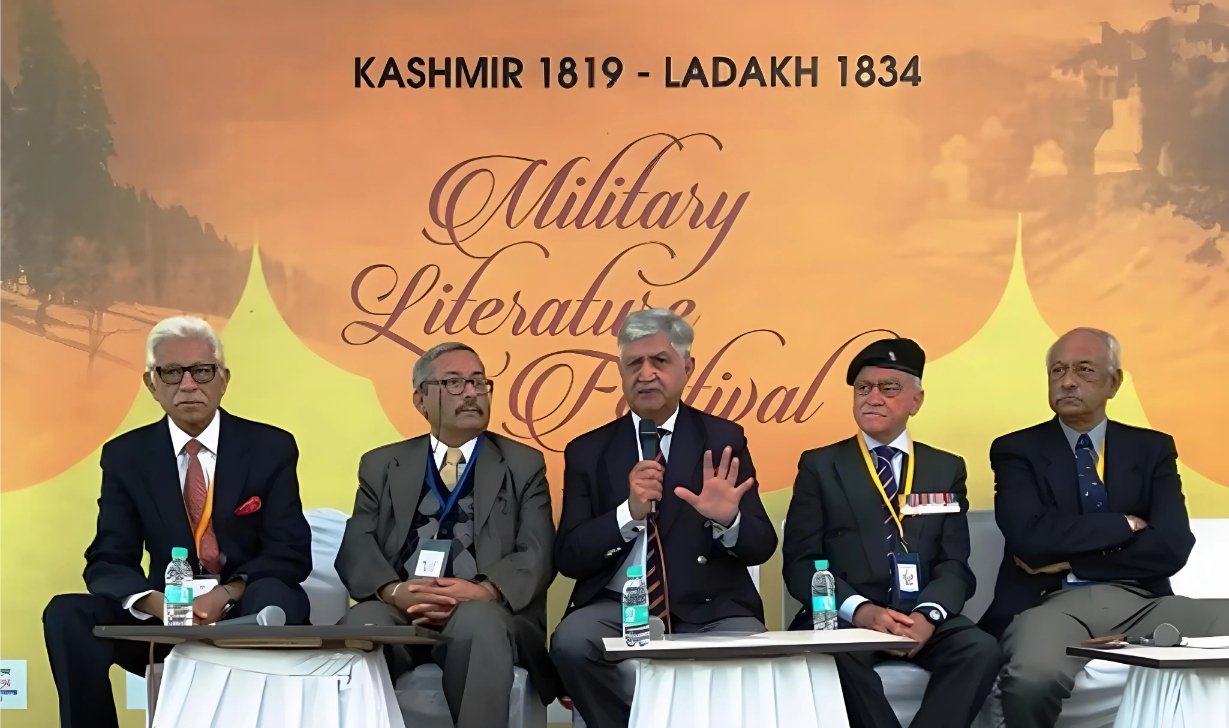
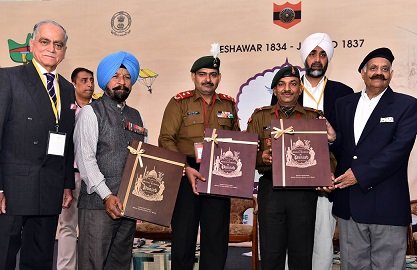
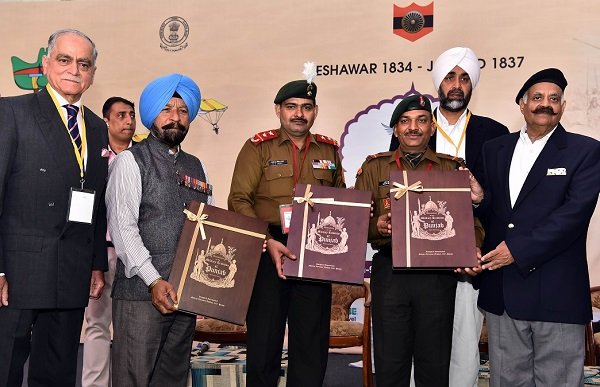
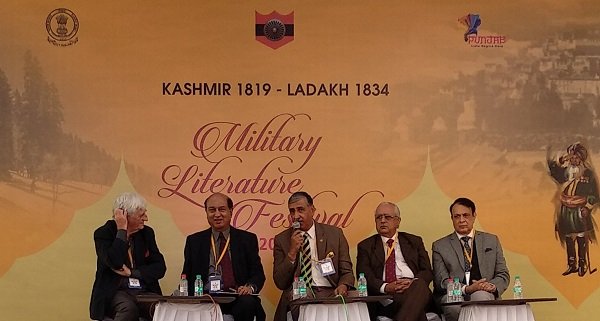
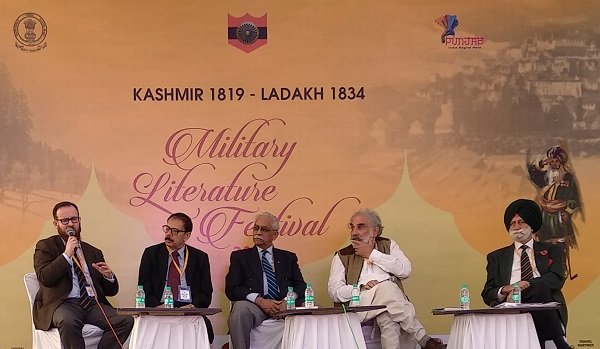
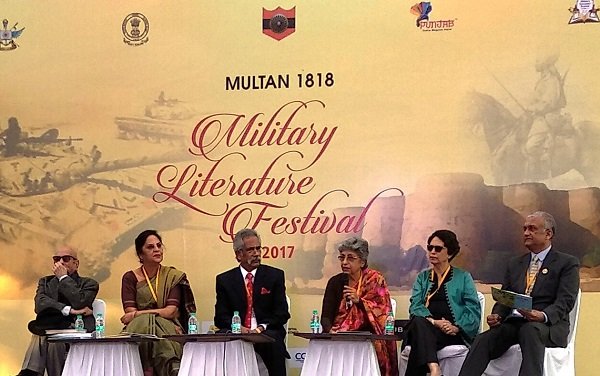
The Military Art and Photography Exhibition, being held as part of the build-up to the inaugural Military Literature Festival, slated for December 7-9, captures the evolution of the Indian Army through the major operations in which it has participated since World War I.

Photos By: Life in Chandigarh

A total of 200 exhibits, including pictures, artefacts, medals, army ammunition of Sikh era, personal belongings of officers and captured flags of Pakistan Army during 1971 operations, are on display.

A highlight of the exhibition is the bust of Flying Officer Nirmaljit Singh Sekhon, PVC (Posthumously). Other rare exhibits include Japanese swords of World Wars and personal photographs of Maj Gen G Nagra, who was GOC 101 Area during 1971 operations.

Also evoking a deep sense of pride are the section-wise displays of various operations, 1947-48, 1962, 1965, 1971, 1999, which include rare pictures of former Prime Minister Lal Bahadur Shastri visiting troops and former President Dr. S. Radhakrishnan with soldiers in Patton Nagar, a destroyed Pakistan Patton tank and Gen. J. Choudhary congratulating soldiers just before ceasefire.

Rare pictures of the moments captured during the signing of the visitor book by Lt. Gen. Niazi after the Pakistani surrender in the 1971 war and the captured flag of East Pakistan Army further adds to the feeling of patriotism. The flag has been preserved by the family of Maj. Gen. Nagra.

The Sikh Military Heritage Section, courtesy Punjab Digital Library, encapsulates the history of battles fought by Sikhs before the British Era. It also traces the journey of battles fought during the British Era and after independence.

The exhibition has been carefully designed to showcase the various landmarks achieved by the Indian soldiers around the world in historical sequence for the discerning visitors.

A special wall has been dedicated to the Saragarhi Battle Warriors, exemplifying the grit and determination of brave Sikh warriors who attained martyrdom living up to the Army motto of ‘Last Man Last Round.’ A handful of courage-laden Sikh soldiers defeated more than 10,000 Afghan Kabilais in this war.

Go see the exhibition on Sunday with your families and live a few moments of pride !!

Large Crowds Bid Adieu To Octogenarian Kailash Chand Talwar

0

People gathered in large numbers at the cremation ground in Sector 25 Chandigarh on Monday to pay their last respects to octogenarian Kailash Chand Talwar, member of the city’s famous jewellers’ family of Talwars in Sector 22, who breathed his last on Sunday.

His son Sandeep Talwar and his grandson lit the pyre as priests performed the last rites.

Sharing his memories of the Talwar family, which originally belonged to Hoshiarpur district of Punjab, one of the mourners, Arvind Jain of Cloth Palace, said the Talwars were among the first family to set up shop in Sector 22 in 1954 after them (Jains).

Photos By: Life in Chandigarh

Originally it was a joint family business, with Kailash Chand, his father and his two elder brothers Tarsem and Satpal in it together. “It was my grandfather and father who helped the Talwar family get a showroom on a monthly rental of Rs 240 per months, which in those times was considered quite high. Like others, business for Talwars was also lukewarm to start with and breaking even appeared a distant dream. Business had started picking up when the gold control hit the trade hard. But then as years went by the business flourished and Talwars became the biggest name in the jewellery business in the city,” Arvind Jain recalled.

As the family grew the business was split among the three brothers with the eldest brother Tarsem Lal retaining Talwar Jewellers and the younger brothers Satpal and Kailash Chand opening Talwar Diamonds and Talwar Jewellery House in adjoining showrooms, becoming the most dominant businesses in the Sector 22-D market.

A prayer meeting is being held for the departed soul at the Sanatan Dharam Mandir in Sector 27 on Wednesday.

Welcome To Karma Café

0

In the age of internet, more and more young impressionistic minds are getting motivated to write books. But, alas, there are very few avid readers, and a sea of social media geeks. The tricity too is sure churning out writers. There has been a flurry of book launches by young, and not so young first time writers in the city since September. Beginning with Part One of ‘The Time Traveler’ by a serving ‘fauji’ Tej Pratap Singh, followed by an anthology of poems named ‘Idiosyncrasy’ by young Twesha Dikshit and then a book on creativity ‘Off The Corporate Bus And Into the Creativity Boat’ by Ashoo Khosla. Adding to the variety on Friday was Nipun Nakra who launched his maiden book

In Nipun’s own words, the book relates the “story of friends, penned by a friend, for the friends”. It is dedicated to all the free-spirited, adventure-seeking and fun-loving souls.
 

rn

rn


rn

Photos By: Life In Chandigarh
 
Says the writer, who is deeply into media marketing, “If you are an avid reader of suspense thrillers, this one is a must read for you. Karma Café, published by Fly High Publications, is a fun filled, hilarious and action-packed suspense thriller that takes you on a roller coaster ride through the peppy college life, dating dilemmas, peer pressures and notorious pranks.”
 

rn

 
Ambitious Nitin, talented Shanky, dashing Jeff and prankster Harry meet each other in college and form an inseparable group ‘V-4’. The vivacious and carefree nature of the gang lands them into many comical situations as well as serious trouble that tests their friendship. The group dynamics change when Preeti and Amie enter their group and love comes knocking. The settings and expressions used to narrate the two innocent and beautiful love stories is what the youth will be looking for.
 
The first half of the story is set in Chandigarh and the second in Delhi. All the surroundings of Chandigarh are used elaborately. So, the characters visit Sukhna Lake, Elante Mall, Rock garden and they romp on the Gedi route.
 
ABOUT THE AUTHOR
 
Author Nipun Nakra was born and brought up in Chandigarh. Schooled in St. Xavier’s and Bhavan Vidyalaya, he did his bachelor’s in commerce from DAV College and MBA from Panjab University. He started his career with 92.7 Big FM and moved on to Star Plus TV Channel. 
 
His journey of writing started when he was preparing for his MBA entrance exam. He has always been an avid reader, having read William Shakespeare, Sydney Sheldon, Robin Sharma, Jeffrey Archer, Stephen Covey, Malcolm Gladwell among others. During his Media career he got to learn about the creative writing process which really helped to shape his writing dream. Most of his maiden book was written while sitting in cafes and libraries. Other than writing he is passionate about adventure sports and music.

STRIKE Out Stroke : Exercise, Reduce Stress, Eat Healthy

0

Sudden loss of balance, sudden loss of vision in one eye or both eyes, sudden unevenness in facial features, sudden hanging down of one arm, sudden slurring of speech – in any of such case don’t take it lightly, rush the patient to a hospital. All these are symptoms of a stroke, which, if not treated immediately, can lead to long term disability, or even death.

Emphasising, and reemphasising the need for awareness about this medical condition, which is the second largest killer of humanity in the world, senior doctors at the Post Graduate Institute of Medical Education and Research (PGI, for short) told media persons on the occasion of World Stroke Day that while stroke is preventable by taking certain simple steps in our daily lives, in case of a stroke also modern medical science has made it possible that disability and death can be prevented by immediately rushing a patient to a stroke clinic.
 

Photo By: Life in Chandigarh


Dr Vivek Lal, Prof. and Head of Department of Neurology, and Dr. Dheeraj Khurana, Prof. and in charge of the stroke control programme at PGI, said the biggest development in the past couple of years has been physical removal of a large blood clot, called an endovascular procedure, or a mechanical thrombectomy, which is being employed successfully to save lives and reduce the long-term effects of stroke. Thrombectomy allows trained doctors to use a wire-cage device, called a stent retriever, to remove a large blood clot.

For this a patient, on suffering a stroke, has to be immediately rushed to a stroke clinic where this procedure is performed after conducting a CT Scan to ascertain whether the cause of the stroke is a clot, blocking a vessel supplying blood to the brain, or rupturing of a vessel in the brain itself. The former is the most common cause of stroke, the neurologists added.

Dr Khurana said dissolving of the clot through intravenous technique (tissue plasminogen activator, or Alteplase IV r-tPA) is another excellent option, but it has been seen that this method sometimes is not very effective if the clot is blocking a larger vessel supplying blood to the brain.  

Dr Lal emphasised that the seeds of stroke are sown in childhood itself, and increased physical activity is the best antidote to the condition. Physical activity also helps keep stress, which is another cause of stroke, at bay, he added.

The neurologists, as well as Dr. JS Thakur, professor of Community Medicine, School of Public Health at PGI, expressed their concern that the physical activity period, which till a few years ago was mandatory  in schools, is no longer in prevalence. They advocated that the period should be reintroduced in schools and it should not be utilised for any other purpose but physical activity.

It was also stressed during the media interaction that consistent and determined efforts at rehabilitation of the patients, who have suffered long term disability due to stroke, had also shown good results. On the occasion, launch of a Neuro Rehabilitation and Spasticity Clinic by the Department of Physical Medicine and Rehabilitation, PGI, in association with the National Institute of Nursing Education and Department of Neurology, was also announced along with a Stroke Patient Support Group.

The PGI is also collaborating with the Government Multispeciality Hospital in Sector 16 to soon open a stroke service centre in the hospital, run by the Chandigarh UT Administration.

Good news : Cricket legend Sunil Gavaskar ‘Stroke Ambassador for India’

His message : “The best stroke in cricket is the straight drive. The best STROKE off the field is not to have one at all. Stay healthy !”

Let Us Strive to STRIKE out Stroke

•    S – Say no to smoking & alcohol
•    T – timely check-ups for cholesterol, blood pressure and blood sugar
•    R – reduce intake of salt
•    I – include healthy food / diet (fruits and raw vegetables).
•    K – keep yourself stress-free
•    E – Exercise regularly.

Some glaring facts

•    116 million years of life lived with disability (YLD) worldwide in 2016
•    Estimated 17 million strokes occur worldwide each year, of which 1.6 Million occur in India alone!!

Govt Balm Must To Ease Stress & Trauma Of Child Diabetics

0

With the medical fraternity still clueless about its cause, let alone cure, and the Indian government indifferent to the enormity of the problem, the future of child patients with type 1 diabetes mellitus (T1DM), whose numbers are increasing by the day, appears to be in the dark. On the eve of World Diabetes Day, and Children’s Day in the country, doctors from the department of Paediatric Medicine in the Post Graduate Institute of Medical Education and Research (PGI, for short) Chandigarh warn that though diabetes occurs far less commonly in children when compared to adults, its standard treatment regimen is very rogorous and stressful on the child as well as the family and a lifelong unaffordable financial burden on them.

Dr Rakesh Kumar, additional professor, and Dr Jaivinder, assistant professor, told media persons during an interaction on Monday that the disorder poses a significant public health burden considering the number of children below 15 years with T1DM. It accounts for about 5%–10% of all cases of diabetes. As per International Diabetes Federation 2015 estimates, out of 5.42 lakh children with type 1 diabetes worldwide, 70,200 (13%) are in India alone.

Photo By: Life in Chandigarh

Further, it is estimated that another 86,000 children below 15 years develop T1DM every year. India is second only to USA in the number of children having T1DM. Exact incidence and prevalence data of the country is lacking as there is no type 1 diabetes registry in India. Some small population-based studies in India suggest incidence of T1DM varying from 0.5 to 10 per lakh per year in children below 15 years, the doctors informed.

Dr Rakesh Kumar said as many as 1120 children with type 1 diabetes have been registered till date in the Paediatric Diabetes Clinic which has been running in the Advanced Paediatric Centre of PGI for the last 12 years. On an average, 4-5 new patients of the disorder report to the clinic every week.

“A study from our clinic showed that nearly 20-25% of children with type 1 diabetes have some form of psychological problem. Commonest problems observed were conduct disorders (24.5%), special symptoms (24%), physical illness (23%), anxiety (10%) and depression (7%). It was seen that poor sugar control and more number of hospitalisations were the two important factors associated with psychological problems.

“In another recently conducted study at our centre it was observed that use of continuous glucose monitoring systems may improve glucose control and another study showed that poor glucose control for three years severely affects growth of children with type 1 diabetes,” Dr Rakesh Kumar added.

The doctors said more than anything else, diagnosis of the disorder in their child comes as a major shock to parents, especially when they learn that their child will require lifelong insulin injections 3-4 times per day and the same number of finger pricks per day for checking sugar with a glucose meter. Parents and guardians go through a phase of shock, refusal, anger, anxiety, guilt, etc. all at the same time.

One of the most difficult problems these families face is a lifelong  financial burden as the average cost for treating a child with T1DM is around Rs 3000-4000 per month which badly affects the budget of a family with average income in India. In the developed countries, most of these children are treated with insulin pumps which have a one time cost of around 2.5 lakh rupees (cheaper model) with a running cost of nearly Rs 8000-9000 per month.

A group of patients of type 1 diabetes in Chandigarh have recently launched a registered organisation by the name Association for Children With Type 1 Diabetes to help raise funds for families who cannot afford the expensive therapy for the disorder. They have demanded that the central and state governments consider providing treatment for the disorder free of cost on the lines available to patients of haemophilia, thalassemia, HIV and TB to mitigate the sufferings of the affected families.

Causes

Researchers worldwide have been trying to pinpoint the exact cause of type 1 diabetes, but success has eluded them so far. But it is known that in most people with type 1 diabetes, the body’s immune system — which normally fights harmful bacteria and viruses — mistakenly destroys insulin-producing (islet) cells in the pancreas. Genetics and environmental factors appear to play a role in this process.

Symptoms
•    Increased thirst and frequent urination
•    Extreme hunger
•    Weight loss
•    Fatigue
•    Irritability or behaviour changes
•    Foul smelling breath
•    Blurred vision

Complications
•    Heart and blood vessel disease
•    Nerve damage
•    Kidney damage
•    Eye damage
•    Skin conditions
•    Osteoporosis

Moms & Babies Have A Romp, Dads Show Their Love

0

Short of a lip-lock, dads-to-be and moms-to-be displayed a range of gestures to express their love towards each other, and towards their expected baby, in a gala pageant for the ‘Maternity Queen’ title organised by Bedi Hospital and Fertility Centre in the lawns of the Chandigarh Club on Sunday night. The cold conditions did not deter the expectant mothers from turning up in their fineries for a once in a lifetime opportunity (at least for most) to sashay down the ramp in style.

Though winners were formally announced in all three categories – moms with babies in arms, moms with 1-3 year babies by their sides and the maternity queen (expectant mothers) – all the 100 odd participants were winners in their own right, the kind of grace and imagination they put into their respective performances.

PHOTOS BY: LIFE IN CHANDIGARH

Dr. G.K. Bedi, a well known and respected gynaecologist, speaking on behalf of Bedi Hospital, said, the annual event, into its third season, was designed to showcase women empowerment, promote family culture (three generations of families were invited) and importance of motherhood. Among its other motives were creating awareness for infertility and cancer prevention in women, especially for career conscience women.

Another message came out loud and clear during the pageant. Apparently taking a leaf our of actress Deepika Padukone’s ad, promoting a popular paints brand, the participants wore masks to press home the message “We, and our unborn babies, have a right to breathe clean air".

Dr. R.S. Bedi, paediatrician & Director Bedi Hospital, on the occasion of completion of 18 years of the hospital’s existence, announced the opening of Grace Bedi IVF centres at seven locations in the region – Solan, Nalagarh-Baddi, Srinagar, Jammu, Pathankot, Kaithal and Yamunanagar – in association with respective local hospitals, the premises of which will be used to run these centres.

The evening started with the mom with baby in arm contest. It was a wonderful and touching experience for the gathering as some of the little ones appeared  buoyant about facing the cameras and the gaze of hundreds of eyeballs and others cuddled up to the warmth of their mothers.

The second section – the moms with 1-3 year children in tow – had its mirthful moments. Some children walked with elan while holding their mother’s finger, but the moody among them dragged their feet, and one odd just refused to budge from his position, necessitating the lady MC (master of ceremonies) for the day to intervene and egg the child on.

The ‘Maternity Queen’ contest was split into two sections, one in which the moms-to-be walked the ramp alone, and the other in which their hubbies accompanied them. The dads-to-be did not disappoint. They gave vent to their emotions through a variety of gestures like hugs, peck on the cheek or forehead, going down on one knee and offering a flower, one even going to the extent of lifting his lady love in his arms. There, however, was one odd gentleman too shy to express his emotions publicly. A bold lip-lock could have been expected in the atmosphere that was building up, but alas it was not to be.

Sheetal Saransh Sharma won the ‘Maternity Queen’ title, followed by Sanita Chawla as 1st runner-up and Tanvi Puri as 2nd runner-up. 
 
The chief guest for the night, Dr G. Dewan, Director General, Health Services, UT Chandigarh, and J.S. Lamba, president, Rotary Club Chandigarh Central, joined Dr Vikram Bedi, neonatologist, and Dr Rubeena from Bedi Hospital in supporting the participants in the campaign for clean air.

Lifeinchandigarh.com wishes the Bedi family and Bedi Hospital many more such successful events

Fortis Mohali Performs Robotic Surgeries To Remove Kidney & Adrenal Tumours

0

First it was the conventional open (long incision) surgery, then came minimally invasive laparoscopic surgery and now it is robotic surgery, which allows surgeons the ability to operate even in very tight spaces in the body that would otherwise only be accessible through open surgery. The high precision surgery allows a patient to walk away in 24 to 48 hours. The results are great – shorter hospitalization, reduced pain and discomfort, faster recovery time and return to normal activities, smaller incisions, resulting in reduced risk of infection, reduced blood loss and transfusions and minimal scarring. After the Post Graduate Institute for Medical Education & Training (PGI, for short), Fortis Hospital Mohali has become the first corporate hospital in the region to start using the four-arm 3-D da Vinci robotic surgery system and the first beneficiaries have given the system a thumbs up !

The system has proved particularly beneficial to patients of kidney cancer/tumour. For 50-year-old Krishan Kumar Behl from Ambala, diagnosed with a huge malignant tumour in the right kidney, the system proved to be a boon. The operation went off smoothly and the tumour extracted was 22 cm in size, much bigger than the kidney itself (see pictures), and weighing more than 1 kg. He walked out of the hospital in three days.

PHOTOS BY: LIFE IN CHANDIGARH

Another patient, 62-year-old Savitri Devi from Karnal, had an adrenal tumour removed using the robotic surgical system and happily admits she is back to near normal with very little discomfort.

Says Dr Priyadarshi Ranjan, robotic surgery specialist and senior consultant, Urology and Transplant Surgery, at Fortis Hospital, Mohali, who performed both the surgeries with his team, apart from the benefits to the patients, the da Vinci robotic surgery system’s 3-D magnification screen allows the surgeon to view the operative area with the clarity of high resolution. The high level of manoeuvrability of the arms also improves a surgeon’s ability to operate accurately and precisely even in tight spaces in the body that would otherwise be accessible only through open (long incision) surgery. The robotic system shields the patients against possibilities of hand tremors during surgeries, thus increasing the surgeon’s confidence, he added.

Dr Ranjan says he has more than half a dozen other patients lined up for undergoing robotic surgery in the coming days. He sees the new generation technology revolutionising the field of surgery in the coming years.

The system is increasingly also being used worldwide for prostate removal, cardiac surgeries and gynaecological surgical procedures.


How does a da Vinci surgical system function?
 
* The surgeon works from a computer console in the operating room, controlling miniaturized instruments mounted on three robotic arms to make tiny incisions in the patient.

* The surgeon looks through a 3-D camera attached to a fourth robotic arm, which magnifies the surgical site.

* The surgeon’s hand, wrist and finger movements are transmitted through the computer console to the instruments attached to the robot’s arms. The mimicked movements have the same range of motion as the surgeon allowing maximum control.

* The assistant surgical team supervises the robot at the patient’s bedside.

Shun Milk At Your Own Peril!

0

On the eve of the 13th annual conference of Indian Society for Bone and Mineral Research (ISBMR), senior endocrinologists at the PGI have emphasised that consumption of milk in any form is critical to ensuring good bone health among the young as well as the elderly. In a pre-conference media interaction, Dr Anil Bhansali, prof. and head department of Endocrinology, and his senior colleagues from the department said intake of at least half a litre of milk (one litre ideally) in any form – liquid milk, curd, paneer or lassi – is absolutely necessary for optimal bone health. People shunning milk are doing so at their own peril, they cautioned.

Dr Bhansali informed that milk is the best source of calcium, and the only source for lacto vegetarians. In the formative years, till middle ages, calcium is essential for building up bone mass and in the later life for maintaining the bone mass. Rapid loss of bone mass leads to weakening of the bones and can result in osteoporosis, a silent killer, the patients of which remain asymptomatic for most part. Women are more prone to osteoporosis than men especially in the post menopausal stage. “Therefore we recommend that post menopausal all women must get themselves screened for the diseases. A simple Dexa scan is the gold standard for screening of osteoporosis, though X-ray, CT scan and MRI are also means for screening of the disease,” he added.

Photo By: Life in Chandigarh

Emphasising that bone disorders are not the domain of orthopaedicians alone, but also of endocrinologists, as metabolic bone disease is the third most common endocrine disorder after diabetes and thyroid diseases, he said Vitamin D deficiency and osteoporosis are most common bone disorders and they are on the rise with increasing longevity. Uncontrolled diabetes itself is a risk factor for poor bone health and fracture. Therefore, adequate sun exposure (30 minutes exposure on 20 percent bare body, including hands and arm, feet and legs and face between 9 am and 3 pm when UV rays are at their maximum), optimal amount of calcium and vitamin D intake, appropriate consumption of dairy products, regular weight bearing exercises like walking, cessation of alcohol and smoking and avoidance of drugs, like steroids, which result in osteoporosis,  are some tested measures to maintain good bone health, he added.

Dr Bhansali informed that it has been seen that increased engagement with the doctor has resulted in enhanced life span of diabetic patients. “Those diabetic patients who visit us at PGI three to four times a year are living up to 80 years and beyond because in getting themselves examined regularly other ailments also get detected and treated.”

With better treatments even victims of hip fractures, especially among the elderly, now have a better chance of survival. Quoting a yet to be published PGI study undertaken in tricity hospitals during the early part of this decade, additional prof. in the department, Dr Sanjay Kumar Bhadada said out of 264 patients of hip fracture in the average age of 55 years, as many as 20 percent died within the first year because of various factors like cardio vascular disease and anaemia caused by lack of activity. Of the remaining, 65 percent became totally dependent on others and 30 percent near dependent on others, he added.

Dr Bhadada said, surprisingly, 80 percent of all patients included in the study received the fractures at home, most of them while moving between the bedroom and the washroom. This speaks volumes about the brittleness of their bones, he said.
       
An estimated 300 delegates from around the country are expected to participate in the conference to be held from November 10-12. There will be two workshops during the conference – one on bone biomechanics by faculty from IIT Ropar and second on metabolic bone disease by field experts.

Among others present were Dr. Pinaki Dutta, additional prof., and Dr. Rama Walia and Dr. Ashu Rastogi, both assistant profs.

Qissebaazi, Poetification™ To Bring Stories, Poems To Life

0

The sixth edition of the Chandigarh Literature Festival to be organized by the Chandigarh based Adab Foundation in association with the Panjab University Department of English and Cultural Studies on the university campus from November 10 to 12 promises to be much more lively and entertaining than in the previous years. Announcing the dates and other details, foundation chairman Mitul Dikshit and festival director Annie Zaidi, a noted writer and poetess, told media persons on Wednesday: “This year’s fest will introduce a first for the region ‘Qissebaazi’ and ‘Poetification’ – performances based on literature to bring the stories and poems alive. The venues – Balwant Gargi Open Air Theatre and the auditoriums of the Department of English and Department of Evening Studies – will be open to the public.

This year’s festival will feature 10 books on a wide range of subjects, including a graphic novel, war and conflict, professions which are dying a slow death and a gay man’s hardships and the discrimination he has to face in society. The books will be discussed threadbare after respective writers have had an open conversation with a book critic. Unfortunately, there is not a single entry from Chandigarh among the ten books. Explaining this, Mitul and Annie said the format of the festival is such that they do not invite the authors or poets directly. They invite noted critics and literary experts from different parts of the country who are free to nominate one writer each of their choice.

Photo By: Life in Chandigarh

However, there will be a few young people from the tricity area participating in a unique session on poetry ‘New Words: Young Poets Present Their Work In English, Hindi and Punjabi’, a multi-lingual event and a platform for young poets, many of whom may not have published their works yet. The session will be curated by young artists Akhil Katyal and Amy Singh.

This year’s festival will also have panel discussions, one of them being on a very topical issue ‘Writing Scared: Freedom of Expression & Punjabi Literature’.  Noted experts will also participate in a panel discussion on ‘Contemporary Art of North India’.

Some celebrated films are also being shown during the three-day festival.
The screening of ‘Anaarkali of Aarah’ will be followed by a discussion between Director Avinash Das and critic Mihir Pandya.

Day 2 & 3 will see engaging sessions between some of the best authors of the country and noted critics and literary experts. Kiran Nagarkar, author of novel ‘Jasoda’, will be seen in conversation with critic Sreenivasan Jain. Another session to look out for will be Hindi poet and Sahitya Akademi Award winner Mangalesh Dabral in conversation with critic Asad Zaidi on his book ‘Naye Yug Mein Shatru’.

Acclaimed author Nayantara Sehgal will be seen in conversation with critic Kiran Nagarkar on her book ‘When the Moon Shines by Day’.  Author Hansda Sowendra Shekhar will be in conversation with critic Vivek Menzes, a widely published writer and photographer from Goa, about his book ‘The Mysterious Ailment of Rupi Baskey’, which has won the Sahitya Akademi Yuva Purashkar. Hansda, incidentally, was in news when the Jharkhand government banned his book ‘The Adivasi Will Not Dance’ claiming it had shown Santhal women “in a bad light.”

For attending, Adab Foundation can be contacted on www.clf.co.in

CHANDIGARH LITERATURE FESTIVAL- 2017-18

10-November-2017 , Friday

Time

Session

Venue

1600 hrs- 1610 hrs

Lighting of Lamp
by Akshay Kumar, Annie Zaidi, Kiran Nagarkar,
Mitul Dikshit Nayantara Sahgal, Rumina Sethi


1610 hrs- 1630 hrs

Welcome and Theme
introduction by Mitul Dikshit
(Chairman Adab Foundation)

Balwant Gargi Open Air Theatre, Panjab University Campus

1630 hrs- 1645 hrs

Become More Creative With Off The Corporate Bus and Into The Creativity Boat

0

If somebody tells you that genius can be taught or learnt, you will certainly have a hearty laugh. But if someone claims that creativity can be learnt and imbibed by everyone, one would tend to be more receptive. So when Abu Dhabi based Ashoo Khosla, a qualified doctor and alumnus of the prestigious Indian School of Business Hyderabad from the founding batch, with several years of experience in corporate marketing, training and business development in Healthcare, FMCG, Pharmaceuticals and Education, introduced to us her first book ‘Off The Corporate Bus and Into The Creativity Boat’ at The Browser in Sector 8, on Wednesday, we were all ears.

Interacting with media persons regarding the book published by Jaico Publishing House, Ashoo says a resounding “yes” to queries like “Is it possible for everyone to be creative? Can creativity be a part of everything we do in our daily lives? “All of us are capable of being creative and whenever we have used creativity there has been advancement in the world,” she asserts, wondering why creativity, the most important subject, one that will truly help us advance, is left out of school and college curricula.

PHOTOS BY: LIFE IN CHANDIGARH

The book, in the self-help genre and written in a gripping story form, explores various techniques utilized by the true masters of creativity – artists and scientists – and makes them available in an easy to use format. It is the story of Aditi Singh, a top-notch product manager. Many covet her job but she wants nothing more than to quit. When she finally takes a much-needed vacation from her seemingly perfect corporate life, she meets Dr. Shiv Prakash, an odd little man who is a master storyteller.

Through his unusual imaginings, he challenges Aditi to find her true passion. As they spend more time together, Aditi uncannily begins to relate to the characters of his stories. Questions are raised and challenges are set. This time, Aditi has to decide what she really wants. Running away is no more an option. It’s time to write her own story.

Through its charming characters, ‘Off the Corporate Bus and Into the Creativity Boat’ offers a glimpse of what you can truly be. It invites you to pursue your passion and strive for true happiness, all while being unique.

The 228-page book, priced Rs 350, was released by spiritual guru and Art of Living supremo Sri Sri Ravi Shakar at annual convocation ceremony of Shoolini University in Solan, on Tuesday. Ashoo is herself a founding member of Shoolini University, where she has launched an innovative online learning platform eUniv and is in the process of integrating a platform for innovation and creativity for all students.

“My larger mission is to reach out to as many people as possible and help them become more creative – in their everyday work and lives.” says Ashoo.  To start with, the book will be a part of the core teaching philosophy that is being imbibed at Shoolini University to ensure all students explore their potential to be creative and innovative. She also hopes to use the book as a tool for corporate trainings in India as well as in UAE, where she is currently based.

In the writer’s own words

How Can You Use This Book?

This book will help you understand how creativity works for the various arts. It covers creativity techniques ranging from writing, drawing, and photography, to music, painting and science.

I suggest that after you understand the basics of these techniques, practice them whenever you can to see how they work for you. Slowly, you will discover that there are some that you are more naturally inclined to, and
which make more sense in the context of your own work and life. Over a period of time, you could have your own special blend of methods that give your creativity the special edge.

At the end of this book, you will find an overall framework for creativity based on the techniques covered in the various chapters, and a summary of these techniques in the form of a ‘creativity guide’ for your reference

Let us remember that we all have it in us to be creative – to come out with new ideas, to make a difference in our lives as well as of those around us, and in our own special way, to make this world a better place.

Lifeinchandigarh.com
wishes Ashoo Khosla a resounding success with her first book, and wishes she pens many more in times to come.