rn
26.
Unlike in the private sector, pursuance of excellence, and in the process making a name for themselves, has been the primary goal of most distinguished doctors in the prestigious Post Graduate Institute of Medical Education and Research (PGIMER, PGI for short) in Chandigarh. And this tradition continues, though arguably in a somewhat diminished manner.
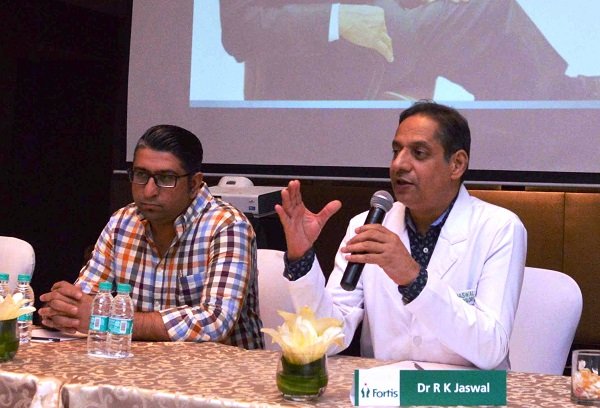
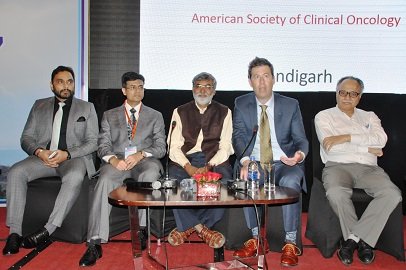
A complex coronary angioplasty procedure in the catheterization lab of the PGI’s Advance Cardiac Centre (ACC), beamed live to a gathering of 1500-odd of the world’s best brains in interventional cardiology in Orlando, USA on Saturday, is another testimony to the high esteem in which PGI is held in the healthcare world.
rn
rn
Photo By: Life in Chandigarh
Participants in the 13th Annual Complex Cardiovascular Catheter Therapeutics (C3) conference, one of the most prestigious and recognized global interventional cardiology meetings in the world, were witness to Prof. Dr. Rajesh Vijayavergiya and his team from the Cardiology Department of PGI performing the complex and technically challenging coronary angioplasty of a 60 years old woman, who got admitted with complaint of recurrent chest pain at ACC.
After successful stenting, Prof. Vijayvergiya commented that the left main coronary angioplasty, shown live, was technically challenging and required great technical skills along with the use of advance hardware. Since left main is one of the most important vessels supplying blood to the heart, treating it is always a battle of nerves, he added.
Prof. Vijayvergiya informed that PGI, Chandigarh is amongst a handful of centers in India, where such kind of complex procedures are successfully performed on regular basis with use of advanced imaging modalities like intra-vascular ultrasound (IVUS) and optical coherence tomography (OCT).
He maintained that PGI being the only center in North India to beam live such a complex coronary angioplasty case to a prestigious international audience, clearly reinforced its position as one of the leading tertiary care institutes in the country, at par with leading international institutes in the field of interventional cardiology.
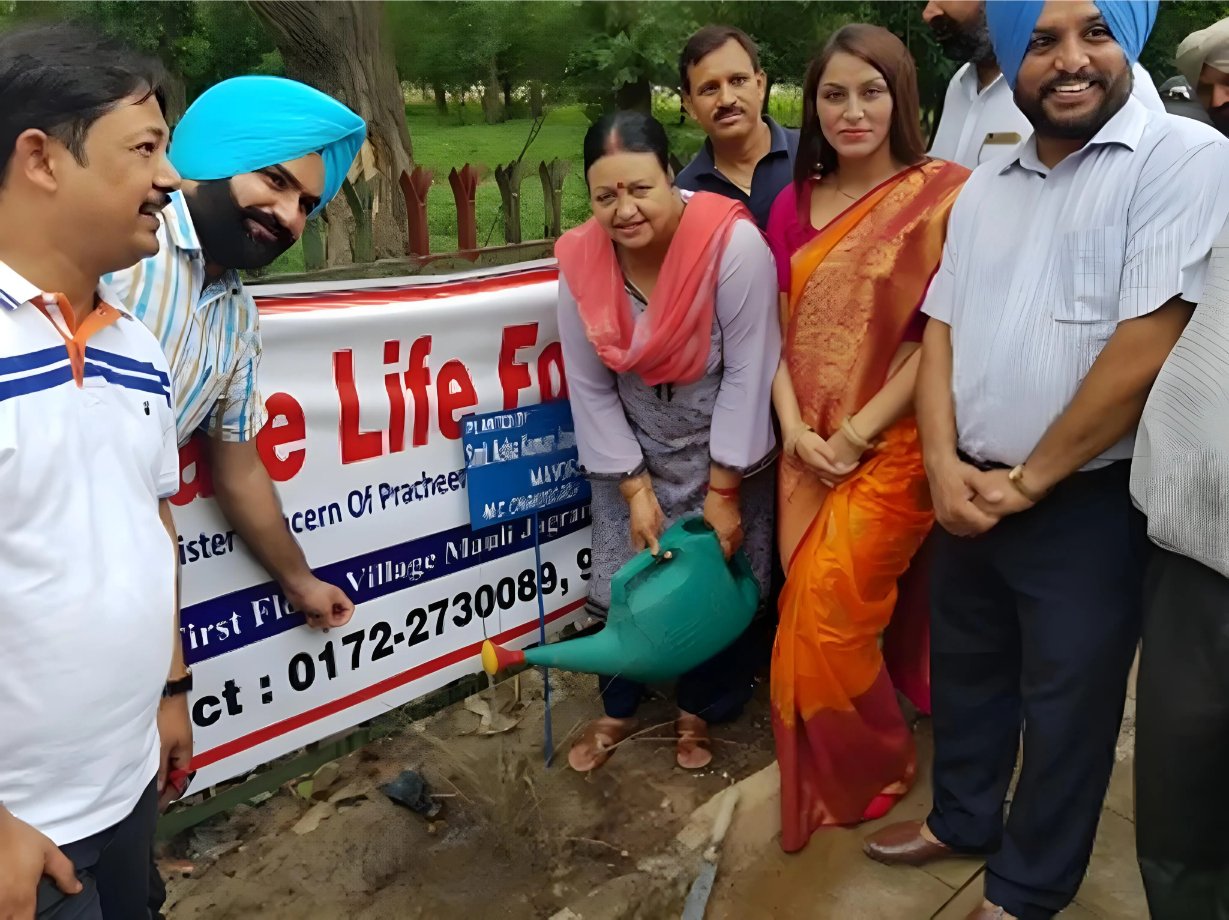
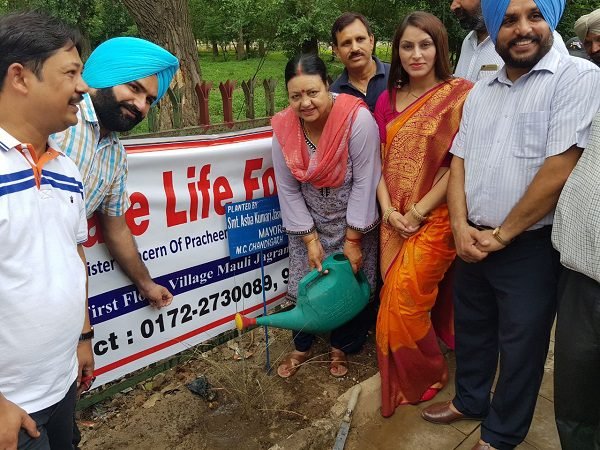
Even as the issue of ensuring supply of tertiary treated water to existing connections, and the stink it continues to generate, is being debated in the Municipal Corporation Chandigarh House, the Water Supply Committee of the corporation has taken a decision which is sure to raise the hackles of kanal house owners.
A meeting of the committee, chaired by Satish Kumar Kainth, on Thursday decided that commercial rates be charged from households in one kanal or above houses for using drinking water for irrigation purposes from August 1 this year. They have been given time till July 31 to take separate connection for tertiary treated water supply for irrigation purposes.
rn
rn
rn
Photo By: Life in Chandigarh
This issue was hotly debated in a recent meeting of the MC House and several councillors had challenged the claim by officials that the tertiary treated water was being regularly supplied to all existing connections, including parks in the city. Mayor Asha Kumari Jaswal had herself admitted that the stink from the tertiary treated water was still unbearable.
Thursday’s meeting of the water supply committee was attended by member councillors Devinder Singh Babla, Vinod Aggarwal, Arun Sood, Jagtar Singh Jagga, Ravi Kant Sharma and Sachin Kumar Lohitya. Concerned officers of Municipal Corporation also attended the meeting.
The committee also decided that public toilets in market places be handed over to the area market associations and public toilets in green belts to the local resident welfare associations for their proper maintenance.
The committee decided that user charges of water tankers for commercial purposes be hiked from Rs. 385 to Rs. 500 plus taxes and higher. It also decided to impose user charges for providing mobile toilet vans for various functions and rallies, etc.
Both the decision on user charges have been sent to the Finance and Contract Committee (F&CC) for framing of policies in this regard.
The three-month old Captain Amarinder Singh led Congress Government in Punjab seems to be seriously trying to do some out of the box thinking in an effort to bring the state back to somewhere near the predominant position it once held in the country. And one of these efforts is visible in the field of skill development.
In another step towards forging direct alliances between its own planned international skill training centres and reputed foreign technical training institutions, Punjab Government on Thursday signed a memorandum of understanding (MoU) with the UK Government to impart internationally valid skill development training to youths in Punjab.

Photo By: Life in Chandigarh
The MoU was signed by UK Deputy High Commissioner Chandigarh Andrew Ayre and Punjab Additional Chief Secretary, Technical Education & Industrial Training, G. Vajralingam in the presence of state Technical Education Minister Charanjit Singh Channi, and Adviser, Punjab Skill Development Mission, Sandeep Singh Kaura.
Speaking on the occasion, Channi said the state government was setting up International Skill Training Centres for providing quality skill training to youths in Punjab for rewarding careers in the country and abroad. The British Deputy High Commission Chandigarh has assured a facilitative role in building linkages between Punjab Technical Education and Industrial Training Department, Punjab Skill Development Mission and skill providers in the UK, he added.
In what can be viewed as a very ambitious move, Channi said Punjab Government is keen on setting up its own technical education and skill development college in the UK, where students from the state can be educated and trained by highly qualified trainers and teachers in that country. Preliminary talks have been held with the UK embassy in New Delhi in this regard and the initial response is positive, he shared.
The minister said the purpose behind signing MoUs for direct tie-ups with reputed foreign universities and colleges was to prevent exploitation of youth at the hands of private agents. As part of these associations with foreign institutes, students of four-year courses would get an opportunity to study two years abroad, he added.
Andrew Ayre said this was a first of its kind MoU signed with the Punjab Government in the field of skill development, and is expected go a long way in forging a lasting partnership between Punjab Government and the UK.
Chief Justice of Punjab & Haryana High Court, Chandigarh Justice S.J. Vajifdar on Wednesday administered the oath of office to two additional judges of the high court.
With the taking of oath by Justice Raj Shekhar Attri and Justice Gurvinder Singh Gill, the number of judges in the Punjab & Haryana High Court has gone up to 48.
Judges of the Punjab & Haryana High Court, its Registrar, senior advocates and office-bearers of High Court Bar Association were among those present at the ceremony.

Photo By: Life in Chandigarh
Faced with a shortfall of 22,000 post graduate teachers and trained graduate teachers in government schools in the state, despite concerted efforts to fill up vacancies through regular recruitment, Haryana Government has had to fall back on retired teachers below 65 years of age to fill in the gaps.
Haryana Additional Chief Secretary School Education P.K. Das on Wednesday launched a portal “http:dsehry.in/RE” developed by the School Education Department to hasten the process of engaging the teachers who have retired from Haryana government, other governments and private managed schools.
Offering them remuneration as per the state government's re-employment policy, Das expressed the hope that they would be able to engage about 5,000 retired teachers for government schools through the portal to provide quality education to students.

PK Das launches the portal
Photo By: Life in Chandigarh
Giving details about the process of recruitment, he said applying for re-employment on the digital platform will make the engagement process easy, transparent and hassle-free. Retired teachers from Haryana government, other state governments and privately managed schools below the age of 65 years are required to register themselves on the portal.
The vacancy position in government schools across the state would be displayed on the portal to enable the eligible and desirous retired teachers to fill up their choice of schools in order of preference in the district of their choice.
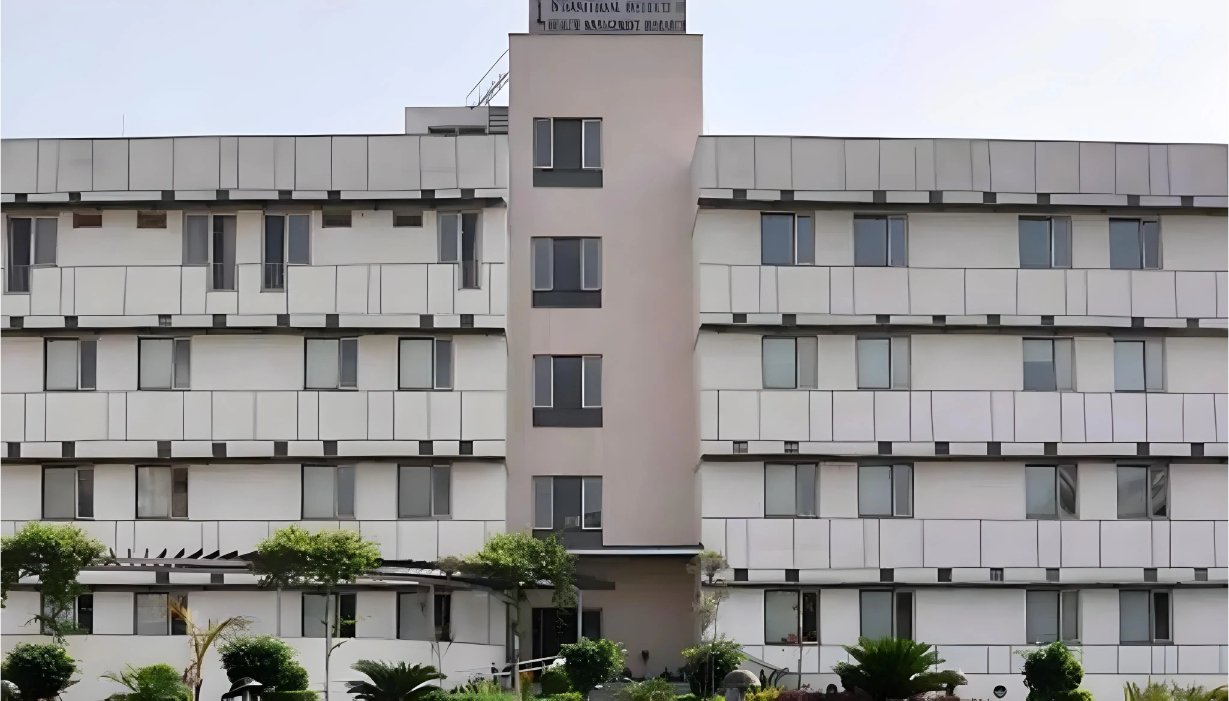
The Post Graduate Institute for Medical Education and Research (PGIMER) Chandigarh, PGI for short, on Tuesday become the first medical institute in the country to provide stents and Orthopaedic implants at cheaper than market rates for the benefit of patients.
Secretary Health and Family Welfare in the Union Government, C.K. Mishra, launched the new facility of providing orthopaedic implants to the patients at rates significantly reduced from prevailing market price at the AMRIT Pharmacy, at PGI’s Nehru Hospital. Stents are already available at reduced rates in the pharmacy.
Mishra handed over the implants to two patients at the Pharmacy in the presence of PGI Director Dr. Jagat Ram. He was accompanied from Delhi by Joint Secretary in the ministry Arun Singhal and Additional Secretary and Financial Advisor Vijaya Srivastava.

Photo By: Life in Chandigarh
On an initiative by the PGI Administration, suppliers have been convinced to provide Amrit Pharmacy these implants at reduced rates. Henceforth, arthroplasty implants of all international brands will be available at reduced rates at the PGI pharmacy. For greater transparency, the rates are prominently displayed at the pharmacy.
Here to attend the Standing Finance Committee meeting of the premier institute, Mishra was presented an overview of the Institute and its planned Sarangpur extension project, which is to house among other facilities the hugely overcrowded OPDs and Trauma Centre. The Union Health Secretary also interacted with Heads of Departments and faculty of the institute and took a round of the Trauma Centre, Emergency Complex, Nehru Hospital, Advanced Eye Centre and Advanced Cardiac Centre to get a firsthand experience. He directed the Central Public Works Department (CPWD) to complete the under construction 250-bedded hospital by the end of the year. Appreciating PGI’s contribution as a premier hospital and public institute, Mishra also recognized the excellence of PGI doctors in research, education and patient care. Describing them amongst the best in the country, he hoped that they will contribute new ideas in improving the general health care system in the country.
How wonderful it would be if our chief ministers were statesmen, and a few of their senior ministers and senior bureaucrats visionaries. In that case vision documents would make more sense.
But in the prevailing circumstances when reliable and updated data, on the basis of which meaningful long term planning is possible, is sadly lacking, and due diligence is a far cry, the so called vision documents being churned out by various governments, largely remain confined to mere paper documents.
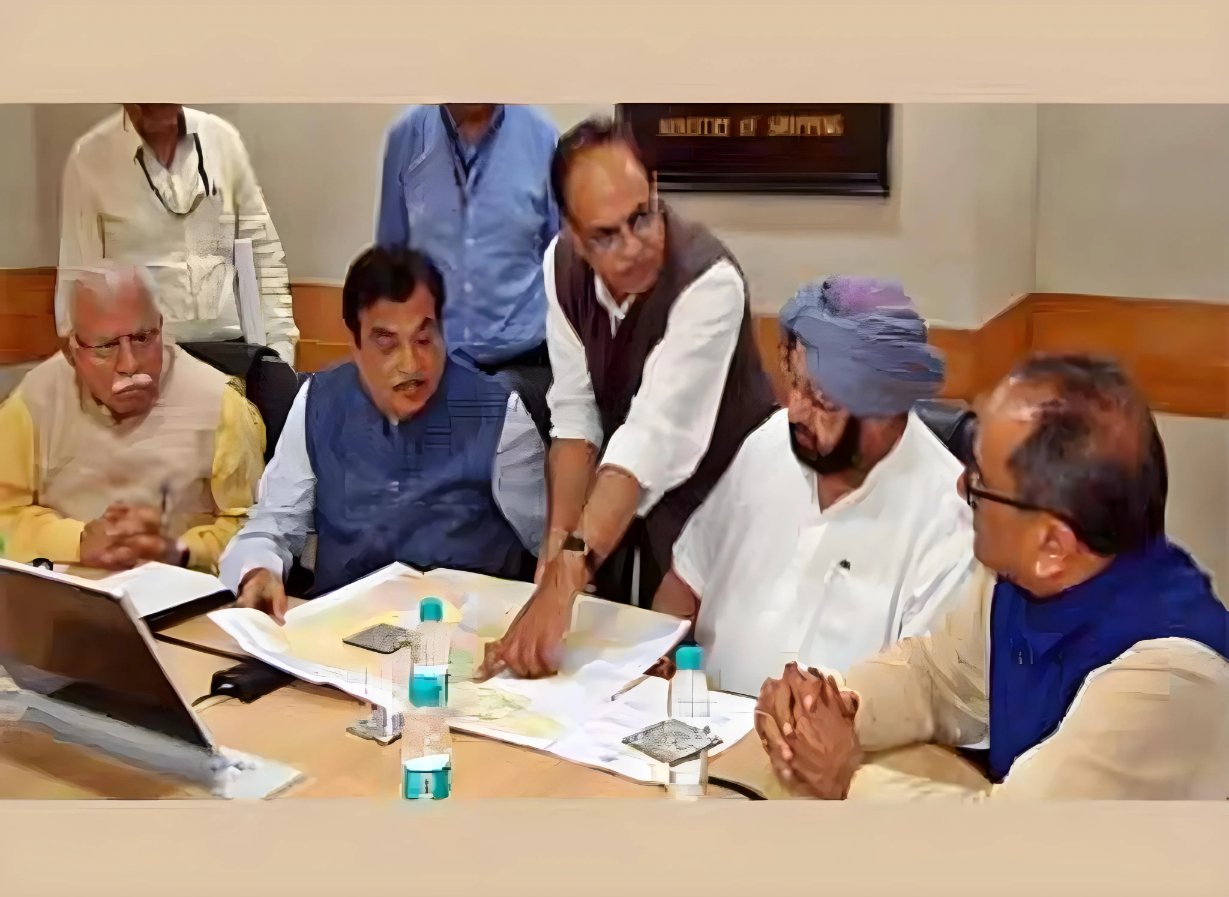
Photo By: Life in ChandigarhNonetheless, the BJP government in Haryana led by Chief Minister Manohar Lal, halfway through its five-year tenure, has prepared one such document “Haryana Vision 2030”. Apparently, the message to the people of the state is that the present government is going to last atleast that long – three consecutive terms.
An official media statement issued on the occasion said: “Aiming at holistic development of the state, including economic, social and environmental, and ensuring peace, quality of life and prosperity of its people, the state government has released Haryana Vision 2030 document, setting for itself firm targets, and a clear roadmap on how to achieve them.”
The Vision Document 2030, among other things, envisages increasing the Gross State Domestic Product (GSDP) to 9.8 per cent, setting up an industrial cluster in each district, creating 18 lakh job opportunities for the youth, raising the strength of skilled manpower by five lakh and ensuring 24-hour power supply in the state.
The statement claimed that seven working groups formed by the state government held about 60 brainstorming sessions to give final shape to the vision document, which has drawn on guidance provided by NITI Aayog and support and assistance extended by UN bodies.
The vision document was released by Chief Minister Manohar Lal on Tuesday. Among others present were state Finance Minister Capt. Abhimanyu, state Education Minister Ram Bilas Sharma, United Nations Resident Coordinator Diego Palacios and state Chief Secretary D.S. Dhesi.
The Haryana Vision 2030 indicators have largely been divided into three categories – economic, environmental and social. The economic indicators focus on increasing the per capita income to Rs 8,34,351 and ensuring participation of 30 per women in the work force in the state.
The environmental indicators include waste and garbage collection and arrangement of hundred per cent toilets and sewerage, 20 e-waste and solid waste management plants, renewable energy contributing 14.5 per cent of the total energy, complete ban on stubble-burning, setting up of 400 climate-smart villages, and check on the depletion of water table.
Similarly, the social indictors include zero malnutrition among children, housing for all, bringing down the Maternal Mortality Rate to 70 per one lakh live births, Neo-natal Mortality Rate to 12 per 1,000 live births, and under-five Mortality Rate to 25 per 1000 live births.
Besides, the vision document aims at hundred per cent net enrolment ratio at pre-primary level in schools, 97 per cent at primary level, and 95 per cent at secondary level, and bringing down the drop-out rate. It also lays stress on reducing crime against women in the state.
The official statement also quotes the Chief Minister as saying “During the last over two-and-a-half-years tenure of the present state government, we have prepared a roadmap for the development of the state.” But he goes on to say that (now) the state government is in the process of preparing a State Resident Data Base (SRDB) to ensure that only eligible beneficiaries get the benefit of various welfare schemes. A survey would (now) be carried out soon to ensure that new schemes and programmes are prepared in keeping with the needs and requirements of the people.
The private war between Shiromani Akali Dal (SAD) president and former Punjab deputy Chief Minister Sukhbir Singh Badal and flamboyant Punjab Local Bodies Minister and former India cricketer Navjot Singh Sidhu is threatening to spill on to the roads.
The ruckus and bad-mouthing inside and outside the Punjab Legislative Assembly during its last session, in which arch rivals, and the principal opposition parties, SAD and Aam Aadmi Party (AAP), appeared to have been working in cohoots, has in a sense added fuel to the fire.
Navjot Singh Sidhu
Photos By: Life In Chandigarh
Unexpectedly finding itself on the back foot within three months of its government taking over reins of the state, which should normally have been taken for granted as a honeymoon period by any government, the ruling Congress is apparently learning the hard way and going back to the basics – attack is the best form of defence.
Navjot Singh Sidhu may already have fired the first salvo. Apparently targeting the monopoly in Punjab of Fastway cable network, considered Sukhbir’s baby, Sidhu on Saturday cracked the whip, directing municipal authorities across the state to go flat out against illegal use of municipal properties by cable network operators for laying of cables and put a stop to it immediately. Uprooting of illegal cable infrastructure on a massive scale in the coming days cannot be ruled out following the order.
Sukhbir Singh Badal
In a statement released to the media, the minister said directions have been issued to the Commissioners of all Municipal Corporations, Executive Officers of the Municipal Councils/Nagar Panchayats and the Regional Deputy Directors of Urban Local Bodies to ensure that the rule of law is followed by all intending to make use of municipal property. Setting a sharp deadline, he has directed all these authorities to report such misuse, and action taken, by June 27.
Sidhu informed that it was brought to his notice in the Vidhan Sabha on Friday, that the cable network operators damaged municipal infrastructure like roads/streets/water supply/sewerage networks in their digging work for laying of underground cables. Anybody intending to use municipal property is required to take permission from the Municipal Corporation/Council/Nagar Panchayats and the concerned urban local bodies are required to charge fees for according such permissions, he said.
Sidhu has instructed all municipal authorities to verify if cable network operators within their respective jurisdictions had obtained required permissions and send copies of applications submitted by the operator and copy of permission granted along with proof of charges paid, if any, by June 27.
He has also make it clear to all municipal authorities that in case requisite permissions have not been taken or charges not deposited, then necessary action as per the municipal acts must be taken and a report sent by June 27.
Sidhu said he had also written to the Power, Irrigation, Information and Public Relations and Excise & Taxation Departments to initiate necessary action in this regard against cable network operators.
On Friday, to a question tendered in the Vidhan Sabha by MLA Sukhjinder Singh Randhawa, the minister in his reply had said that a probe into the cable network business had brought to light an unholy nexus which resulted in the loss to the tune of Rs. 500 crore to the state exchequer. He had named Fastway as a leading player in this business.
1...798081...105Page 80 of 105
|