Home Blog Page 72

Affordable Ownership & Rental Housing In Sharp Focus

0

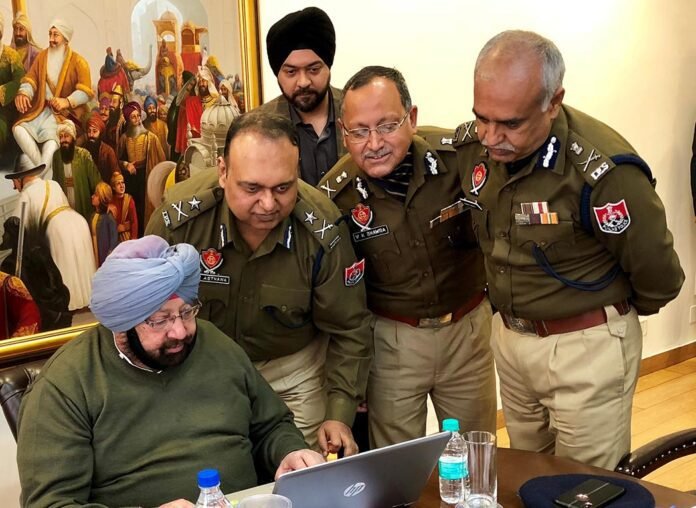
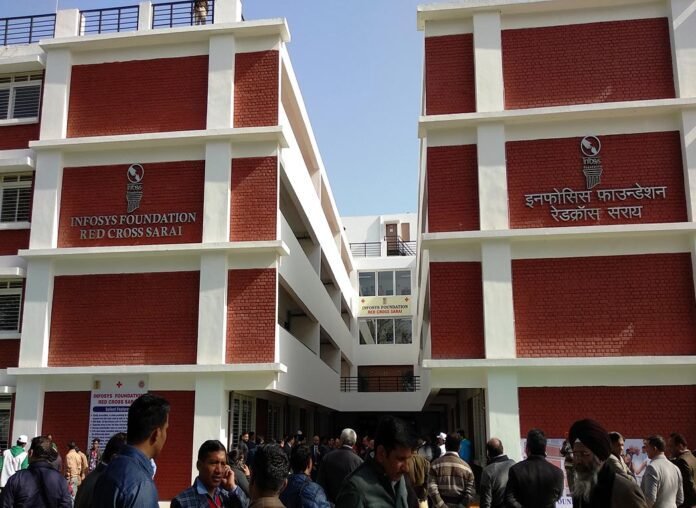
Faced with a massive shortage of housing, more than 90 percent of it in the affordable segment, the Punjab government, has decided to concentrate its energy and resources on incentivizing investment in this sector. Recognising the urgent need for rental housing, this segment will also be encouraged in the coming years. A group of ministers under the chairmanship of Health Minister Brahm Mohindra is already deliberating on finalizing a “holistic” policy on new housing and regularizing existing unauthorized housing colonies by ensuring minimum basic amenities for residents. At the same time stringent measures are being contemplated with the use of modern remote sensing technology to prevent new illegal colonies and constructions to come up.

As per National Building Organization (NBO) estimates, the housing shortage in the state in 2007 was 6.90 lakh units which grew to 12 lakh units in the 2011 census of India, of which 10 lakh units shortfall was in the urban areas. More than 90% of this housing requirement would be required for poor, economically weaker sections and low income group. This was the scenario in 2011 when 37.49 % of Punjab’s total population of 2.77 crore was living in urban areas. This percentage of urban population is estimated to jump to 50 percent by the year 2041, resulting in a near crisis if urgent steps are not taken immediately to increase inventory, especially in urban areas, at a fast clip.

Addressing these issues at a media interaction in the new year, Punjab Additional Chief Secretary Housing and Urban Development Vini Mahajan said the state government was set to unveil a special forward looking policy for affordable colonies in the next two months based on small sized plots with an enhanced saleable area.

Photo By: Life in Chandigarh

Recognising the need for affordable rental housing for students, senior citizens, professionals and labour class, Vini Mahajan said a special policy with provision for incentives to the private real estate developers in this direction is expected to be rolled out in the next three months.

Applications under the Punjab Shehri Awas Yojana-2017 had been received from all towns in the state and these were being scrutinized under the supervision of respective Deputy Commissioners. Benefits under the scheme would be launched by Chief Minister Captain Amarinder Singh on Republic Day, she said.

Regarding regularization of existing unauthorized colonies, the Additional Chief Secretary said a comprehensive policy, aimed at ensuring minimum basic amenities to citizens who had purchased properties in these colonies, was under the consideration of a group of ministers headed by Punjab Health Minister Brahm Mohindra and is likely to be finalized soon. At the same time stringent measures are being taken with the help of remote sensing technology and drones to prevent any more illegal colonies and constructions from coming up, she said, adding that regulatory wings were being set up in each of the area development authorities and Chief Administrators of these authorities had been given powers of additional director town and country planning for this purpose.

She informed that out of 1214 unauthorised marriage palaces in the state, 1150 had applied for regularization. Some had already been given a green signal by the state government after they fulfilled all necessary requirements, including fire safety norms, adequate parking facility, etc., and others would also get approval as and when they fulfill the criteria laid down in the policy.

Vini Mahajan said that the department had taken measures to improve the interface with the citizens. Starting from e-CLU services on a pilot basis for the Lalru master plan, e-auction across all area authorities, launch of an exclusive app to keep tab on illegal colonies and illegal construction and a PUDA mobile app, the department would this year also be adding e-approval of licenses for development of colonies and online building plan approval.

Coming to projects being taken up in Mohali, she said considering the prospect of increase in demand for housing near the International airport following the launch of international flights from there the process had been started by GMADA for aggregating 4,000 acres of additional land under land pooling policy for expansion of the Aero City project. Similarly, all other area development authorities had been asked to prepare demand based perspective plans for their respective areas to meet the ever increasing demand for housing and commercial sites and aggregate land through land pooling.

A request for proposal (RFP) had also been initiated by GMADA for inviting private parties to set up a Technology University on 50 acres in IT City Mohali, which will also get an ultra modern convention centre, alongwith Ludhiana and Amritsar in PPP mode. Steps are being taken to provide modern amenities like 24×7 water supply, smart water meters, solar power, tertiary treated water, rain water harvesting and adequate green cover in all future projects to be undertaken by the area development authorities, she added.

Anandpur Sahib is also to get a Special Development Authority for its planned and integrated development.

What Have The Guests™ Brought To The City ?

0

Officers coming on deputation from the central government, Punjab and Haryana make up the backbone of the top hierarchy of the Chandigarh administration. They do not lose an opportunity at national and international fora to wax eloquent about the pre-eminent place the Union territory, and joint capital of two states, holds in the pecking order of states and union territories in the country on various parameters, including the most important parameters of development.

But it would be worthwhile trying to understand what contribution they have made in improving the already well planned and well developed predominantly urban territory, thanks to the commitment of the visionary statesmen of the times and the town planners and architects whom they tasked with raising a mode new capital of post independence undivided Punjab.

Photos By: Life in Chandigarh
Having lived all my life in this once sleepy city, which used to virtually ‘go to sleep’ as it were by 7:00-7:30 pm, I can claim to have some perspective to this very important question. It is high time we addressed this question because not only Chandigarh, but also its adjoining villages falling within the jurisdiction of the Union territory, are threatening to slip into anarchy with the ‘guest babus’ indifferent to, and clueless about finding lasting solutions to the most pressing problems confronting this ‘10 km x 10 km’ territory, bursting at its seams.

No wonder they come out with grandiose cut-and-paste, quick-fix proposals without doing due diligence, and without involving the various stake holders in the planning process. The result, invariably these proposals fail to pass muster and are either withdrawn or put on the back burner. The recent proposal of charging up to 50 percent of the cost of a car as road tax for cars costing above Rs 10 lakh and on purchase of a second car, aimed at cutting down on cars in the city, is a perfect  example of this mindset. Now to say that it is only a draft and open to public comments does not cut much ice with the public.

Chandigarh has the good fortunate of having a large pool of retired and serving professionals and experts in just about every field of activity. What stops the administration from pooling their expertise on such matters. But no, the bureaucratic machinery would rather not dilute its authority in doing so. It is happy doing what it does best – resort to its whims and fancies and arbitrary ways.

Mode day problems require mode and out-of-the-box thinking, and taking people along. Unfortunately none of these is the forte of the administrative machinery. Moreover, if they can’t apply their own minds, they will not allow the fertile minds of other stake holders to work for them. They would rather appoint consultants at a considerable cost to the exchequer and then allow their reports to catch dust.

The most noteworthy among the few positives in recent years the union territory’s bureaucracy can claim is setting up of the e-Sampark Centres, where a host of government services were provided under one roof, long before the northe states, including Punjab and Haryana. The Rajiv Gandhi Technology Park (IT Park, for short) was also a good initiative, but appears to have lost its way somewhere along the line. UNESCO heritage status for the Chandigarh Capitol Complex is another achievement of the administration.

To some extent the expansive Botanical Garden and Nature Park spread over 176 acres of land in Sarangpur village on the outskirts of the city and the unique seven-acre spread Butterfly Park in Sector 26 can be called good projects, however they have failed to attract eco tourists, which was one of their major objectives.

For a mode city like Chandigarh, even after decades we are still struggling to prepare a data base of public and private properties and various public services, so very essential for long term future planning. We don’t have a plan to improve the efficiency of the public transport system, there is no parking policy in place, the promised citizens charter remains on paper, three-wheelers and cabs are swarming the city in the absence of effective monitoring and regulation, road maintenance is patchy, street lights keep playing the hide-and-seek game, daily sweeping of sector roads is a distant dream and maintenance of open spaces and the tree cover is reactionary, rather than routine.

In recent times we have seen the municipal corporation taking “firm steps” to set a few things right, and setting ‘dead’lines for their implementation, but it has become a laughing stock for all it has been able to achieve. The garbage processing plant issue continues to be a tho in its flesh, the segregation of waste at source is in limbo and the deadline for compulsory tertiary water connections for kanal houses is long past.

The priorities of the administration are also lop-sided, to say the least. Everyone in the administration appears to be focussed on making the city ‘Smart’. So we are witnessing massive deployment of resources on re-carpeting the cycle tracks and laying new ones without a cycle or cycle rickshaw plying on them. A least utility underpass for pedestrians is being constructed connecting sector 16 to sector 17 when the more important decade old proposal of constructing more than half a dozen underpasses for traffic at various congestion points in the city is still seeking an implementation agency.

Control over air and noise pollution, and tackling the issue of plastic waste doesn’t appear to be on the Administration’s agenda at all as the city waits for an emergency situation to arise and jolt the authorities out of their slumber.

The most urgent need of the times, of keeping a watchful eye on the roads and public places, especially in the wake of the challenging security situation arising out recent cases of rape, stalking and snatching, is also not getting the attention it deserves. In fact, the UT administration has a golden opportunity to focus on a time-bound 100 percent coverage of the city with quality high resolution cameras and zonal monitoring stations to make it the ‘Camera City’ of the country. It is bound to pay rich dividends in terms of providing people with a sense of security and bringing more decorum to the traffic.

Another glaring example of mindless action is the underutilised new and much touted multi level parking in Sector 17 developed at a cost of Rs 47 crore, while completely ignoring the maintenance and optimum utilisation of the original smaller multi level parking lots in the city.

The Sector 17 City Centre itself presents a sorry look with ill maintained buildings and lack of effective regulation. The government offices housed in the sector, apart from adding to the unkempt look of the buildings are also contributing their fair bit to the clutter of vehicles in the parking lots.

The utter neglect of sector 34 for years, which has prevented it from rightfully claiming its position as the city’s sub centre, is yet another example of the lack of foresight and commitment on the part of the bureaucracy.

There is no structured mechanism in place to monitor strict compliance of fire safety measures in buildings and the fire department lacks highly trained staff and mode equipment.
The pet dog byelaws remain unimplemented and the comprehensive scheme for management of stray dogs has proved woefully ineffective.

The presence of beggars is being allowed to multiply at a pace faster than the general population, and little hought is being given to wean them away through a well thought out and imaginatively designed rehabilitation mechanism. It’s a difficult proposition, but needs to be tackled head on in association with various NGOs, especially those working in the slum areas. ‘Skilling India’ is hotly being publicised in the country, why can’t it be applied on beggars with persistent persuasion, foresight and sensitivity.

We are still dependent on the rain gods for survival of the most precious possession of Chandigarh, the manmade Sukhna Lake. The state of the Sector 42 manmade lake is another example of somebody’s brainwave in the administration turning sour.

Though transit tourists are aplenty because of the city’s locational advantage, standing as it is on route to four states – Punjab, Haryana, Himachal Pradesh and Jammu & Kashmir, concerted and progressive steps have not been taken to create enough tourism assets to hold the tourists back for longer stays. The annual tourist calendar lacks a bouquet of imaginatively designed events to attract the attention of tourists.

Another lucrative opportunity, Convention tourism is also a non-starter in the absence of a world class convention centre, though the international airport has now improved connectivity with the world.

So where lies the solution to the future of the city seeking to retain its place in the Sun ? We, meaning all stake holders, need to put our heads together. Can we think radical and really out-of-the-box !!

One such whacky thought to set the pace for an animated discussion on the subject is laid out thus : Why not infuse a corporate culture in Chandigarh, with the elected representatives and Administration, in consultation with the stake holders, framing policies and setting directions while planning, execution and maintenance of projects, programmes and schemes is outsourced to reputed and time tested agencies under their watchful eye.

Let’s have informed thoughts, opinions, ideas, Please !! We are all in it together.

Natl. Security Strategy, Military Diplomacy & New Frontiers Of Warfare In Focus

0

Need for a clear cut and transparent all encompassing national security strategy, a greater role for military diplomacy within the overall framework of the national foreign policy and increased focus on the new frontiers of warfare like cyber and space came in for sharp focus on the concluding day of the two-day first ever Military Literature Festival, jointly organised by the Punjab Government and UT Chandigarh Administration in association with Army’s Western Command, at the Lake Club complex on Saturday.

Eminent experts participating in the session on ‘National Security Strategy’, moderated by Western Army Commander Lt. Gen. Surinder Singh, felt that the strategy, which had long eluded the country in the absence of political will, was all the more important for India, which found itself in a unique situation, sharing borders with its two nuclear armed adversaries working in tandem.

Former Deputy Chief of Army Staff Lt. Gen. Vijay Oberoi (retd.), while strongly advocating a formal, declared National Security Strategy, pointed out that in the absence of a clear cut objective before the country, and well defined roles of various arms of the government in different situations, there could not be effective cohesion between them towards achieving the defined goals. He did not mince words when he said, “Strategy is the opposite of crisis management, and the latter, unfortunately is what the country is all about. Till date we have only one strategy in place, the nuclear strategy that too is a draft strategy.”

Photos By: Life in Chandigarh
Session on ‘Military Diplomacy – The Indian Perspective’

Adding to this, the former Army Chief, Gen. VP Malik (retd.), while listing out various occasions since independence when the political leadership of the times had let down the country, said even after the Mumbai attack, the Parliament attack and the Kargil intrusion, the government had failed to roll out a well defined strategy to counter Pakistan. “If the country has continued to chug along despite facing various travails and tribulations all this while, it is because of the resilience of its people and professionalism of its strategic arms, including the armed forces,” he asserted.

Earlier, speaking on the subject, Lt. Gen. Aditya Singh (retd.), who had also been a member of the National Security Advisory Board, said a framework of the National Security Strategy had been prepared by the board but it never saw the light of day. He said a think tank he was part of had now prepared a National Security doctrine, which could be considered by the government.

In another session on ‘Military Diplomacy – The Indian Perspective’, moderated by Gen. Malik, he said greater participation of the armed forces in the decision-making process in military matters both in the Ministry of External Affairs and the Ministry of Defence would pay rich dividends to the country. But, while the External Affairs Ministry over the past 10-15 years had been appreciative of the important contribution the armed forces could make in such a decision making process, the same could not be said for the Defence Ministry, he maintained.

Dwelling on the stellar role played by the Indian armed forces in various UN peace-keeping operations, the importance of joint exercises held with the armed forces of other big and small countries and the significant contributions of military attaches in various Indian embassies abroad, the panellists felt that as a strong Asian power, aspiring to be a world power, India needed to raise the bar in these indulgences to showcase its pre-eminent position on the world stage.

Session on ‘New Frontiers of Warfare’

Sharing his experiences as a military attaché, Lt. Gen. SR Ghosh (retd.) stressed the need for attaching area specialists from within the armed forces to the military attaché for more effective military diplomacy with countries of deployment. He was all for high visibility, all-services exercises with foreign powers to send across a powerful message of India’s capabilities to its adversaries.

Maj. Gen. MP Bhagat (retd.) recounting the role of the Indian armed forces under his command in UN peacekeeping operations in Somalia, which was rated the best among all other powers participating in the mission, felt that Indian forces were better equipped than those of other world powers since our men were thorough professionals, compassionate and more enduring. 

All the panellists, including Lt. Gen. HS Lidder (retd.), felt that India could not hope to become a great world power till the time it changed from a reactive country to a proactive country. Lt. Gen. Lidder felt for a thaw in Indo-Pakistan ties direct official dialogue between the Army chiefs and DGMOs (Directors General of Military Operations) of both countries should be given a shot. Creation of hot lines between them alone was not enough, he added.

Emphasising on the overriding importance of space and cyber warfare as the fourth and fifth dimensions of new age warfare in the session ‘New Frontiers of Warfare’, moderated by former Western Army Commander Lt. Gen. KJ Singh (retd.), the panellists, including Lt. Gen. VK Saxena (retd), an expert on unmanned warfare, Col. RK Tyagi (retd.), expert on cyber warfare, Ajay Lele, expert on space warfare, and Dr. (Mrs) Manpreet Sethi, expert on nuclear warfare, felt that this techno warfare would dominate the wars of the future and no country could afford to lag behind rapid developments in these areas.

Stressing that there were ethical issues involved in these new frontiers of warfare which needed to be debated in depth at the international level, the experts felt that India should keep itself abreast of all developments happening in these fields and timely prepare remedial measures so as not to be taken unawares in case of countries like China or Pakistan resorting to unethical use of these warfare tactics in contravention of international laws and conventions.

Hard Core Issues & Soft Side Of Military Life Discussed

0

From hard core issues like ‘Strategic Perspective – China’, ‘IPKF in Sri Lanka’, ‘Role of Indian Armed Forces in World War II’ and ‘Counter Insurgency Operations in Jammu & Kashmir’ to a soft subject like ‘The Joys & Dilemmas of Being A Military Family’ the opening day of the two-day first ever Military Literature Festival, jointly organised by the Punjab government and UT Chandigarh Administration in association with the Indian Army’s Western Command at the Lake Club in Chandigarh on Friday, had it all.

After a full house at the inauguration, where Punjab Governor VP Singh Badnore declared the festival open, the sessions on various topics, which commenced simultaneously at four different venues, attracted audiences well below the expectation of organisers. At least one session also saw three of the five expert panellists missing, forcing the other two to proceed after a long wait for their co-panellists and greater audiences. Perhaps the organisers got their format wrong and spread themselves too thin for a first time event.

Photos By: Life in Chandigarh
The only three living Param Vir Chakra (PVC) recipients, Capt. Bana Singh, Naib Subedar Sanjay Kumar and Subedar Yogender Yadav being honoured at the inauguration.

The discussions during the session on ‘Strategic Perspective – China’ centred around the Dragon’s rising ambitions to become the unchallenged powerhouse in Asia and a world superpower equivalent to the USA, and the need for India to engage with it diplomatically while strengthening ourselves militarily to be able to fend off any aggressive posturing by the neighbouring country.

In the discussions, moderated by former Eastern Army Commander Lt. Gen. Parveen Bakshi (retd.), Former diplomat G. Parthasarathy strongly advised that China needed to be tackled with patience. He advocated thorough revamping of the Defence Ministry, which was proving to be a big obstacle in the way of speed procurement of critical armaments by the defence forces.

Session on ‘Strategic Perspective – China’

Maj. Gen. BK Sharma (retd.) and Lt. Gen. JS Bajwa (retd.) emphasised that India needed to proactively rework its strategies to counter balance China’s growing influence in Asia.

Gen. Bakshi however sounded a positive note saying India’s firm response during the Doklam standoff had sent a strong message to China that it could not play around with India.

Moderating another discussion, on ‘IPKF in Sri Lanka’, Lt. Gen. Depinder Singh (retd.), who led the Indian Peace Keeping Force to the island country,  wondered what political aim the Rajiv Gandhi led Indian Government was wanting to achieve by sending the Indian forces there – was it to defend the LTTE or to protect the political integrity of Sri Lanka ? He said the war proved a big blooding exercise for the Army which had not seen battle since the 1971 Indo-Pak war but at a very heavy cost to the country in terms of men lost, injured or disabled in action (1500 men lost their lives and 3,000 others were wounded). The individual training of soldiers was found wanting during the entire three years of operations, he observed.


‘IPKF in Sri Lanka’

Vir Chakra awardee Col. Anil Kaul (retd.) shared his memories of a grim battle when his tank sub-unit was tasked with bailing out para commandos from a   difficult situation against the LTTE cadres. He himself was seriously injured in the gun battle and remained medically unattended for 18 hours in his tank. The operation was a success, but it was a horrifying experience as bodies of 35 our men who lost their lives in battle were burnt by the LTTE cadres using engine oil.

Participating in a session on ‘Role of Indian Armed Forces in World War II’, Lt. Gen. PK Singh (retd.), British writer Alan Jeffreys, Indian military writer Pushpinder Singh Chopra, Panjab University professor Rakesh Dutta and journalist Rahul Bedi while acknowledging the fact that the Indian armed forces, especially the Army, gave a very good account of themselves during the second World War, felt that their achievements were only now being officially recognised the way they should be. It was pointed out that the Burma campaign, which resulted in the biggest land defeat of the Imperial Japanese Army till then, was in fact largely spearheaded by Indian soldiers.

‘Role of Indian Armed Forces in WW II’

The session on ‘Counter Insurgency Operations in Jammu & Kashmir’, moderated by former Northern Army Commander Lt. Gen. BS Jamwal (retd.), threw up an interesting hypothesis. Speaking on the subject, Maj. Gen. Dilawar Singh (retd.) asserted that though the Indian forces were conducting counter insurgency operations in the state “they were not countering insurgency.”

Giving a couple of personal examples, when he was posted to Kashmir, he claimed that in one case he engaged the religious leaders in 63 villages under his command in a discussion on ‘Jihad’ following which not a single youth from these villages left his home to join the so called ‘jihad’. In another case he was able to persuade local population to engineer the return of two boys who had left their homes to join the ‘jihadis’. When he returned to the area 12 years hence he felt satisfied that the commitment of the villagers was holding and the two boys were happily settled in their lives, Maj. Gen. Dilawar maintained.

While Lt. Gen. Jaswal asserted that there was a vast improvement in the Kashmir situation since 1990, when every house in the valley had a Pakistani flag atop its roof and youths in the thousands had crossed over to the other side of the border, Lt. Gen. JS Cheema, who recently retired as Deputy Chief of Army Staff, felt that while the armed forces were reasonably successful in keeping control over the security situation in the valley, ultimately a political solution had to be found to the Kashmir problem.

‘The Joys & Dilemmas of Being a Military Family’

Lt. Gen. AC Suneja (retd.) stressed the need to keep up the pressure on the insurgents in the Valley while advising security forces to be extremely respectable towards elders when they conduct cordon and search operations in the hinterland.

In the session ‘Joys and Dilemmas of Being a Military Family’, moderated by Maj. Gen. AK Sengar (retd.), Army wives Mrs. Daulat Oberoi and Mrs. Rita JP Singh and Army daughter Mrs. Ashali Verma, while asserting that there could not be a more fulfilling life than in the Indian armed forces, felt that with the aspirations of the Indian women, including wives of military officers, rising there had arisen a big challenge to balance their responsibilities as military wives and their personal careers. Mrs. Rita JP Singh, particularly, felt that the new age women were competent enough to strike a balance between both roles.

Rev of Hundreds Of “Big Birds” Salutes Military Martyrs

0

A spectacle of this kind may never have been seen in the Chandigarh tricity before. More than 300 big birds – high powered motorcycles of the likes of Harley Davidsons, Triumphs, Indian Chiefs, BMWs, Ducatis, Benellis, KTMs, Yamahas, Kawasakis, Suzukis, Hondas and Royal Enfield – revved into life all at once near the War Heroes Memorial in Sector 3 on Sunday to participate in the ‘Bravehearts Ride’ for the Military. The cavalcade of 317 super bikes (far beyond the organisers’ expectation of 200) traversed a distance of 41 km through Chandigarh, Mohali, Zirakpur and Panchkula before coming to a rest at the Chandimandir cantonment to raise a pitch for the first ever Military Literature Festival to be held from December 7-9. The event is jointly being organized by the Punjab Government and UT Chandigarh Administration.

Coinciding with the Armed Forces Week being celebrated in India from December 1-7, the Ride began with a representative of the bravehearts laying a wreath at the memorial. Lt. Gen. TS Shergill (retd.), Senior Advisor to Punjab Chief Minister Capt. Amarinder Singh, also laid a wreath on behalf of the Punjab Government, as an Army contingent from Chandimandir reversed arms in memory of soldiers who laid down their lives for the country in the line of duty.


Photos By: Life in Chandigarh


A welcome cup of tea, and off they were, ones and twos at a time, leaving behind an all pervading smell of gasoline. As per last count 400 professional riders, including 10 women, some of them riding pillion, were flagged off by Gen. Shergill. Organisers informed the media that members of several bikers’ groups participated in the Ride, including Armed Forces Harley Owner Group (AFHOG), Road Rockers, Free Riders, Harley Owners Group (HOG), Royal Enfield Prium Cafe, Harley Davidson Chandigarh, Saddle Back Warriors, Team Mojo Mahindra, Prium Cafe (Royal Enfield), Indian Chief and Kawasaki. The Ride was coordinated by Col. NKS Brar.

Piloted and escorted by police vehicles, with an ambulance taking up the rear, the bike riders traversed the entire route at a controlled speed of 40 km per hour attracting curious onlookers en route. The memorable event came to a close with another round of well deserved refreshments at the cantonment.

Programme Of Upcoming Events

Audio Visual Shows:    5-9 Dec    Lake Club Area    7 a.m. – 11 a.m. & 3 p.m. – 7 p.m.

Akash Ganga Sky Diving:    5-6 Dec    Lake Club Area & Sectt. Ground    3 p.m. – 5 p.m.

Band Displays:    5-9 Dec    Lake Club Area    7 a.m. – 11 a.m. & 3 p.m. – 7 p.m.

Equitation Tattoo (Horse Show):    6 Dec    Sectt. Ground    2:30 p.m. – 5:30 p.m.

Motorcycle Daredevils:    7 Dec    Madhya Marg, Sectt. Ground, Uttar Marg, PU    3:30 p.m. – 5:30 p.m.

Paramotor Display (Paragliding):    5-7 Dec    Uttar Marg, Madhya Marg, Near Lake Club, Sectt. Ground & PU    11 a.m. – 1 p.m. & 3 p.m. – 5 p.m.

Military Literature Festival:    8-9 Dec    Lake Club    10 a.m. – 6 p.m.

Something Nice & Trendy To Suit Every Taste

0

Looking to set up a new home or give its interiors a makeover for the New Year. The ‘Furniture & Home Decor Expo 2017’, which opened at the Sector 17 Parade Ground in Chandigarh on Friday, may have something nice and trendy to your liking. There’s a fairly wide range of both ethnic and modern indoor furniture, garden and outdoor furniture and furnishing and decor items, besides the usual household utility stuff at the four day expo which is on till December 4. Timings 10 a.m. to 8:30 p.m.

The indoor exhibition, put up by Bangalore-based ‘I Ads & Events’ in an area of 1300 sq mts, has exhibitors participating from across the country. Though some of the exhibitors were still in the process of unpacking and displaying their wares when Lifeinchandigarh.com visited the expo on Friday afternoon, we bring you the best of the displays.
 

rn


rn

Photos By: Life In Chandigarh
 
A young entrepreneur from Delhi Honey Khullar, who started his enterprise Greenline Italia four years ago, has brought a range of modern furniture, designed and crafted indigenously (he proudly claims he is promoting Make in India). We saw on display an impressive dining table set with botticino fiorito Italian marble table (skeleton of ply board and flesh of marble), The 5X5 feet dining table set comes at best price of Rs 1.60 lakh, including 18 percent GST. 
 
Another equally impressive dining table set has the flesh of world class Onyx marble. The 8X4 feet dining table set comes for Rs 1.85 lakh.
 
An eight-piece sofa set using high grade leatherite fabric and exclusive vintage polish on wood caught our fancy. The sofa set comprising a three-seater, two one-seater sofas, two pouffes and a center table has a prize tag of Rs 1.50 lakh.
http://greenlineitalia.com/
 
The furniture at most of the stalls is not for immediate sale and has to be pre-booked.
Chennai-based Kreative Comfort has brought in moulded teak and sal wood furniture with different fabrics. The range for a 9-seater sofa set and a center table is from Rs 1.35 lakh to Rs 1.75 lakh, inclusive of GST and doorstep delivery in Chandigarh only.
 

rn

 
Nawab brand of Delhi has on offer an exquisite range of hand carved pure teak wood furniture in Rajasthani style. Our eyes remained glued to a ‘jhula’ and sofa set (3-seater sofa, 3-seater couch and a centre table) with a price tag of Rs 6.5 lakh, excluding GST and packing and carriage charges.
 
Indian Handicrafts had on display a range of wooden furniture with intricate metal engravings. Noteworthy among the displays are dining table sets, centre tables, double beds, set of different sized decoration tables and ethnic wooden trunks.   
 
The organiser has his own stalls too, one of which has a range of impressive imported outdoor and garden furniture, including gazebos (outdoor huts) with seating, LED lit garden umbrellas and swings. The range from Rs 13,000 (LED umbrella) going right up to Rs 1.10 lakh (12-seater gazebo).
 
Ruchira Aggarwal of Shapes & Shades from Ghaziabad has displayed a whole lot of beautifully crafted sculptures made of terracotta and poly stone ranging from Rs 750 to Rs 2-2.5 lakh. A terracotta Buddha is a special attraction. But Aggarwal politely refused photography of his creations.
 
Saharanpur based Abu Fazal Exports on their first outing to Chandigarh have brought a range of exquisitely carved sagwan wood furniture. We couldn’t take our eyes of a Rs 1.50 lakh sofa set, such was the quality of craftsmanship on it. 
 
For wall hangings and other decorative items, the stall of Rajasthan based Fanusta Global attracted our attention. Talking to its owner Ekta Pareek revealed a movement for women’s empowerment called Diva’s as being instrumental in creating the beautiful pieces of art. The organisation runs a factory in Jodhpur and has two sale outlets in Jaipur. Diva’s is looking for partnerships with women entrepreneurs and organisations in Punjab, Haryana and Himachal Pradesh to extend its activities. The range of wall hangings and other decorative items is from Rs 300 to Rs 15000.
 

rn

 
Talk of Rajasthan without marble is incomplete. The Incredible Art brand from Gangapur city in Sawai Madhopur district of Rajasthan has brought several sculptures in white marble. From small creations to as large as 8 feet high, they have so much in their collection. Elephants, horses, lions, panthers among animals, to fountains, lamps and fruit baskets, the range is extensive. There’s a matching gulf in the price range as well – from Rs 250 for a small sized elephant to Rs 4.5 lakh for an eight feet tall horse.
 
So reach out, and get satiated.
 

rn

rn


rn

rn


rn

rn


rn

rn


rn

rn


rn

rn


rn

rn


rn

rn


rn

rn


rn

rn


rn

rn


rn

rn


rn

rn


rn

rn


rn

rn


rn

rn


rn

rn


rn

rn


rn

rn


rn

rn


rn

rn


rn

rn


rn

Congress Leader Seeks To Strengthen Political Base In City

0

It wasn’t the first launch of Congress leader and former Union minister Manish Tewari’s latest book “Tidings of Troubled Times” – it had already been released in the national capital nearly two months ago. But apparently looking for opportunities to strengthen his political base in his home town, where he had first emerged as a student leader, he chose to hold one launch of the book in Chandigarh as well. The invitation for the event, held at the English Department auditorium of Panjab University on Thursday, had mentioned that Punjab Chief Minister Capt. Amarinder Singh will be present, but he did not turn up. “I believe he has been caught up in more important matters than a mere book launch,” Manish Tewari remarked, clearly disappointed with the development.

A promo of the book on Amazon.com describes it as a collection of the writer’s articles published (in leading newspapers) in 2016-17. Among the areas he largely focuses on are the new surge of the religious right, turmoil in the Kashmir Valley, legal affairs and the country’s foreign-policy dimensions. Many of these articles appeared in the Indian Express, Hindustan Times, the Asian Age and the Quint. Tewari had earlier authored another book ‘Decoding a Decade: The Politics of Policymaking’.

Photo By: Life in Chandigarh

In conversation with Indian Express Resident Editor Nirupama Subramanian, after the launch of the book, Tewari reserved bulk of his political punches for the BJP saying right through the 42 months of the Modi led NDA government there has been a deliberate attempt to muzzle freedom of speech and expression guaranteed in the Constitution as a fundamental right. Any criticism of the establishment, including the military establishment, is being dubbed as anti-national and seditious, he maintained.

Under the circumstances the civil society has to be extremely vigilant and thwart all attempts to polarise the people on every conceivable issue. He said the resent reverses suffered by the BJP in the students union elections in some universities and the turning tide against the ruling party on the social media are indications of a changing mood in the country, which needs to be encouraged if sanity has to prevail.

He also suspected that the belligerent campaign against the Hindi movie ‘Padmavati’, even before its vetting by the Censor Board, was a ploy to polarise the voters in the run up to the Gujarat elections and he won’t be surprised if the whole hullabaloo over the movie dies down after December 14.

Tewari insisted that the President and the Vice President need to shed their rubber stamp tag and act as activists against flagrant and clear violations of the provisions of the Constitution by the government.

In this connection he thought former President Pranab Mukerjee should have stood up against the dismissal of the Uttarakhand government and postponed the action till after the trust vote was done.

He also mentioned the episode when while demitting office Vice President Mohd. Hamid Ansari observed that the minorities were feeling insecure. While Ansari was right in saying so, what stopped him from voicing these views all the more than three years the same atmosphere was prevailing, he asserted.

Regarding the Indo-Pak relations, Tewari said he did not see any major breakthrough in the logjam till the time that the Indian government and the Pakistani Army was fully on board in any parleys.

On Indo-China relations, he said it was in the interests of both India and China to maintain friendly relations. India had to strike a balance in its relations with US, USSR and China and not lean too heavily on any single power, he added.

Earlier, introducing the book Dr SK Sharma, Prof. Emeritus, Energy Research Centre, Panjab University, said the articles carried holistic views on vital contemporary issues faced by India from within and without. These include institutional challenges, state of nation, and freedom of speech, impact of geopolitical environment and role of super powers in the country’s neighbourhood.  

Dr Sharma said Tewari discusses every issue not only from the present perspective but provides historical background to present a clear picture to the reader.

The writer looks at the issue of triple ‘talaq’ not from a religious perspective, but an entire new one by tracing the history of great injustice towards women starting with ‘sati pratha’, which the reformists at different times fought against, Sharma informed.

Humour & Valour Go Together In Tense Conflict Situations, Its Amazing !!

0

A young Army officer, now a much retired Lieutenant General, in good old times joins his new posting in a remote pocket of Dimapur district in insurgency infested Nagaland state after travelling a week by air and road, and the last miles walking. Even before he has time to put up his legs to unwind, he is jolted into action hearing firing from outside. He rushes out and sees the jawans returning the fire. He asks the nearest jawan what is happening. A militant attack, he is told. Do we know the position from which the fire is coming, he asks and promptly comes the reply, No Sir !! Then what are you firing at, he asks. “Sir, ainna nu daraana tain hai naan (Sir, we have to frighten them in any case). The officer is stumped. The attack is subsequently repulsed.

This and many such instances of Punjabi humour in the thick of action were related by Lt. Gen. JL Malhotra (retd.) from his personal experiences while speaking on the subject “What Indian Army Jawan is Made Of ” on the concluding day of the two-day Military Parley at the auditorium of Sector 10 Govt. Museum & Art Gallery on Wednesday. The parley was organized in the run up to the first ever Military Literature Festival to be jointly organized by the Punjab Government and UT Chandigarh Administration from December 7-9.

Photos By: Life in Chandigarh
Reciting another incident in another sector, Gen. Malhotra said following withdrawal of his battalion from an operation, the following day he saw a young officer bleeding through his pants and asked him what had happened. “Sir, marihh jaei chhutaran vich chhot laggi hai (Sir, have received a slight wound in the buttocks),” was a casual reply from the officer. When the superior insisted on seeing the wound and the young officer’s pants were lowered he was aghast to see a gaping hole in the back and the officer’s undergarment stuck in it.

The officer was asked why he did not report to a doctor and the reply surprised the superior, “Sir, had I gone to the doctor I would have been withdrawn from the battle front for treatment, and I do not want to miss the action.” On the superior’s assurance, he was treated properly and allowed to continue in battle front positions. The wounded officer during the withdrawal had walked 15 kms and waded through the ice cold water of a river.

Lt. Gen JL Malhotra
Such humour and valour you won’t see anywhere but in the armed forces, Gen Malhotra proudly told the audience, which also included a large group of school students.

Bridging the Gap

Speaking on “Bridging the Gap” between the armed forces and the civil society, Col. Avnish Sharma (retd.) cited another example of the never say die spirit of the men in uniform. A squadron leader sustained multiple fractures in his ribs, legs and arms while ejecting in a MiG crash. Recuperating in hospital, he requested for a drink from the hospital staff, which was declined. But he insisted on being given Rothmans cigarettes, a favourite with Air Force officers, and this time he had his way.

Col. Avnish Sharma
Col Sharma recollected another mirthful moment in the context of army service as a cadet, when their instructor while introducing himself said he was a man of climax and anti-climax. When we asked him how, he replied my first and middle name Jang Bahadur (martial name) is the climax, the anti-climax being my sir name Sharma (pandit).

Unexpected Commission

During an intervention Col. Gurmukh Singh (retd.), now settled in the US, related the most unusual of happenings which won him an unexpected commission in the Army. Coming from a rural background with little proficiency in spoken English, but with some determination, he was a surprise last inclusion in the list of 22 candidates declared passed in the first round of the test.

Since he was hard of hearing from one ear, he was sure to be rejected in the medical. But a day before, family friends helping him out showed him to an ear specialist who cleaned up his ear and promised that his hearing impairment will remain undetected for at least a month. Lo and behold out of the 22 candidates who underwent the medical test 20 candidates failed and Gurmukh was the only one to be given an all clear, while the remaining one candidate was asked to reappear for the medical after a month.

Military Industrialisation

Making a pitch for innovation and out-of-the-box thinking for simple solutions to problems in his topic “Military Industrialisation”, Maj. Gen. Surjit Singh (retd.), who after his retirement has worked with the industry, said the combination of user (armed forces), industry and the academia could go a long way in achieving this goal.

Maj. Gen. Surjit Singh
Giving a perfect example of innovative thinking by troops on the ground, he said a ropeway was built following the collapse of a regular bridge across a river on way from Gangtok to North Sikkim. The ropeway was at a gradient to allow carrying of heavy loads of supplies up to 150 kg aided by gravitational pull.

Another example he gave was of simulators for training in throwing grenades, especially for cadets, which was developed after years of trying to convince superior officers to go for it to prevent casualties.

Different Perspective

Giving a presentation on “Kargil War – Different Perspective” Brig. Harwant Singh (retd.) felt that India despite winning the Kargil War gained practically nothing, while Pakistan Army got a psychological boost from their perspective that six battalions strength of their Northe Light Infantry were able to tie down a hugely larger Corps strength of the Indian Army.

Brig. Harwant Singh
By not crossing the line of control (LoC) even during the battle, India also proved the Pakistani Army’s pre incursion assessment to this effect right and thus further emboldened their covert operations of pushing in cross border terrorists, which was evident from the increased and more audacious attacks in Kashmir, the brigadier asserted. He suggested that India should have pressed home the advantage after recapturing strategic heights and reclaimed some of the lost territory across the LoC. By prolonging the battle India could also have hit at another weakness of Pakistan, its economy, which was already in shambles then, he maintained.

Ruing the fact that the country had repeatedly been taken by surprise and found under-prepared in conflicts right from independence – in the 1947 incursions by Pakistani tribals, the 1962 Chinese aggression, the 1965 war with Pakistan and the Kargil war – he made out a strong case for the Indian government and the military establishment to pledge that they will never in the future be taken by surprise and will not be found underprepared again.

Mental Mobility

Citing several personal examples of anti-insurgency operations in Kashmir, where terrorists were hit with excessive firepower than is normally used under the circumstances, with little or nil casualties of armed forces, Col. Krishan Yadava (retd.) in his talk “Mental Mobility in Counter Insurgency Operations” felt that the lower leadership should be given ample freedom to act as per the demands of the situation to minimize casualties.

Col. Krishan Yadava
He also gave the example of a JCO (junior commissioned officer) using his presence of mind to single-handedly engineer the surrender of nearly half of the 13 odd terrorists who had infiltrated into Kashmir by making them believe that they had been surrounded and would be mowed down. Three others holed up in a village were also later captured with the cooperation of the local population. A huge cache of warlike arms and ammunition were recovered from the captured terrorists, he added.

Counter Attack

Maj. Gen HC Sachdeva (retd.) while sharing his experiences of “Operations in the Amritsar Sector” during the 1971 war with Pakistan emphasized the importance of a quick counter attack to press home the advantage of the disarray in the enemy ranks after being forced to retreat in the face of a gutsy defence. Heavy casualties were inflicted on the enemy in this counter attack with far less casualties on the Indian side, he said, claiming that it was the first time a team  of the Border Security Force fought alongside the regular army and even won a Vir Chakra in the process.

Maj. Gen HC Sachdeva
Siachen Occupation

Defending his decision to launch Operation Meghdoot in 1984, under which helicopters were used to drop Indian soldiers onto the Siachen glacier, where heights reach up to 28,000 feet, Lt. Gen. PN Hoon (retd.), who was the Core Commander in Srinagar then, in his impromptu talk said it was necessary to preempt the occupation of the heights by China, which would have given them an offensive and strategic advantage over India.

Lt. Gen. PN Hoon
He advocated sharing of decades of operational experiences of war and conflict gathered by various formations of the Indian Army with the newer battalions so that the lessons learnt are absorbed and not lost sight of.

Defence Production

Lt. Gen. JS Dhillon (retd.), who remained Director General Quality Assurance (DGQA) Defence, was firm in his belief that maintenance of very high standards of quality assurance was required in arms, ammunitions, equipments and stores supplies to the armed forces to maximize results and minimize casualties. No concessions whatsoever should be given to ordnance factories and other public sector undertakings on this score, he asserted

Lt. Gen. TS Shergill
Communication Skills

Emphasising on inculcating communication skills, both verbal and written, among officers in the Indian Army to be make them more effective in their leadership roles, Col. RD Singh (retd.) in the course of his talk also attracted the attention of the school students to the issue by engaged them in word puzzles, which they answered with aplomb, winning chocolates as rewards.

Among others who spoke, Capt. Amarjeet Kumar (retd.) threw light upon his experiences during the 1971 Bangladesh war and the role played by the indigenous resistance army, the Mukti Bahini. Flight Lt. (retd) GS Jawanda gave his insights into the naval and air operations, especially of the Easte Command, during the 1971 war, Col. JDS Jind (retd.) spoke about overcoming the unexpected challenges of mine clearing operations in the Shakargarh sector, and Brig. IS Jakhal (retd) gave graphic details of operations undertaken by the 1st Sikh in driving out the marauding Pakistani tribal insurgents from Kashmir in 1947, which won it several war decorations.

Punjab Boys In Academies

Maj. Gen. BS Grewal, Founder Director of the Mohali-based Armed Forces Preparatory Institute, listed out the achievements of the institute, which, during the just six years of its existence, has already placed 83 of its trainees in various military academies like NDA and IMA. By doing so it had helped restore some of the glory of Punjab, which was once considered the sword arm of the country but which gradually was heavily losing numbers in these academies, he added.

Senior Advisor to the Punjab Chief Minister, Lt. Gen. TS Shergill (retd.) remarked that the success of the pre events augured well for the success of the Military Literature Festival, prior to which a massive motorcycle rally “Braveheart Ride For Military” will be organized on December 3, in which riders on 200-odd Harleys and other big bikes are expected to participate.

Veterans Recount Bittersweet Memories Of War

0

There is very little happening in the country which instantly makes us feel pride in ourselves as a nation, except perhaps the exploits of our national team on the cricket field and the strides taken by our scientists involved in our famed space and missile programmes. But enter a hall where ‘fauji’ veterans are discussing India’s military history and your pride touches a high point.

School students listening into several such stories of grit and valour against all adversities, of the spirit of do or die for the country, of sacrifices, of victory, defeat and reverses, left them in awe of the brave hearts on the first day of the two-day Military Parley organised at the Sector 10 Government Museum and Art Galley auditorium on Tuesday. The parley is part of a series of activities being organised in the run up to the first ever Military Literature Festival to be held from December 7-9.

Photos By: Life in Chandigarh

The topics touched by war veterans, including Army generals, brigadiers, colonels, a squadron leader and a wing commander of the Air Force, ranged from the relevance and status of the armed forces in society, man or machine who matters most, successful operations like Operation Cactus and Battle of Haji Pir, lessons from Kargil War, military humour, bomber operations deep inside Pakistan in the 1971 war, operations in Siachen, and the Trishna expedition in which an army adventure team sailed across the world in a relatively small yacht amidst the treacherous seas.

Among the other topics were Battle of Chawinda in 1965 in which the Indian Army suffered serious reverses, operations of 1st Jammu and Kashmir Rifles in the Bangladesh war, the Battle of Bumla during the 1962 India-China war in which the ill-equipped and ill-prepared Indian forces were vanquished despite displaying exemplary bravery on the battlefield, experiences of the 50 Para (independent) brigade during the 1965 war in the Kutch area of Gujarat and Lahore. There were also talks on the impregnable Ambala air base during the 1965 war, the Hazratbal operations and training of the Indian infantry.

Setting the stage for the parley, Lt Gen. Bhopinder Singh (retd), former Lt. Governor of Andaman and Nicobar and Puducherry, said with new dimensions being added to warfare like nuclear, space and cyber, countries were forced to expand their armed forces depending upon their threat perception. Maintaining that India’s large standing Army commanded high respect in the eyes of the common man ever since Independence, he rued the gradual degradation and devaluation of the armed forces under successive governments.

Sharing an instance of the spirit of love displayed by common citizens for the Army during the 1965 war, he said people thronged railway stations to give us food. When our forces advanced on the borders, farmers marched behind us insisting that when the Indian forces capture Lahore they would bring back buffaloes as souvenirs.

Lt. Gen. VK Dhir (retd) stressed the need to think beyond the clichéd dictum that the man behind the machine is more important than the machine, because the pace at which technological advancements were overtaking battlefield scenarios was mind-blowing and no country could afford to be a laggard in adopting the latest warfare technology. The time is not far when a B.Tech.  degree could become mandatory for joining the armed forces, he added.

Strongly advocating scrapping of the ordnance factories, which he claimed had failed to deliver quality military hardware, he called for establishing military industrial complexes with the help of the private sector, asserting that the country could trust in it to deliver cutting edge technologies as per requirements of India armed forces. How long can we remain dependent on other countries for our own security requirements, he asked.

Rooting for greater allocation of funds for the defence forces for rapid modernisation, Gen. Dhir suggested that the government could also consider pruning the large standing army of the country, which consumed 85 percent of the defence allocation, to make it lean and mean.

Squadron Leader PPS Gill (retd) shared graphic details of two successful daring bombing operations during the 1971 war in which Canberra bombers of the Indian Air Force inflicted considerable damage upon the heavily defended Karachi airbase and naval base.

Brigadier RJS Dhillon (retd) spoke about Operation Cactus carried out by the Indian Army in the Maldives to save that country from a coup bid, and said the operation gave the Army the confidence to launch operations at short notice. He described the operation as an example of perfect sync between political and military leadership.

Colonel J S Bindra (retd) reminiscenced about the capture of Haji Pir Pass prior to the 1965 war by 1 PARA led by Major Ranjit Singh Dyal.

Throwing light on the lessons of the Kargil war, Brigadier MPS Bajwa (retd)  batted for keeping intelligence apparatus intact along with proper utilisation of  resources. Brigadier Kiran Krishan dwelt on humour and described it as the companion of an army man, while relating some lighter moments from his army days.
Colonel MS Dahiya (retd) spoke about the Siachen Operation in 1984-85 and recalled the difficulties involved in operating on inhospitable terrain.

The parley will continue on Wednesday.

DG Tourism Wants Hospitality Sector To Adopt Heritage Sites, Monuments, Tourist Spots

0

India finds itself lagging way behind its cherished desire of becoming one of the top tourist destinations of the world considering its vast potential. Nonetheless, going by government figures, the graph of international tourist arrivals in the country is continuing to witness a steep gradient since 2003, barring a two-year window in 2008-2009 when worldwide recession pulled it down a few notches. Surprisingly, the outbound Indian tourists to foreign destinations have outstripped the inbound international tourists by more than two-and-a-half times.

These observations were made by Satyajeet Rajan, Director General (Tourism) in the Union Ministry of Tourism, while interacting with participants in a Special Plenary Session and later talking exclusively to Lifeinchandigarh.com on the concluding day of the two-day CII Hospitality Summit 2017 : Hospitality Sector in the North – New Trends & Technologies, Alliances & Partnerships, Innovations and Practices, organised at the CII Northern India campus in Chandigarh on Saturday.

Photos By: Life in Chandigarh

During another session,  the Thought Leadership Session : ‘Partnerships for Growth – Expanding the Business Footprint’, captains of the hospitality industry, including top executives from resort and hotel chains like IntelliStay Hotels, Tree of Life Resorts and Hotels, Carlson Rezidor Hotel Group and Keys Hotels, interacted with other representatives of the industry, including hotels, restaurants, resorts and spas, institutes of hospitality management and tour operators, to explore business opportunities for their respective international and national hotel and food and beverages chains in their expansion push in the North.

The Director General (Tourism) invited the hospitality industry from North India to take up heritage sites for basic maintenance and upkeep under the Tourism Ministry’s ‘Adopt a Heritage Site’ campaign, recently rolled out by President Ram Nath Kovind at a function organized to mark World Tourism Day on September 27.

Yatra.com Adopts Hampi

He informed that online tour and travel company Yatra.com had adopted Hampi in Karnataka for basic maintenance and upkeep of the world heritage site of UNESCO. Yatra had also adopted other historical sites – Ajanta Ellora caves in Aurangabad district of Maharashtra, Qutab Minar in Delhi and the iconic Leh Palace.

Similarly, TK International Limited, which manages many hotels and resorts, has adopted Konark Sun Temple, Rajarani Temple in Bhubaneshwar and Ratnagiri monument in Madhya Pradesh. The SBI Foundation has adopted Jantar Mantar in Delhi.

Satyajeet Rajan said, “We have listed out some monuments to be offered to the private sector for adoption, but are not limiting ourselves to those. Offers to take up other monuments and tourist spots can also be considered.”

Large Format Food Festivals

He also suggested that organising large format food festivals, which have a universal appeal, should be considered by the hospitality sector both in the country and abroad to attract tourists.

Observing that highways had improved tremendously in India over the years, he felt that the roadside amenities along highways and in monuments were woefully lacking. “We are in touch with the National Highway Authority of India (NHAI) and petroleum companies to improve the roadside amenities along highways. Archaeological Survey of India (ASI), which maintains some of the heritage sites, is also being roped in to improve public amenities, he added

Security of Foreign Tourists

Reacting to observations on security concerns among foreign tourists, while claiming that such stray incidents took place in other countries as well, including advanced countries, he admitted that this perception of insecurity among foreign tourists needed to be tackled seriously. In this regard, he informed the tourism ministry was going to approach the Union Home Minister to push for expeditious implementation of the concept of tourism police across the country and consider deploying Central Industrial Security Force (CISF) to guard the ASI-managed heritage sites.

The Director General (Tourism) also agreed to take up with the state governments and concerned central agencies some other concerns of the hospitality industry, like putting online the entire process of taking 30-odd approvals required before start of business operations, putting timelines to the approvals and improving infrastructure and internet facilities at tourist places. He promised to write to the state governments on the issue of earmarking hospitality zones in cities and towns so that the industry could get land at economically viable rates.

Complex Industry

Submitting that the tourism and hospitality was a complex industry, dependent, like some other industries, on a number of agencies for approvals and support and it was not always easy to get things moving at a brisk pace, he admitted that lack of knowledge among officials and corrupt practices at some levels often compounded the problems.

He informed that one example of efforts being made to cut red tape at the level of the central government, and put approvals online, was the classification of hotels, where the cumbersome and time-consuming process of postal requests had been done away with.

Spending By Foreign Tourists

While agreeing that India had a vast tourism potential and the country was still a long way away from reaching anywhere near the full potential, he asserted that the tourism sector was making good progress. Though India ranks 25th in the world in terms of number of international tourist arrivals and 8th in the Asia-Pacific, but in terms of foreign exchange earnings (FEE) it is 13th in the world and 7th in the Asia-Pacific. “So you see, per capita spending by international tourists coming to India is pretty high”, he added.

Disfavouring a comparison between India and any other country in terms of strategies to attract tourists, Satyajeet Rajan said “ours is a unique culture and we would like to showcase it in all its glory. We would be happy if the tourists come to India to enjoy the rich cultural and geographical diversities (mountains, deserts, beaches), ancient heritage and monuments, and bask in the heavenly experience of centuries old practices of yoga, ayurveda and spiritualism, and not tourists immersed in casino culture. Medical tourism is another area where we are doing exceedingly well, and we are keen on building on our positives.”

Wondering why Ayurveda tourism is thriving in South India, when the biodiversity is in much greater abundance in the Himalayas, he stressed the need to promote ayurveda tourism in a big way in the North.

Interacting with the gathering, Prashanth Rao Aroor, CEO, MD & Co-founder of IntelliStay Hotels, had this advice to give to students of hospitality management institutes wanting to make a choice between beginning a career with a five star chain of hotels or upcoming chains of new branded hotels : “This the right time to ride the wave when at least five chains of new brands in the country are growing exponentially, throwing up immense opportunities for talented and trained professionals to grow their careers at a faster clip than in five star chains, where career growth is slow and limited.” Giving example from his personal experience he said his own restaurant manager from managing a single restaurant had grown to become COO of their entire chain of 20-odd hotels in less than 10 years.

http://intellistayhotels.com/

Among others who shared their expertise with the gathering was Amanjit Singh, Head Marketing & Business Development of boutique resorts and hotels chain Tree of Life Resorts & Hotels, which also owns the Tree Leaf brand.

http://www.treeofliferesorts.com/

Keys Hotels, which runs a chain of hotels in 19 cities under three brands Keys Prima, Keys Select and Keys Lite, was represented by Gurpreet Walia, Director Strategy & Partnerships.

https://www.keyshotels.com/

Zubin Saxena, Vice President Development – South Asia, Carlson Razidor Hotel Group, talked about opportunities of doing business with his group, which owns several popular brands – Quorvus Collection,  Radisson BLU, Radisson, Radisson RED, Park Plaza, Park Inn, Country Inn & Suites and Club Carlson

http://carlsonrezidor.com/
 
Man Mohan S Kohli, Chairman, CII Hospitality Summit 2017 & CEO of Aroma Group, and Manu Kochhar, Past Chairman, CII Uttarakhand State Council, and Joint Managing Director of Hotel Madhuban, moderated the Special Plenary Session and the Thought Leadership Session, respectively.