Home Blog Page 69

After Military, Now Sports Literature Festival Comes To City

0

The rapidly declining trend of reading has not been able to deter the select die hard community of litterateurs, writers and reading enthusiasts from their continuing efforts at promoting reading by providing platforms for unfettered exchange of thoughts and ideas. And Chandigarh is one of the torch bearers in this field, as in many other progressive activities. A couple of literature festivals have been a part of the Chandigarh calendar for some time now, but now specialized literature festivals are moving in to catch the attention of the tricity residents with refreshing new flavours. First to come was the Military Literature Festival in December 2017 and, here comes a sports literature festival, a concept prevalent in few cities across the world, including London and Melbourne. The two-day inaugural ‘Play Write 2018’ will be on at hotel The Lalit March 17-18.

‘Play Write 2018’, being organized by recently launched Vibrant Networking Forum, will bring together sports personalities who have either written books or have been the subject of one or more books themselves, curators of the event Vivek Atray and Chitranjan Agarwal formally announced at a news conference here on Monday.

Photo By : Life in Chandigarh

Key speakers expected at the event, powered by Ethos and Kuantum Papers Ltd,  include legendary Indian hockey center forward and triple Olympic gold medalist Balbir Singh Senior, 106-year-old marathoner Fauja Singh, members of the sensational Minerva Punjab Football Club, which last week won the premier Indian football I-League, members of the  Indian Women’s rugby team, skiers Himanshu and Aanchal Thakur, Olympic boxer Akhil Kumar, golfers Shubhankar Sharma, Ajeetesh Sandhu and Gurbaaz Mann and radio jockey, actor and stage host Aparshakti Khurana.

The event moderators for different sessions will include well known sports writers Vijay Lokpally, Novy Kapadia, G. Rajaraman, Sandeep Nakai and Amrit Mathur besides Chandigarh’s very own writer Khushwant Singh.

The sports literature festival will feature 10 sessions covering hockey, cricket, marathon running, soccer, boxing, women’s rugby and kabaddi, etc. Kings XI Punjab players will be part of a session on cricket and I-League soccer champions Minerva Punjab FC will be represented in a discussion on soccer.

The organisers said ‘Play Write 2018’ was an attempt to bring sports personalities, sports writers and sports lovers and enthusiasts under one roof. Children from a school in Amritsar, trainees of the Rural Tennis Academy being run by Chandigarh Lawn Tennis Association (CLTA) and inmates of a local NGO will get an opportunity to interact with the sports personalities and writers, they added.

With the kind of response we have received in the very first foray, we have thoughts of making the event an annual affair and keep growing in the level of participation as we go along, Vivek Atray and Chitranjan Agarwal said.  

Bill Detrimental To All Forms Of Medicine: IMA

0

The medical fraternity is up in arms against the central government’s National Medical Commission (NMC) Bill, which is to replace the Medical Council of India (MCI) Act, alleging that the Bill is a big scam aimed at benefitting the lucrative private medical education industry, an overwhelming majority of which is either controlled by politicians or patronised by them.

Interacting with media persons on Saturday, senior functionaries of the Chandigarh Branch of the Indian Medical Association (IMA) denounced the legislation as an ill conceived and half baked exercise which has the potential to play havoc with the medical education system and infuse mediocrity in the medical profession.

Photos By : Life In Chandigarh

How do you explain the provision in the Bill that an MBBS student, who has to pass 30 odd exams during the course of his four and a half years of academic study, will now have to pass a National Licentiate Examination (exit exam), to obtain a license for practice, while the AYUSH doctors will be permitted to practice allopathic medicine by just undergoing a six month bridge course without having to sit for the exit exam, the doctors asked.

The senior IMA functionaries, Dr Bhushan Kumar, Dr Ajay Aggarwal, Dr Neeraj Kumar, Dr R.S.Bedi and Dr Neeraj Nagpal alleged this was a ploy to benefit the politicians from all hues who were running big businesses in medical education and had a vast number of AYUSH seats lying vacant in these institutions. This way the AYUSH seats are bound to get more lucrative for medical students as compared to the hard work having to be put in by MBBS students, they asserted.

The doctors further claimed that the Bill provides for doing away with the system of regular inspections of the medical education institutions and giving the managements unbridled freedom in fee structure and increasing the number of seats at will.

They maintained that the National Medical Commission under the Bill will be completely controlled by the central government with all members nominated by it. This will lead to arbitrariness in decision making and greater corruption.

Defending the institution of Medical Council of India (MCI), they said it had ensured good quality of doctors coming out of medical education institutions. This is borne out by the fact that Indian doctors are rated highly and are much sought after in advanced countries. The government used the ruse of rampant corruption in MCI to dissolve it, but this issue could have been tackled by resorting to greater checks and balances and taking strict penal action against those found guilty.

The IMA leaders claimed that the Parliamentary Standing Committee on Health had rejected the bill but the government was adamant to reintroduce the bill in the same shape in the current session of Parliament.

They demanded reconsideration of the Bill in its current form and a considered nationwide debate on its provisions so that the final document which emerges is above board and representative of all stakeholders. The national body of IMA has decided to hold a massive mahapanchayat in this regard in New Delhi on March 25 to compel the government for reconsideration of the Bill. As part of a national campaign, the doctors held an awareness drive at the Sukhna Lake on Sunday morning.

The doctors clarified that they had the highest respect for all forms of medicine but expressed their opposition to the ‘khichri’ which was sought to be prepared by the central government. They felt that any such move was fraught with danger and was detrimental to the interests of both allopathic for of medicine and the traditional forms of medicine.

Get Your Eyes Examined for ‘Kala Motia’ Along With Sight

0

Crossed 40 years of age. Time for most of us to start wearing spectacles. Along with getting our eyesight checked, it is also time to get ourselves examined by an eye specialist for a silent disease which has no defined symptoms, but which, if left undetected, has the potential to severely impair our vision, and even leave us completely blind for life. The common and incurable disease of the eye – Glaucoma, or ‘Kala Motia’ – causes vision loss due to slow and progressive damage to the optic nerve, which relays images captured by the eyes to the brain for recognition and further interpretation. This is mostly caused by normal pressure inside the eye balls, which keeps them in proper shape and does not allow them to collapse, rising too high.

Giving media persons insight into the disease on the eve of Glaucoma Awareness Week being observed by the PGI from March 11, experts from the Advanced Eye Center in PGI said Glaucoma is third major cause of blindness after cataract and uncorrected refractory errors. Blindness due to cataract and refractive errors is reversible; in contrast, blindness due to glaucoma is irreversible. Glaucoma cannot be cured but blindness due to glaucoma can be prevented in majority of the cases by timely diagnosis and treatment.

Photo By : Life In Chandigarh

Sharing the PGI’s experience in tackling the disease, Prof SS Pandav and his team of doctors informed that the premier institute has 45,000 registered glaucoma patients from the region. On any working day the department of ophthalmology attends to 150-200 existing and new patients of Glaucoma. “Our experience shows that every month 900-1,000 new patients of the disease are added to the already huge list of existing patients, which means more than 10,000-12,000 new patients are being added every year,” Prof Pandav added.

As Glaucoma has no symptoms, it mostly remains undetected until it is too late. It is estimated that 90% of Glaucoma patients in our country remain undiagnosed which puts a large population at risk of going blind.

Since awareness is the key to detect Glaucoma early, the Advanced Eye Center in association with Eye Research Foundation and Glaucoma Support Group, Chandigarh, regularly organizes awareness programmes for the public. Glaucoma Support Group at Advanced Eye Center has been active in this field for the last 10 years, and has conducted a number of Glaucoma educational campaigns for the public as well as for the health care professionals. Apart from a number of public lectures, television and radio talks, street plays, Glaucoma musical concerts and walks, the Group has organized 10 Glaucoma workshops for the general ophthalmologists to upgrade their Glaucoma diagnostic and treatment skills, in the last three  years alone.

Who is at risk of developing Glaucoma? Glaucoma can occur at any age but generally it affects people above 40 years of age and the risk increases as the age increases. People over 60 years of age are six times more at risk than population at large. People with high ‘eye pressure’ and people with a family member having Glaucoma are particularly at risk of developing the disease. Certain ethnic groups and people with diabetes are also prone to develop Glaucoma.

Can it be prevented? All Glaucomas cannot be prevented, but visual impairment and blindness can be prevented by early detection and treatment. Since Glaucoma may not have any symptoms, periodic eye checkup is of utmost importance for early detection. Some people may see colored halos around lights and have mild blurring of vision in the evenings. Such people should consult an eye specialist without delay. Otherwise, whenever you visit your eye specialist for reading glasses, you must insist on checkup for Glaucoma which includes measuring ‘eye pressure’, examining the optic disc for any damage and evaluation of drainage angles of the eye. Opticians who make glasses for you are generally not trained to do this.

How is Glaucoma treated? The aim of treatment is to prevent further damage and preserve the remaining visual function. This is best achieved by reducing ‘eye pressure’. In most cases ‘eye pressure’ can be reduced by using eye drops. As Glaucoma is a chronic disease, the treatment is life-long. The number and nature of eye medication is likely to change over a period of time, therefore, regular periodic checkups are important. Some people need lasers or surgery to control the disease.


Coming, CCTV Cameras With Night Vision & Speed Radar Capability

0

With the effectiveness of the closed circuit television (CCTV) cameras already installed in the Union territory still in doubt, comes news that it is readying to install CCTVs in the city with night vision and accurate speed check capabilities. The information was shared by Chandigarh Senior Superintendent of Police (Traffic and Security) Shashank Anand while dealing with the subject of night time traffic regulation during a media interaction at a private function in the city on Friday.

Admitting that it was not practically possible for traffic policemen to be physically present on the roads at all times during the day and night, he said induction of modern technology was imperative for effective traffic regulation round the clock at all places. The installation of these modern cameras will ensure that night time traffic offenders do not go scot free and are penalised for their violations.

Photo By : Life In Chandigarh

SSP Traffic & Security Shashank Anand (left) helping paste a honk free awareness sticker on the SUV of HDFC Bank Regional Manager Vineet Arora (center)

This raises a pertinent question whether induction of modern technology alone will help in remedying the situation? The hotly debated and much hyped Varnika Kundu stalking case has already exposed the chinks in the CCTV network in the city. The investigating agency in the case has been unable to provide the footage of the cameras installed on the entire route of the alleged chasing episode and the multiple cameras installed at Housing Board Crossing, where the alleged attempt to kidnap the girl was reported to have been made.

Shashank Anand and his team of senior traffic police officials was at the HDFC Bank Regional Office in Industrial and Business Park Phase I as part of the continuing awareness campaign to ensure a honk free Chandigarh. Besides sensitising the HDFC officials to the need for controlling the menace of indiscriminate honking, honk free Chandigarh stickers were also pasted on the vehicles of some top officials of the bank.

Bank Regional Manager Vineet Arora told Lifeinchandigarh.com that he had promised to partner with the Chandigarh Traffic Police to spread the message through awareness drives within the bank staff in all branches and their respective customers by physical means, emails and social media posts. All bank staff will also affix campaign stickers on their vehicles and will launch a drive to paste these on the vehicles of its willing customers and the general public outside high footfall public places like malls.

Spelling out various initiatives being taken by the traffic police, Shashank Anand said a mapping of honk free zones like schools, hospitals, courts and old age homes was being done where honking within a 100 metre perimeter was absolutely prohibited even under the most compelling circumstances, and the regulation will be strictly enforced.

As part of a broader awareness drive, road users were being sensitised to the need for good road etiquette and persuaded to be mutually accommodative, compassionate, understanding and cooperative and not to get worked up on minor issues with other road users to prevent incidents of road rage. Regarding the honk free campaign, he said, it will continue for a reasonable time since persuasion invariably leads to permanent solutions. “We will not self pat ourselves for the work we are doing, and there will be a periodic independent impact assessment of the campaign. Enforcement, without which the entire exercise will be incomplete, will follow with full vigour,” he added.

Other traffic police officials claimed that the awareness campaign against honking and modified silencers, especially in Royal Enfield motorcycles, had started showing positive results. Violations had reduced marginally, but a lot needed to be done still. No campaign can succeed without people’s mass participation and cooperation, and our approach is in consonance with that spirit, they added.

Lifeinchandigarh.com sincerely hopes that today’s awareness initiative will go beyond a mere photo opportunity and a PR exercise and make a real impact on the ground.

Celebrity Chef Gunjan Goela Curates Veg Magic From Old Delhi Bylanes

0

Trust celebrated chef Gunjan Goela to curate a menu in a five star setting which will give you a feel of being in the famous food streets of Old Delhi. If you are imagining that it will be Muglai, which most people identify the National Capital with, then you are wrong. The food historiographer and gourmet, who travels across the ITC’s chain of hotels and who popularly features on cook-shows across television channels like BBC, TLC, History Channel, NDTV Good Times, to name a few, has brought a pure vegetarian ensemble so delicious and lip-smacking that it will have the foodies craving for more. Welcome to WelcomHotel Bella Vista Panchkula for the ‘Dil Lazeez Delhi 6’ Food Festival – on from March 9 to 18 !

In an exclusive interaction with Lifeinchandigarh.com, after live demonstration of cooking a couple of dishes, and tastings of some others she has brought on the table, which delighted  our taste buds no end, Gunjan said she has been working these past two decades to bring the traditional authentic Indian flavours back into a five-star setting. “We must take pride in our own traditional cuisines,” she added.

Photos By : Life In Chandigarh

On Thursday, alongwith media persons, wives of defence officers had been invited as special guests on International Women’s day to pre-festival tastings. As they departed, the ladies appeared as delighted with the main course dishes and the desserts as the media persons.

If the Amrood (guava) Ki Sabzi turned out to be a dream taste, the other items on the table like Chakundar (beetroot) Ke Pakore, Katthal (jackfruit) Ki Sabzi, Moong Dal Pakori, Saabat Moong Dal cooked in Chhajj (butter milk) with a sprinkling of ‘hing’ and ‘zeera’ and Palak Mangodi Kadhi were no less delightful. And an assortment of desserts – the textured Khirni with an unusual grainy feeling on the tongue, unlike the smooth custard-like Khirni of Punjab, the Malpua and the Ghiya Ki Lauj (barfi made out of ghiya) – to round off a sumptuous meal were simply awesome.

Gunjan opined that the recipes for all these dishes are standard but their tempering matters a lot towards enhancing the tastes, textures and flavours. Tracing the history of the original Delhi cuisine, she said Delhi has since ages been traditionally an important trading centre not only within India but for overseas markets as well. And the backbone of this huge wholesale trade, including of spices, have been the traders, most of whom were ‘banias’, “a community I am proud of belonging to.”

“The ‘banias’ indulged in pure vegetarian cooking without the use of onion and garlic and the cooking medium invariably remained desi ghee. Though these traders travelled extensively as per the demands of their profession, and hence assimilated varied experiences from far and near, which eventually influenced their eating habits, but they largely retained the original flavours of their food. I am deeply influenced by the richness of this Delhi food and my effort always is to use desi ghee as a medium of cooking, which besides giving the food the depth of taste and flavour is also now being considered among the healthiest cooking mediums by the medical fraternity,” Gunjan said.

The celebrity chef during the course of the festival plans to add Tinda, Tori and Ghiya to the menu to telling effect with her expert tempering. Crispy Arbi cooked in curd, Jeemikand Kofta, Aloo cooked in Methi Ki Chhatney, Chandni Chowk Kachori, Bajre Ki Khichhri, Gur Chawal and Urad Dal Ki Kheer are some of the other items on her mind.

The list of snacky foods includes Aloo Tikkia, Moong Daal Cheela, Dahi Saunth Pappri, Paani Ke Batashe, Mattra Kulcha, Aloo Kachori etc.

The menu for breakfast is quite appetizing and has more delicacies to offer with Aloo Kachori, Mattar Samosa, Daal Samosa and Pakoras. The main course includes numerous dishes with Mangochi, Aloo Dum, Bhuni Arbi, Nimonaey, Dungare Kathal, Dahi Bhindi, Palak Mangodi Kadhi, Sabut Matar Chonkey. The dessert section includes Jave, Phirni (popular rice and milk dish), Moong Daal Halwa, Goand Ke Ladoo, Ghiya Lauj, Urad Kheer and Kesar.

Spelling out the tweaks made to the ambience for the festival, Hotel General Manager Vivek Khanna said, “Adding to the ambience of the festival is a creative decoration which includes a buffet decor and use of hanging umbrellas and kites, symbolic of the kite flying culture in Delhi. Banta bottles have been put on the shelves. The Tea and Golgappa stalls give a feel of road side eating experience, so typical of Delhi.”

Lookout For A Startup & Innovation Hub

0

Chandigarh is already up there when we talk of the most desirable places to visit in the world, but can we now focus on making it the startup, innovation and entrepreneurship hub for North India, just as Bangalore has established itself as the hub for South India ? This, and many other issues cropped up during a discussion on ‘Chandigarh: An Aspirational Destination’ organized on the occasion of the Annual Session of CII Chandigarh Council on Wednesday. UT Home Secretary Anurag Aggarwal, Chandigarh Mayor Davesh Moudgil and the top leadership of CII’s northern region participated in the discussion.

Anurag Aggarwal in his address said the uniqueness of Chandigarh’s town planning and architecture was already a topic of animated discussion the world over and was a result of French architect Le Corbusier breathing life into then Prime Minister Jawaharlal Nehru’s dream of a new capital city for Punjab "a new town, symbolic of the freedom of India, unfettered by the traditions of the past".

Photos By: Life In Chandigarh

So, in many ways the aspirations around Chandigarh had already come true, he said, adding that the UT Administration with the support of the people of Chandigarh would not like to sit on its laurels but strive to take it to a still higher level. The effort is not only to make it the  first renewal energy city of the country but also usher it into a leadership role in economic development with a difference.

Spelling out the “small, small steps” continually being taken on the ground towards that end, the Home Secretary said after the Capitol Complex was declared a Heritage Site by UNESCO in 2016, a lot of work at restoration and conservation of the buildings and structures in the complex had been undertaken with the assistance of a renowned architectural consultant. “Although we keep hearing talk of the administration not being able to preserve the heritage structures and capitalising on the tourist potential of the Capitol Complex, the fact is that there is a sea change in the condition of the complex four years ago and now. And, for the first time people are getting to see the various assets of the Complex in their original glory,” he said.

The potential of solar panels on rooftops of government buildings had reached a saturation point with 20 MW power being generated from them and now it was time for rooftop potential of private buildings being exploited. “We have been going from sector to sector to rope in the cooperation of the people to set up solar panels atop their houses, but so far we have not been very successful in persuading the people. Less than 2 MW solar power is being generated from private rooftops. Luckily, we have found a new sizable potential of generating another 20 MW by setting up solar panels atop raw water tanks at all waterworks of the municipal corporation, which is going to be exploited soon.”

He said apart from celebrating the heritage buildings and structures, the administration had identified 30 age old heritage trees across the city for conservation and preservation and sought support from CII for this purpose. “These trees can be a rich source for attracting religious tourism,” he added.

For boosting employment opportunities, Aggarwal informed that an economic development model with sharp focus on innovation and entrepreneurship was under preparation. The Chandigarh Region Innovation and Knowledge Cluster (CRIKC) had already submitted a proposal to the UT administration regarding this and it was being considered. A decision had already been taken to convert the defunct Government Press into the city’s first Incubation and Innovation Centre, he said.

Mayor Davesh Moudgil while pointing to the municipal corporation’s initiative begun on Wednesday to persuade all its employees to cycle to work every Wednesday, said more such steps will be taken in the future to improve the environment. He made an impassioned appeal to the residents of Chandigarh to adopt segregation of waste in every household to prevent an ecological disaster.

He also appealed to the people to be prepared to make more sacrifices in terms of generating greater revenues to enable the municipal corporation to maintain a high level of maintenance of services in the city. He also offered the rooftops of dozens of community centres in the city for installation of solar panels in an effort to generate more renewable energy.

Moudgil utilised the opportunity provided by the presence of the UT Home Secretary, who is also Local Bodies Secretary, to reiterate the growing demand for increasing the tenure of the Mayor from one year to five years as in most states to ensure continuity of development activities.

CII Northern Region Chairman and Chairman & CEO, ReNew Power Ventures Pvt. Ltd., Sumant Sinha, while appreciating Chandigarh for its unique architecture and world class infrastructure, felt that the city must aspire to become the first Model Solar City in Northern India, it must be promoted as an economically viable city and needs to be endorsed as a hub for entrepreneurship and startups. Among the other challenges would be increasing its air connectivity with all major cities and towns of the country and establishing a robust local transport system. The ease of doing business must also improve, leading up to ease of living, he said, adding in a lighter vein that since ease of living in Chandigarh was already high, the reverse must be ensured with ease of living leading up to ease of doing business.   

Calling Chandigarh the city of the present and of the future, CII Northern Region Deputy Chairman, and Vice Chairman & Managing Director of Vardhman Special Steels Ltd, Sachit Jain said the city ticked all the right boxes in the field of education, health services, infrastructure, governance, modernity, etc., and was hence very close to being a smart city already. 


Sarvjit Samra & Viren Popli Take Charge In Punjab, Sofi Zahoor & Sarvjeet Virk In Chandigarh

0

A New Year, A New Team. The Punjab State Council and the Chandigarh State Council of the Confederation of Indian Industry (CII) on Wednesday elected new teams, with Sarvjit S. Samra and Viren Popli taking over as Chairman and Vice Chairman respectively in the Punjab Council and Sofi Zahoor and Sarvjeet S. Virk occupying the respective posts in the Chandigarh Council for the year 2018-19.

Sarvjit S. Samra: Managing Director and Principal Promoter of the rapidly expanding Capital Small Finance Bank Limited, Sarvjit S. Samra is an MBA in Finance and Marketing and based out of Jalandhar. He has been a driving force behind India’s first small finance bank, which graduated from a local area bank in 2015. Today the bank has 100 branches with a very strong footprint in Punjab and planning to rapidly expand towards Delhi and Haryana. The total business of the bank at present is Rs.4450 crore with nearly 5 lakh accounts. The bank has 80% of its business in rural and semi urban areas.

Photos By: Life In Chandigarh

Viren Popli: Currently Chief Operating Officer of Swaraj, the second highest selling tractor brand in India and farm equipment sector of Mahindra & Mahindra Ltd., Popli is based out of Mohali. He has over 24 years of work experience across diverse industries ranging from pharmaceutical, media and two wheelers to farm mechanisation. Viren is a Bachelor of Mechanical Engineering from Nagpur University and Masters in Management Studies from SP Jain Institute of Management & Research, Mumbai University. Before taking over as COO of Swaraj Division, Viren was the Chief of Operations, Mahindra Two Wheelers Limited. Before joining Mahindra, Viren worked with Star India for 10 years and with Ranbaxy Laboratories Limited for 6 years. He also managed India’s first girl band – Viva! Besides being a seasoned professional, he is also a qualified scuba diver.

Sofi Zahoor: Senior Director India – HR and Operations for India, Quarkxpress Publishing R&D (India) Pvt. Ltd., Sofi Zahoor brings several years of professional experience to Quark. During his career he has worked with multinational companies across several positions. His 18+ years of experience in IT industry brings forth a unique blend of cross functional experience with over three years experience in customer support, five years in sales and marketing and almost 10 years in human resources management covering areas of talent management, organizational design, performance management and entire gamut of change management initiative in the area of HR.

Sarvjeet S. Virk: Co-founder and Managing Director of Finvasia Group of Companies, Sarvjeet S. Virk has had 10 years global experience holding various positions. Before founding Finvasia, he had experience of working in USA on multiple positions and his last profile was as Vice President, Spectrum Novel Solutions Inc (NY). He has a CABP (Executive Professional Course) from City University of New York-Baruch College and a Master’s in Business Administration (MBA) from Amity University with a specialization in International Business and Marketing. He has a Bachelor’s degree in Engineering from Punjab Engineering College. Sarvjeet has extensive knowledge of all aspects of business, including business development with global institutional investors, risk management practices and day-to-day operations.


Collective Farming The Way Out; Approach It As A Business

0

The only way small and marginal farmers can escape the debt trap is to cut down on fixed and variable agricultural input costs, which can be achieved solely by indulging in collective farming and approaching agriculture practice as a business instead of merely as a means of sustenance. This was the broad consensus which emerged from deliberations by farm experts, progressive farmers and farm mechanisation companies on the concluding day of the two-day 11th Progressive Farmers’ Meet jointly organised by the Confederation of Indian Industry (CII) and Mehram Publications at the CII Northern Region headquarters on Tuesday.

Focussing on the topic ‘Custom Hiring Centres – Making Farm Mechanization Affordable’ the participants felt that individual small and marginal farmers must curb the tendency of buying tractors and mechanised farm implements on their own since the capital cost of mechanisation was too high and economically not viable. Instead, such farmers must organise themselves into groups and collectively hire these through custom hiring centres (CHCs) at an efficient cost. Progressive farmers Gurvinder Singh Sohi and Buta Singh shared their experiences of successful collective farming with the audience comprising largely the farming community.

Photo By : Life In Chandigarh

Responding to the discussion, Punjab State Pollution Control Board Chairman Kahan Singh Pannu, who was the chief guest, said modern precision farming was the future for making the business of farming profitable and CHCs are going to become of the fulcrums of change in the coming years. He advocated that suitable changes be made in the laws and policies to encourage collective farming. Sharing his experiences during a visit to US a decade ago, he said the tractor and mechanised farm implement companies there themselves opened CHCs for the benefit of farmers and Indian companies also have to follow suit if they are to maintain growth in their businesses.

The CHC service providers can also work closely with the state government on crop residue management, create an eco-system for crop diversification and work along with the government on extension services, he added.

Punjab Agriculture Commissioner Dr Balwinder Singh Sidhu informed that the state government was in the process of bringing a bill in the vidhan sabha to formalise legal leasing of land for farming on a large scale. To an observation regarding subsidy on solar powered submersible pumps, he said a conditional subsidy of 70 percent was being offered to farmers who took steps to conserve water in farm practice like drip irrigation.

Spelling out the state government’s initiatives to encourage modern farming practices, Punjab Agriculture Department Director Jasbir Singh Bains said agricultural zoning was being planned to promote particular crops in a zone depending on its suitability. Strict measures had been taken to ensure quality agro chemicals are supplied to farmers, farm machinery banks had been planned and new crop insurance models were being devised in association with farm experts, he added.

Vikram Ahuja, Managing Director of Zamindara Farm Solutions Pvt Ltd, which is majorly into leasing out of farm machinery especially in Fazilka and Muktsar areas of Punjab, asserted that leasing rather than ownership of farm machinery and implements was a much more profitable proposition. At the cost of replacement of a set of tractor tyres, a farmer could hire a range of farm machinery for an entire year’s operations on a 4-5 acre farm.  There are two formats of hiring – one Library service, which entails hiring farm machinery for a fixed period of time, and two, Taxi service, under which the company gets the desired work done on per acre or hourly basis.

Amit Mittan, Country Manager of Finland based Agroy Group, which provides a digital platform to groups of farmers for sourcing quality fertilisers, agro chemicals and seeds at highly competitive bulk prices, and very recently started operations in India, emphasised that modern mechanisation was extremely essential for profitable farm operations. Listing out various reasons why mechanisation was increasingly becoming essential, he said labour shortage was a key factor. Among the advantages were efficiency of farm practices, bringing down post harvest losses, effective cost and profitability management and reducing time engagement of farmers in production activities.

Stressing on the need for farmers to organise themselves into groups for affordability and efficiency of farm operations, he also emphasised the need for preparing long term business plans, a concept which was woefully lacking in India.

B.N Sachan, Product Development Head, Escorts Tractors, asserted that selection of tractors as per an individual farmer’s or group of farmers’ requirements was essential for cost effective farm operations. He said to make the ownership of a tractor more profitable for farmers Escorts had started a pilot project to facilitate tractor owners to till the farms of other farmers as well. The company would in the near future also offer tractor-farm implement packages to farmers, he added.

Moderating the discussion, Past Chairman, CII Chandigarh Council and Chief Executive Officer, Nectar Lifesciences Ltd Dr Dinesh Dua said accelerated growth in the farm sector through increased mechanisation will go a long way in achieving India’s goal of 10 percent overall economic growth in the coming years.

Earlier initiating the discussion, President of the Borlaug Farmers Association, South Asia Paviterpal Singh Pangli cited various recent scientific studies to suggest that the heavy depletion of soil quality in overexploited states like Punjab had resulted in an alarming fall in the nutritional value of fruits and vegetables, leading to several deficiencies in our daily diets. 

Elections Looming, Indo-Pak Border Tensions May Worsen

0

The heightened intensity of skirmishes on our borders and the recent spate of audacious terror attacks in Kabul can be seen as a clear retaliatory action by Pakistan to its arm-twisting by the Donald Trump Administration on the issue of reining in the terrorist groups operating from its territory. And with the general elections in Pakistan due in July this year, to be followed by elections in India, the situation could turn for the worse.

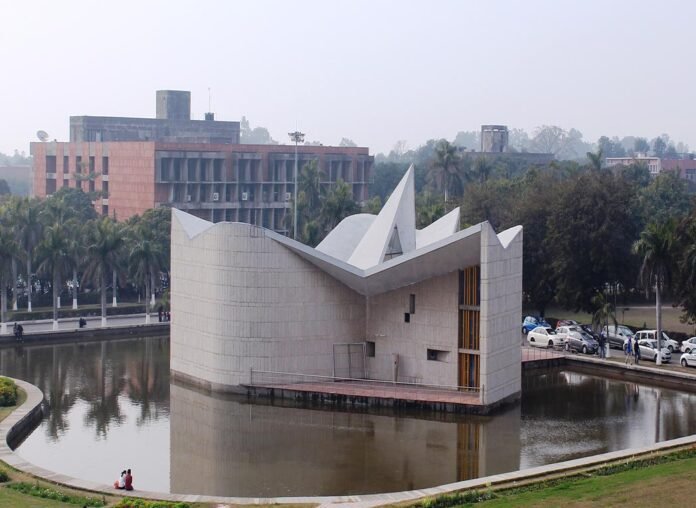
These observations echoed right through the inaugural session of the two-day national seminar on “Emerging Geo-Strategic Manifestations in Pakistan: Implications for India”, on Tuesday. Top ranking security experts and researchers are participating in the seminar being organized by the Department of Defence & National Security Studies (DDNSS), in the Golden Jubilee Hall of the Panjab University.

Photos By: Life In Chandigarh

The speakers were pragmatic in acknowledging that Pakistan had been extremely successful in exploiting its geo-strategic advantage because of its location and that India could not contain the hostile neighbour merely by adopting a tactical approach. The leadership in India has to act responsibly and display statesmanship instead of taking recourse to brinkmanship, was the general refrain among them.

In his keynote address, Lt. Gen. M.M. Naravane, General Officer Commanding-in-Chief, Army Training Command (ARTRAC), Shimla said the increased US pressure on Pakistan was likely to push it closer towards China, which had already replaced US as the largest supplier of military hardware to Pakistan. China’s tacit support to Pakistan’s nuclear programme was also well known, though a recent development of China not opposing Pakistan being put back on the terror financing watch list was heartening. Whether this was an indication from China to Pakistan that its support could not be taken for granted, is something to be seen, he added.

Lt. Gen. Naravane delivering the keynote address

Emphasising that Pakistan should continue to remain a major focus area of India’s foreign and military policies, Lt. Gen. Naravane advocated that while dealing with the hostile neighbour, statesmanship on the part of the Indian leadership should take precedence over brinkmanship. The growing radicalisation and intolerance over petty issues in our society cannot also be wished away, he said.

Prof. A.K. Grover (R) conferring honorary professorship on Dr Arvind Gupta

Chief Guest at the inaugural session, Dr. Arvind Gupta, Director, Vivekananda International Foundation and former Deputy National Security Advisor, in his inaugural address wondered whether India knew Pakistan as well as the world believed it did. India has never focussed deeply on understanding the mindset in Pakistan and what drives the hatred towards us. There has hardly been any research done in India with Pakistan as a subject, he said adding that whatever social contact we have had as two peoples was also clouded by emotions.

Describing Pakistan as an artificial state with a lot of internal contradictions, but held together by an Islamic ideology, he made out a case for a deeper study of its intentions and strategies to come up with an answer to the rogue state. On the issue of the never ending debate within the country on whether or not to hold talks with Pakistan, he said while leaving diplomacy to the diplomats, the Indian leadership should focus on further strengthening its military, economic and soft powers and its relationships with the other neighbouring countries in a long term strategy to isolate the hostile neighbour.

Asserting that India should not close any option vis-a-vis Pakistan, Dr Gupta advocated taking a hard look at and revisiting the Indus Treaty between the two countries because the neighbouring country depended heavily on the Indus river system for meeting its water needs.

Earlier, in his introductory remarks, Maharaja Ranjit Singh Chair Professor at PU and former Western Army Commander Lt. Gen. (retd.) K.J. Singh while describing Pakistan as PPP (Persisting Pain of Proximity) said the hostile neighbour had displayed a capability to punch beyond its weight. He said with the institutions in Pakistan crumbling, political parties being sidelined,  Chinese influence taking a stranglehold on its economy and US putting pressure on it to rein in terrorist organisations, the outcome of the July general elections in Pakistan would be watched closely by India and the world. He stressed the need for adopting new doctrines towards Pakistan.

Others who spoke were former Lt. Governor of Andaman & Nicobar Islands & Puducherry Lt. Gen. (retd.) Bhopinder Singh, DDNSS Chairperson Dr. Jaskaran Singh Waraich and Prof. Rakesh Dutta.

Panjab University Vice Chancellor Prof. Arun Kumar Grover, who presided over the inaugural session, conferred honorary professorship of DDNSS on Dr Arvind Gupta.

After the inaugural session, a panel discussion on “Pakistan’s Military Capability – An Assessment” was held. The panellists included Air Marshal (retd.) Amit Aneja, who gave an “Assessment of Pakistan’s Air Power”, Maj. Gen. (retd.) Amarjit Singh, who highlighted “Pakistan’s Strategic Culture”, Dr. Vijay Sakhuja, former Director, National Maritime Foundation, New Delhi, who spoke on “Pakistan’s Maritime Strategy” and Dr. Shalini Chawla, Senior Fellow, Centre for Air Power Studies, New Delhi, gave an “Assessment of Pakistan Military”.

The panel discussion was followed by two technical sessions in which several researchers presented their research papers on issues related to the seminar theme.

Prof Grover’s Ironical TIFR Days

Recalling his old memories of Panjab University Vice Chancellor Prof Grover which dated back to the late 1970s at the Tata Institute of Fundamental Research (TIFR), Dr Arvind Gupta said Prof Grover was his senior in the Ph.D. course. While studying for his Ph.D. (Physics), Prof Grover besides being a very committed student was also a bold leader who did flinch from taking on the faculty in the interests of students, Dr Gupta added. Ironically, Prof. Grover, who once espoused the cause of students, is now the butt of the students’ ire on one pretext or the other.  

Kids In 4-14 Age Group To Sparkle In Groovy New Styles

0

The kids’ fashion week brand is here. Chandigarh will for the first time witness the branded ‘Junior’s Fashion Week’, which has travelled to Bengaluru, Chennai, Mumbai, Kolkata, and Delhi NCR before setting foot in the city. On Sunday, 140 odd children, who had registered with the organisation online during the past few weeks, will step on the ramp in two sessions at JW Marriott and make a stylish fashion statement no less than their professional counterparts in prestigious shows like the Lakme Fashion Week and Wills Lifestyle India Fashion Week. The children in the age category 4-14 years, who will showcase the Spring Summer kids’ collection for some of the top brands, went through a grooming and personality development workshop under the supervision of a seasoned academician, model, choreographer and stage director Jessica Gomes Surana from Kolkata.

Speaking exclusively with lifeinchandigarh.com at the venue of the workshop just before it got under way, Jessica said the Junior’s Fashion Week was not just about modelling, “It’s a platform to groom children and develop social skills and confidence in them. When children in this age category, especially the 4-5 year olds, first come to such a platform they tend to cling on to their parents and are very reluctant to leave their company. We as professionals take personal care of each child and handle them with a lot of sensitivity to allow them to open up at their own pace.”

Photos By : Life In Chandigarh

“Most of the children would be taking to the stage for the first time. They would not have faced large audiences, cameras, glaring lights and high decibel music too. We groom them and give them the confidence that they can take all these in their stride,” Jessica said.

As we could see in the hall where the workshop was being held, some children were rank shy, others were tentative and unsure, but some among them jelled with the new environment like fish takes to water. When the time arrived for the children to start posing for the cameras some of the girls especially seemed ready to take on their professional counterparts, such poise and style, it was unbelievable!! Volunteers from city’s Indian Institute of Fashion & Design (IIFD) were on hand to help children feel at ease and acclimatise to the new environment.

Jessica, however, had a word of caution here for the parents. “We are in the business of grooming the children, developing in them social skills and instilling in them a sense of confidence, so that when they go back home and to school they are ready to take the stage and face audiences, which will help them immensely later in life. However, what we would not want is for parents to get too ambitious with their children and start pushing them hard into commercial activities at this tender age. Care should be taken that children at this age are not be deprived of their natural growing environment, games and fun and frolic.”

Coming back to Sunday’s Junior’s Fashion Week, she said the first session will start at 12:15 p.m. in which the children will showcase the Spring Summer 2018 collection of Marks & Spencer and The Children’s Place. The second session, beginning at 5:15 p.m. will feature the collections of US Polo Kids Girls, Flying Machine and US Polo Kids Boys. Hair styling, make-up and technical rehearsal will precede the show.

Photos From Earlier Shows

The Junior’s Fashion Week is the brainchild of Vin Sharma, who earlier worked with Lakme Fashion Week and later launched his own brand in 2016. It has held more than a dozen shows across the country so far, with the latest destination being Chandigarh, where it has received an enthusiastic response on its very first outing.