

The heart pumps blood through the aortic valve to our entire body. If this valve narrows, typically due to age related wear and tear (above 70 years) or stops working properly due to other factors, the heart is forced to work harder to push blood through. This extra workload can damage the heart over time, increasing risk of heart failure.
The damaged valve cannot be treated and needs to be replaced. Earlier surgeons used to cut open the patient’s chest to replace the valve, which however was not possible particular in case of elderly and high-risk patients, who were left to their fate.
But since the last 10 years of so with the introduction of TAVR (transcatheter aortic valve replacement) procedure, also called TAVI (Transcatheter aortic valve implantation), in India it has become possible to replace the valve in such high-risk cases as well since, being minimally invasive, it is much safer.
As part of the procedure, after a patient receives sedation and/or anaesthesia, and medicine to prevent clots, an interventional cardiologist inserts a thin flexible tube (catheter) into an artery, typically through a small incision/s in the patient’s upper thigh (groin). The catheter is guided to the heart. It delivers the new valve, placing it inside the old aortic valve. On being expanded, the new valve pushes the old one behind it, taking over the function of regulating blood flow from the heart to the body. The catheter is then removed from the body and the incision/s stitched closed and bandaged.
TAVR typically takes about an hour or two from start to finish. Apart from much smaller incision/s in the body, the procedure allows for lesser pain, quicker recovery, shorter hospital stays (most patients go home in a day or two), and significantly improved quality of life.
Advertisement

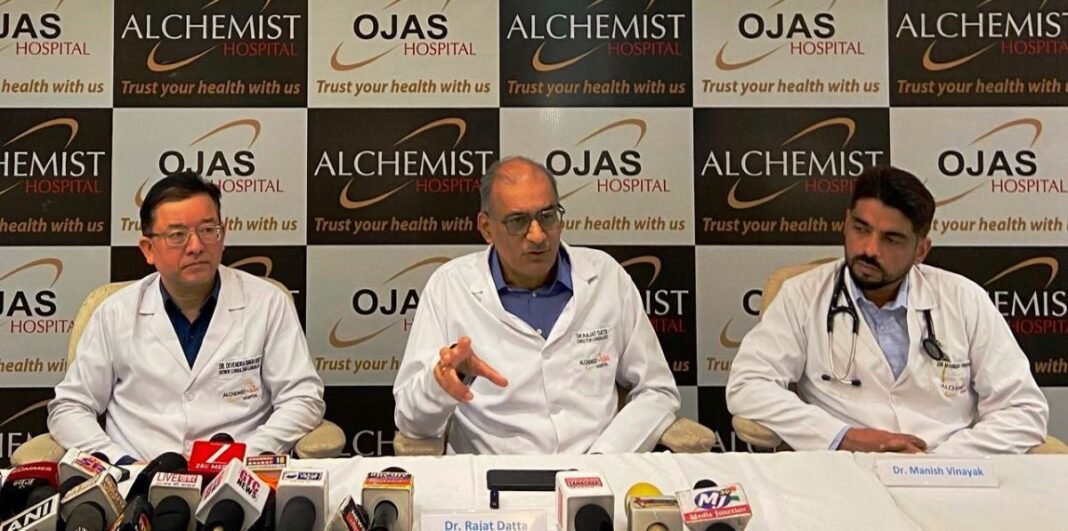
Interventional cardiologists from the Alchemist & Ojas Hospitals Panchkula on Thursday (12.02.2026) announced that the twin hospitals between themselves had achieved the milestone of successfully conducting 50 such complex procedures over a period of just around 18 months. Through the accomplishment the doctors sought to highlight the hospitals’ growing expertise in advanced structural heart interventions.
Briefing media persons Dr. Rajat Datta, director-department of interventional cardiology at Ojas Hospital, Panchkula, a unit of Alchemist Hospitals, Panchkula, informed that the oldest of his patients to undergo the TAVR/TAVI procedure was 91 years old. After undergoing the procedure patients, depending on their age and other health conditions, can hope to live 10 years or more.
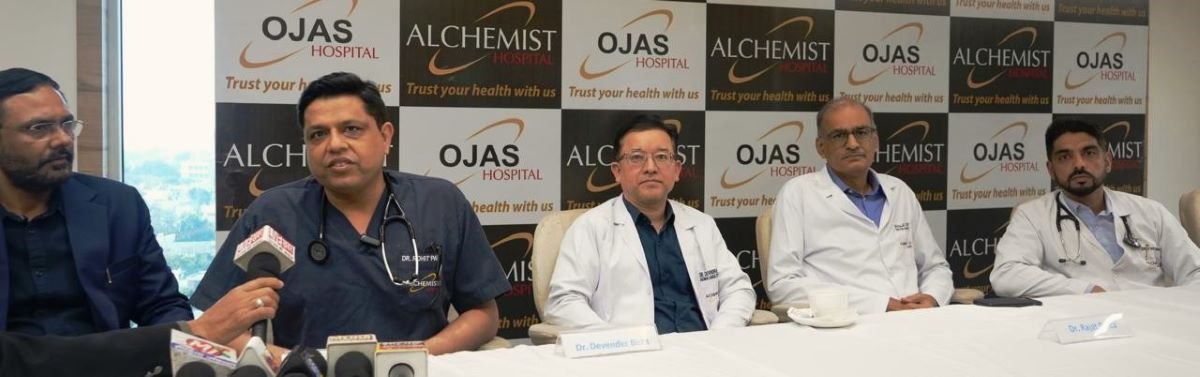
Dr. Rohit Parti, director-department of interventional cardiology at Alchemist Hospital, Panchkula, added: “With advanced cath lab infrastructure and clinical expertise, we continue to expand access to complex cardiac interventions in the region.”
Dr. Devendra Singh Bisht, senior consultant- interventional cardiologist & electro-physiologist; and Dr. Manish Vinayak, senior consultant-interventional cardiology, emphasised that the focus of the twin hospitals has always been on patient safety, precision, and long-term outcomes. “Every TAVR case is carefully evaluated by our heart team to ensure personalized treatment planning,” they added.
How do the doctors decide whether a patient is a fit case for TAVR/TAVI?
The decision to go for TAVR is made by a team of doctors and surgeons after examining the ECHO report.
Cost of the procedure
The cost comes to between Rs 15-17 lakh
Lack of will/awareness in India
According to Dr Rajat Datta, last year one lakh TAVR/TAVI procedures were conducted in the USA, which has a population nearly one-fourth that of India. In sharp contrast, despite a nearly four-fold population, surprisingly only about 3,000-4,000 procedures were conducted in India, which points to possible lack of will among elderly candidates to undergo the procedure, coupled with lack of awareness about it.