
Home Blog Page 75

100% Pure Maple Syrup From Canada Chases Olive Oil Craze

0

What started as the great Indian craze for Chinese food has now spread to Thai, Italian, French and what not. The burger and pizza invasion has the young generation hooked. Spanish and Italian olive oil, riding on the hype created over its health benefits, has become a fad with the hip crowd, and to a lesser extent Canola oil from Canada. Now comes 100% pure maple syrup from Canada, which is touted as a natural replacement for the good old common sugar, being shunned by the modern world as the “food villain of the century”.

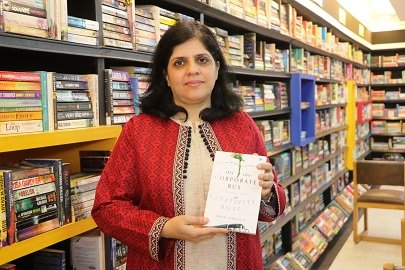
Well known nutritionist and author Kavita Devgan and master chef from Chandigarh Kandla Nijhowne on Thursday gave a visual presentation of the health benefits and versatility of 100% pure maple syrup from Canada at an interactive session held on behalf of the Federation of Quebec Maple Syrup Producers, Canada at Hotel JW Marriott in Chandigarh.

PHOTOS BY: LIFE IN CHANDIGARH

Playing on the ill effects of common sugar in lifestyle diseases like diabetes, obesity and inflammation, the two experts claimed that 100% pure maple syrup from Canada is a healthier alternative to sugar and other artificial sweeteners as it is natural and pure and is an excellent source of anti oxidants and essential nutrients.

Dwelling on the nutritional value of the maple syrup, which is a natural product obtained by letting water content to evaporate from sap collected from the maple tree,   nutritionist Kavita said, “100% pure maple syrup from Canada is already known to us as a natural sweetener. The fact that it is an excellent source of manganese and riboflavin (B2), a good source of magnesium and multiple other nutrients like calcium, potassium, sodium, copper and zinc, makes it a healthier alternative to sugar. Pure maple syrup contains a significant amount of phytohormones of the abscisic acid (ABA) family, a molecule that is believed to help against the inset of insulin resistance. This could be good news for diabetics, and those looking to knock off some weight, as well as athletes.”

She said maple syrup is known as liquid gold in Canada, where nearly 78% of world’s maple syrup is produced, and 90 percent of this output comes from Quebec province alone, the remaining 10 percent being accounted for by Ontario, New Brunswick and Nova Scotia provinces. Pure maple syrup contains 65 types of antioxidants, nine of which are unique to maple syrup, offering health benefits similar to those of berries, tea, red wine, flax seed, other fruits and vegetables. 100% pure maple syrup from Canada is a nutritive gourmet product that can enhance the taste of the dish – be it beverage, appetizers, main course or desserts, she added.

Chef  Kandla demonstrated three recipes using the maple syrup – a salt preparation, a drink and a sweet dessert.

100% Pure Maple Syrup From Canada Chases Olive Oil Craze

0

What started as the great Indian craze for Chinese food has now spread to Thai, Italian, French and what not. The burger and pizza invasion has the young generation hooked. Spanish and Italian olive oil, riding on the hype created over its health benefits, has become a fad with the hip crowd, and to a lesser extent Canola oil from Canada. Now comes 100% pure maple syrup from Canada, which is touted as a natural replacement for the good old common sugar, being shunned by the modern world as the “food villain of the century”.

Well known nutritionist and author Kavita Devgan and master chef from Chandigarh Kandla Nijhowne on Thursday gave a visual presentation of the health benefits and versatility of 100% pure maple syrup from Canada at an interactive session held on behalf of the Federation of Quebec Maple Syrup Producers, Canada at Hotel JW Marriott in Chandigarh.

PHOTOS BY: LIFE IN CHANDIGARH

Playing on the ill effects of common sugar in lifestyle diseases like diabetes, obesity and inflammation, the two experts claimed that 100% pure maple syrup from Canada is a healthier alternative to sugar and other artificial sweeteners as it is natural and pure and is an excellent source of anti oxidants and essential nutrients.

Dwelling on the nutritional value of the maple syrup, which is a natural product obtained by letting water content to evaporate from sap collected from the maple tree,   nutritionist Kavita said, “100% pure maple syrup from Canada is already known to us as a natural sweetener. The fact that it is an excellent source of manganese and riboflavin (B2), a good source of magnesium and multiple other nutrients like calcium, potassium, sodium, copper and zinc, makes it a healthier alternative to sugar. Pure maple syrup contains a significant amount of phytohormones of the abscisic acid (ABA) family, a molecule that is believed to help against the inset of insulin resistance. This could be good news for diabetics, and those looking to knock off some weight, as well as athletes.”

She said maple syrup is known as liquid gold in Canada, where nearly 78% of world’s maple syrup is produced, and 90 percent of this output comes from Quebec province alone, the remaining 10 percent being accounted for by Ontario, New Brunswick and Nova Scotia provinces. Pure maple syrup contains 65 types of antioxidants, nine of which are unique to maple syrup, offering health benefits similar to those of berries, tea, red wine, flax seed, other fruits and vegetables. 100% pure maple syrup from Canada is a nutritive gourmet product that can enhance the taste of the dish – be it beverage, appetizers, main course or desserts, she added.

Chef  Kandla demonstrated three recipes using the maple syrup – a salt preparation, a drink and a sweet dessert.

Punjab Govt Thinks Private, Allows Pre-Primary Admissions In Govt Schools

0

As in many other states, management of government schools is among the weakest links in the Punjab government functioning, and yet it is ready to take on extra burden of students in these institutions of learning, riled by poor infrastructure, shortage of teachers and non-teaching staff and general mismanagement.

In what is being touted as a measure to strengthen the school system, the Punjab Cabinet on Wednesday gave its nod to a proposal, announced earlier by Chief Minister Capt. Amarinder Singh, of enrolling students for pre-primary classes from the next academic session.


Photo By: Life in Chandigarh

Following the cabinet approval, government schools will from this month itself start enrolling children over the age of three years in the pre-primary classes, which will become operational in the forthcoming academic session. Under the existing rules, government schools could admit children only above the age of six years.

An official press release said, “The move will help ensure holistic and integrated early childhood care and education, and also check the decline in enrolment of children in government schools.”

The release said the chief minister emphasised the need to improve the school curriculum in government schools with inclusion of adequate and accurate account of historical events and heroes to help connect the children to their roots. Local Bodies and Tourism Minister Navjot Singh Sidhu also pressed for inclusion of cultural topics in the course curriculum.
Quoting government figures, the release said, though Punjab’s child population in the age group of 6-10 years currently stood at 24.47 lacs, enrolment in government schools is a mere 9.6 lacs, with the number declining year on year. The state government attributes this decline to the fact that parents tend to send their wards at an early age i.e less than six years to schools whereas as per RTE Act and as per Government Policy, children below the age of 6 years are not admitted in government schools.
Estimating the child population in the age group of 4-6 years to be 5.33 lacs, the state government is of the view that by not admitting the children in the age group of 4-6 years, the learning levels of the students in government lag behind students of their age studying in private schools, which start admitting students much earlier.
In a welcome move, the Cabinet approved an amendment to the Punjab School Education Board Act, 1969, to abolish the post of Senior Vice Chairman. It also gave its nod to amend Section 6 (a) of the Act, thus stipulating that no person shall be appointed as Chairman or Vice Chairman unless he/she has served with the Central Government or State Government or both on a gazetted post for a period of not less than 15 years.
           
Further, the amended Section 15 (1) envisages that the Secretary of the Board shall be appointed by the state government and will be an officer from Indian Administrative Service (IAS)/Punjab Civil Services of Additional Secretary rank. The amendment in Section 17 1 (i) prescribes the syllabi and courses of studies in consultation with SCERT.

Global Tenders To Be Invited For World-Class Tech Varsity

The Punjab Cabinet also gave its go-ahead for inviting global tenders to establish a world-class Technology University at SAS Nagar (Mohali). The proposed university will focus on skill development in IT/IT enabled services, biotechnology and related biosciences, material sciences and nanotechnology.

Following the cabinet approval, proposals will now be invited from the open market from the open market by providing wide publicity. The applicants can either pay as per IT Policy-2013 or as per the proposal received from the Reimagining Higher Education Foundation. Based on the proposals received from the Foundation, an area of 50 acres earmarked for IT/ITES, etc can be allocated for setting up the university.
           
Criteria Amended For Plots In IT City

In another decision, the state cabinet also relaxed the eligibility criteria for allocation of plots in IT City, SAS Nagar for sizes varying between 3 and 25 acres to allow non-CMM-SEI Level 5 certification companies to set up business. Further, companies wishing to exit IT City have been allowed to surrender plots by deducting 10% of paid up amount.

Punjab Vigilance Bureau Steps In To Hasten Probe

0

The much hyped 200 feet wide approach road to the International Airport in Mohali, inaugurated by Prime Minister Narendra Modi in September 2015, has come a cropper in quick time pointing towards complicity of supervising government agencies with the contractor.

Following a string of recent accidents, some resulting in deaths and serious injuries to road users, on the massively pot-holed road, and severe criticism in the Media, the Punjab Vigilance Bureau appears to have finally decided to move swiftly to get to the depth of the muddle.

PHOTOS BY: LIFE IN CHANDIGARH

An initial inspection of a stretch of the road on Tuesday by teams from the Bureau,  accompanied by road construction engineers, has endorsed the obvious – prescribed standards and quality of materials were not followed in the construction of the road.

An official press release quoting a spokesperson of State Vigilance Bureau said “on the basis of complaints regarding non-worthiness of this recently constructed road, Vigilance Bureau Chief Director Mr BK Uppal, ADGP along with senior PWD and GMADA engineers, technical teams of VB and experts of Central Road Research Institute (CRRI) have inspected the road and excavated the road at two points with JCB machine and one with sampling machine.

“During this special inspection, it has been prima facie found that the road was not designed properly as per the actual soil (clay soil) and traffic conditions (heavy load trucks) at the site, and improper/sub-standard material was used which was not according to the prescribed specifications mentioned in the DPR as well as in the contract conditions.”

According to Uppal, GMADA had already received a sampling report from CRRI but experts from the national institute had been asked to collect more samples from the locations selected by the technical teams of VB, PWD (B&R) and GMADA and submit a report after thorough analysis for review by the Bureau. Based on the CRRI reports, further action would be initiated against guilty engineers and the contractor, he added.

Among others present at the inspection site were G. Nageswara Rao, Director Vigilance Bureau, Shive Kumar Verma, Inspector General of Police (Economic Offences Wing) and engineers from PWD, GMADA and CRRI.

Dr KS Chugh Laid To Rest

0

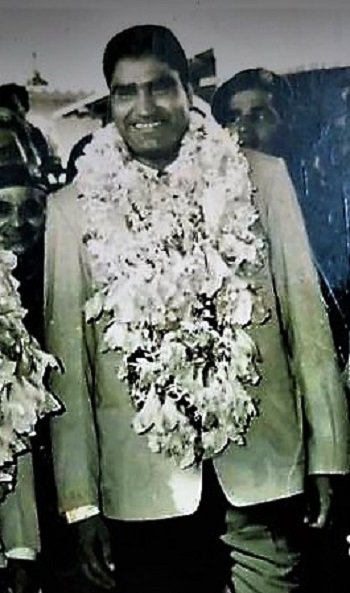
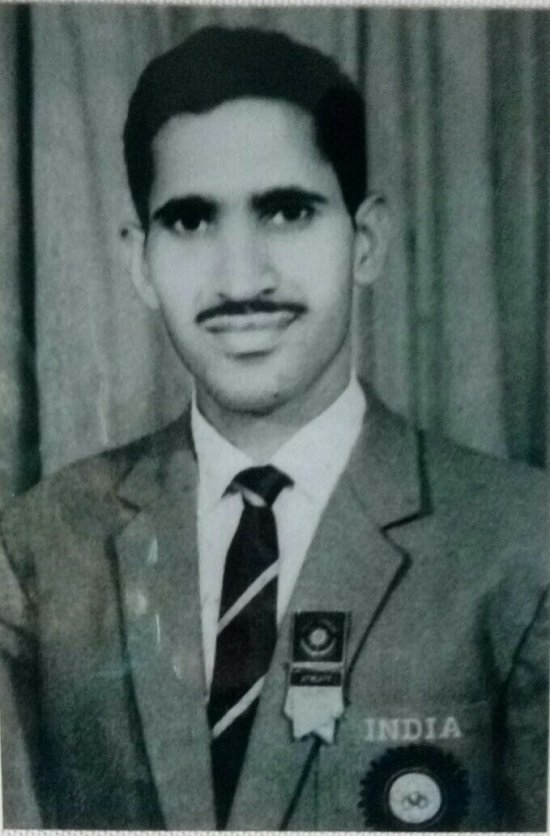
A large cross section of people, including the fraternity of Post Graduate Institute of Medical Education and Research (PGIMER, PGI for short), academia, bureaucrats and others, attended the cremation of Dr K S Chugh, considered the father of nephrology in India, at the electric crematorium in Sector 25, Chandigarh on Monday. Dr Chugh, a world renowned nephrologist, passed away in the city on Sunday after a two-year tryst with a deadly disease.

His sons Sumeet Singh Chugh and Sumant Singh Chugh, both physicians settled in the US, were by his side when the last rites were performed.

PHOTOS BY: LIFE IN CHANDIGARH

Many among the gathering were heard recounting their memories of the highly professional, and at the same time a saintly person, that Dr Chugh was. An Emeritus Professor and former head, Dept of Nephrology, PGI, Dr Chugh is credited with being responsible for training a majority of the senior nephrology consultants and teachers in the country today.

Remembering Dr Chugh, Dr Priyadarshi Ranjan, Urologist & Chief Kidney Transplant Surgeon at Fortis Hospital, Mohali, says : “Dr Chugh had a great influence in shaping not only my career but of scores of other kidney transplant specialists across the country. He had been a thorough kidney physician, an avid teacher and more importantly an upright individual. Being the head of the PGI research academic community he streamlined the research thesis and other projects in PGI and stood up against fraudulent research, so as to maintain the highest standards of quality. His passion for his profession was unparalleled and we would remember him for his knowledge, wisdom and elevation of our country to the global level in nephrology. His contributions towards teaching, training and research in the field of nephrology are immense”.

Having taken up the speciality in 1956, when he performed the first renal biopsy, which ushered in the new era of modern nephrology in India and led to the recognition of this specialty as a distinct discipline, Dr. Chugh made a pioneering contribution to the development of nephrology in India. He passed MD (Medicine) with kidney diseases in 1961 and became the first qualified nephrologist of India. He set up the first Department of Nephrology in PGI, Chandigarh in 1963, initiated the dialysis program at the PGI in 1963 and renal transplant program in 1973. He started the first super-specialty course in Nephrology for the award of DM degree at the PGI, Chandigarh in 1969.

Apart from the Padma Shri award, Dr Chugh was awarded Fellowship of the Royal College of Physicians, London (FRCP, London), Honorary Fellowship of the American College of Physicians (Honorary FACP), D.Sc. (Honoris causa) Punjabi University (2010), D.Sc. (Honoris causa) GNDU, Amritsar (2013), D.Sc. (Honoris Cause), Dr NTR University, 2016.

He was conferred the title of National Emeritus Professor of Nephrology by the National Academy of Medical Sciences of India. Besides these, he was a recipient of B C Roy

Urgent Need For Geriatric Speciality In India

0

In India, there’s a speciality, and super specialities, for Pediatrics, but none in Geriatrics. Who cares for the elderly anyways, goes the common refrain in the country with the highest young population in the world, and it proves true in the medical field as well. Unlike in the West, where healthcare for the elderly is a priority area, the Indian government does not seem to have any focus, or thrust on specialised healthcare for the elderly. In fact the country does not have a post graduation in Geriatrics, and, whatever facilities dedicated to the elderly there are in select private hospitals, are manned by generalist doctors, one odd among them with perhaps a fellowship in geriatrics.

Admitting to the sorry state of affairs, organisers of the three-day 5th International Conference of Geriatric Orthopedic Society of India 2017, being held at Hyatt Regency in Chandigarh, said it was their Society’s endeavour to at least train orthopedicians in a holistic approach to treatment of orthopaedic problems of the elderly, who are most in need for specialised treatment when their physical and mental faculties start to show signs of wear and tear.


Interacting with media persons on the sidelines of the conference, Dr John Ebnezar, Padma Shri, and president of the Society, and Dr Vijay G. Goni, organising secretary of the conference, alongwith other senior orthopedicians said even while treating the orthopaedic issues of the elderly there was a need for a multi-dimensional and holistic approach to their treatment and rehabilitation. Ideally they should first be attended to by a geriatric specialist before being referred to an orthopaedic specialist or a multi speciality team of doctors. Among the orthopaedic problems which most afflict the elderly are osteoarthritis, fractures, dislocations, osteoporosis, etc, they added.

But along with these issues most elderly people also suffer from other health issues as well like chronic back pain, hypertension, diabetes, depression, dementia, which have to be tackled simultaneously, thus bringing in other medical specialists, including neurologists, psychiatrists, rheumatologists and endocrinologists, they said, adding that even after orthopaedic surgeries, occupational therapies are necessary for the proper rehabilitation of elderly patients.

Dr Sanjeev Patnaik and Dr Uday Kumar shared their experiences of some of the advanced countries, where healthcare authorities even went to the extent of not discharging elderly patients from hospital after orthopedic surgeries unless they make sure that the patients’ support system at home is conducive to their proper physical and mental rehabilitation.

The orthopedicians uged the Union and state governments to urgently create infrastructure to train geriatric specialists and set up specialised geriatric healthcare facilities across the country, to gear up for a scenario of the country with the largest young population turning into a country with the largest elderly population in the next four-five decades.

Expect Better Blood Purification, BP Control, Quality Of Life

0

Patients of kidney failure, requiring lifelong dialysis, are in for some relief in terms of better quality of life with a hospital in the tri-city claiming to be the first dialysis centre in the region, and among a handful across the country, to bring a new therapy system which has become a gold standard in Europe and in advanced countries elsewhere in the world.


Introducing media persons to the 5008/5008S system using the latest ‘Online HDF’ technology, kidney and transplant specialist Dr Manish Singla of Mayo Hospital, Mohali, said though the system consumes the same time – four hours per dialysis session – as the previous outdated systems being used by other hospitals, it provides a higher degree of blood purification, better blood pressure control, less requirement of costly Erythropoietin injections and better overall quality of life.


rnPhoto By: Life In Chandigarh

rn

Using the new therapy system will not only ensure that the patients no longer feel constant tiredness and lethargy, and lead a near normal life, but their average life expectancy following kidney failure will also increase substantially from two-three years to 5-7 years, he added.

rn

rn

Informing that around 0.1 percent of population suffers from permanent kidney failure, needing lifelong dialysis, he said there would be more than 3000 such patients in Chandigarh tri-city alone and more than 30,000 patients in the region.

rn

rn

Dwelling on the cost of dialysis, Dr Singla informed that a normal dialysis session costs anywhere between Rs 1500 and Rs 2500 and a patient has to undergo two sessions a week. In Mayo Hospital, the new therapy will cost Rs 500 per session more. But, since the Online HDF dialysis technique removes up to 10 times bigger toxins from the body, and improves the haemoglobin level, the additional cost is more or less offset with less need for the expensive Erythropoietin injections, saving a patient an estimated Rs 4,000 to Rs 5,000 per month, he claimed.

rn

rn

Asked about future prospects of regenerating failed kidneys, he said advanced research in stem cell therapy has raised hopes that the first artificial complete organ to be successfully developed in the world could be the kidney. So far artificial tissues and artificial tissue-cum-machine combinations have been developed, but not complete organs. The trials on an artificial kidney have passed the second stage and now these have to be tried on humans. If all goes well, we could see artificial kidney transplants becoming a reality in the next two to three years, he added.

rn

Showbizz To Ride Piggyback On Admn

0

The Golden is so very precious in our lives, whether it be birth, wedding or any other anniversary. The Chandigarh Union Territory Administration did not think alike, when it allowed its 50 years of existence to go by without much ado. But, surprisingly, now it has partnered a non-government entity, allowing it a piggyback ride to celebrate “Establishment Day”, a five day grand extravaganza to mark the 51st year of the City Beautiful from November 1 to 5, 2017.

What came out in the press conference organised by the private entity, Showbizz Celebrations Pvt. Ltd., where Chandigarh Tourism Director Jitender Yadav unveiled the official logo of the festival, was that the UT Administration will allow its platforms, including venues etc, to be used by Showbizz, which for all practical purposes will be the organiser of the event.

Photo By: Life in Chandigarh

According to a statement shared at the press conference, the Chandigarh Administration is an associate partner with Showbizz for the event, which is being held “to connect the youth of the city with its rich history of success and development.” 

The statement, quoting Manmeet Singh and Narbir Singh, both Directors of Showbizz Celebrations Pvt Ltd., said the five day festival to be held at Parade Ground in Sector 17, will feature Chandigarh icon awards, a picture gallery showcasing the historical legacy of the city, a food festival with special showcase by Ashish Chopra (a culinary historian, author and television host), rallies of vintage and luxury cars, a luxury lifestyle exhibition, a real estate expo and a fashion show with a Bollywood showstopper. There will be a carnival for kids’ entertainment and an elderly women’s marathon. Gurdas Mann will lead a line up of artists to add to the entertainment quotient. A special song on Chandigarh is also being prepared, they said.

Will it be a routine expo, or a memorable event, as the organisers are claiming it will be, we’ll know, come November 1.

Patar To Head Punjab Kala Parishad

0

In its push to revive the rich art and culture of Punjab, the state government has appointed celebrated Punjabi writer and poet Dr Surjit Pattar as Chairman of the Punjab Kala Parishad. His nomination was made by Chief Minister Capt. Amarinder Singh and Tourism and Cultural Affairs Minister Navjot Singh Sidhu presented the appointment letter to Dr Patar in Ludhiana on Tuesday.

He replaces another popular Punjabi artist Satinder Satti, whose appointment towards the fag end of the tenure of the previous Akali Dal-BJP government had raised many eyebrows.

In his thanksgiving words, Dr. Patar promised to launch a people’s movement to propagate Punjabi culture, folk arts and literature.

Photo By: Life in Chandigarh

Speaking on the occasion, Navjot Singh Sidhu reiterated the state government’s resolve to constitute a ‘Cultural Parliament’ soon to initiate meaningful and constructive deliberations leading to strategies aimed at popularizing Punjabi art and culture. Modern tools of communication, including internet and social media, would be liberally used to ensure faster penetration into every household in Punjab, he added.

Member of Parliament from Ludhiana Ravneet Bittu was among several dignitaries present.

Another Kiran Bedi Comes To Town?

0

There may be a lot for the female folk to cheer about with Nilambari Jagadale on Tuesday taking over as the first woman Senior Superintendent of Police of UT Chandigarh. But law breakers and criminals beware, she comes with the image of a no nonsense hard boiled policewoman.

In her first media interaction on taking charge, Nilambari, who has headed the police force in three districts of Punjab, two of them being sensitive border districts of Fazilka and Pathankot, came across as a balanced professional police officer, becoming empathetic and sympathetic, and ruthless as the situation demands.

PHOTOS BY: LIFE IN CHANDIGARH

Her inclination to interact and seek suggestions from the public, including the media, to further improve policing in the union territory could bode well for the Chandigarh folks menaced by intolerable levels of street crime and violence.

Nilambari, an engineering graduate, who worked in a multinational corporation (MNC) for two years before joining the IPS, appeared keen on revisiting some community policing initiatives taken in Chandigarh in the past and adding her own inputs to make the Chandigarh Police more people friendly.

She feels that for a professional police officer the challenges are the same whether you are a man or a woman. So long as you are fair and professional in your approach you will be respected by the force as well as the public at large, she asserted.

Having Kiran Bedi, the first Indian IPS officer, and the only woman Inspector General of Chandigarh Police so far, as her role model, Nilambari has a chance to prove her mettle in a bigger arena which is Chandigarh, joint capital of two states.

Remember the days when Kiran Bedi used to roam the streets incognito at night keeping a watchful eye on her force, for which she was appreciated and loved by the Chandigarh populace. It’s an example worth emulating.

We wish her Good Luck & All The Best!!