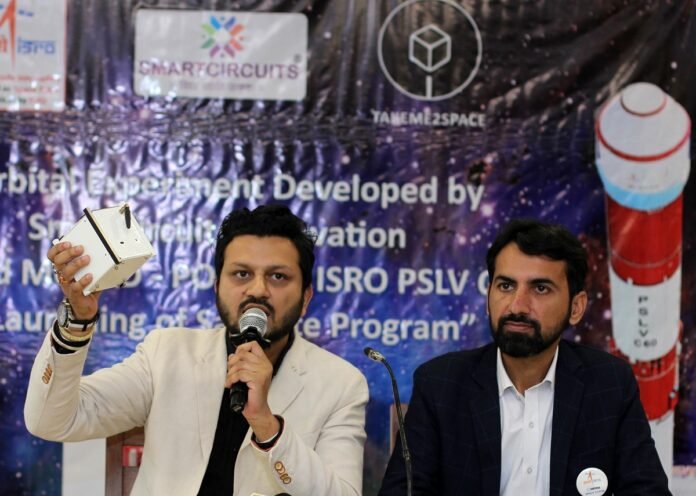
Haryana-based startup Smartcircuits Innovation co-founders Sourabh Kaushal and Raghav Sharma sharing with mediapersons in Chandigarh recently about their experimental module which will be part of India's First AI lab in space.
Company also unveils its Small Satellite Programme for schools, universities and researchers
Polar Satellite Launch Vehicle (PSLV) is India’s third generation launch vehicle that, besides numerous Indian and foreign satellites, has launched two spacecraft -Chandrayaan-1 in 2008 and Mars Orbiter Spacecraft in 2013 – which later travelled to the Moon and Mars, respectively.
The country’s warhorse launch vehicle will tonight blast off into space to launch two specially designed satellites as part of ISRO PSLV-C60 SpaDeX mission to demonstrate the country’s recently developed space docking technology, on successful completion of which India will join as the fourth member of a select club of three nations possessing this technology.
The space docking technology is key to India’s planned human spaceflight and satellite servicing missions in the future.
In addition to its primary space docking technology goals, SpaDEX mission will also utilise the PSLV’s spent fourth stage, which is responsible for the correct injection of payloads into their desired orbits, as an experimental platform, known as POEM-4, allowing for various microgravity experiments. A total of 24 payloads will be flown during this mission, including contributions from academia and startups.
One of these experimental private payloads will be Hyderabad-based company TakeMe2Space’s (TM2Space) MOI-TD (My Orbital Infrastructure – Technology Demonstrator), India’s first artificial intelligence (AI) laboratory in space.
The company, specializing in advanced satellite solutions and orbital infrastructure, aims to revolutionize space research by enabling real-time data processing in orbit. Its AI laboratory will allow for the processing of data directly in space, eliminating the need for extensive ground-based data transmission and significantly reducing costs associated with space research.
As part of TM2Space’s AI lab in space, a Haryana-based space tech startup and ISRO-certified space tutor, Smartcircuits Innovation, claims to have developed an experimental module that will measure the temperature profile of a rolling satellite in Low Earth Orbit (LEO) at various orbital stages using an external sensor.
Space tech researchers and Smartcircuits Innovation co-founders Sourabh Kaushal, Raghav Sharma, and Sachin Sharma, who have helped establish AI and Space Labs in many Chandigarh tricity schools, are confident that the data collected from the experimental module will be helpful to space agencies for the future space missions as temperature management is a crucial part of any space mission.
Addressing a press conference in Chandigarh recently two of Smartcircuits Innovation’s co-founders – Sourabh Kaushal and Raghav Sharma – asserted that their experimental module is an important achievement as it marks the first time a Haryana-based startup is sending such an experiment into orbit. School students actively participated in coding for the experiment, highlighting the project’s emphasis on inclusivity and education, they added.
Small Satellite Programme
Smartcircuits Innovation also unveiled its Small Satellite Programme, also known as the Near-Space Satellite Launch Project, to empower students from schools, universities, and researchers to develop low-cost satellites and launch them to an altitude of approximately 50 km, reaching the stratosphere. Participants can receive live data on Earth and later send their experiments into orbit using POEM (PSLV Orbital Experimental Module).
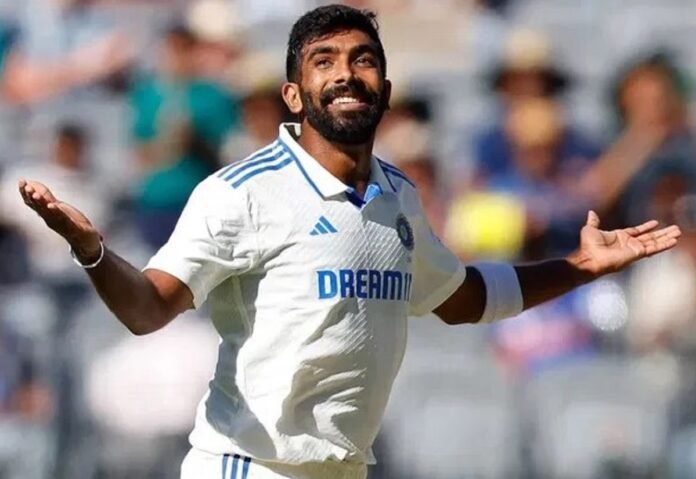
Undeterred, unstoppable: Jasprit Bumrah once again foxes Aussie top order in the second innings on the fourth day of the Boxing Day 4th Test match at the MCG on Sunday (29.12.2024). PHOTO Credit:X@cricketcomau
With Australia 333 in lead, and last man standing, India can fancy their chances on final day
May be required to score at four runs per over, which, on paper, is doable
If only the top order can stand up, NOW!
Who says the days of Test cricket are over! The home of the longest format of the game, the Melbourne Cricket Ground (MCG), has seen record crowds throng the massive stadium to watch the Boxing Day 4th Test match for the Border-Gavaskar Trophy, which has sprung new surprises every single of the four days which have gone by, with a thrilling finish in prospect on the final day on Monday.
After the fluctuating fortunes, brilliant bowling performances, and remarkable resilience shown by the lower order batsmen from both sides, it’s anybody’s game at stumps on the fourth day.
The home team’s tail wagged and wagged, after another top order batting collapse, triggered once again by the wizardry of Jasprit Bumrah, this time ably supported by an inspired bowling effort by Mohammed Siraj. From attempting to make quick runs, their focus shifted to saving the match.
(LATEST UPDATE: However, the hard work of the Indian bowlers was negated by yet another top order collapse, with Pat Cummins and Mitchell Starc sending back the top three batters – Rohit Sharma (9), KL Rahul (duck) and Virat Kohli (5) – with just 33 runs on the board in 26.1 overs, leaving the young Yashasvi Jaiwal and Rishab Pant to hold the fort.)
From 91/6 at one stage, the Aussies held on to dear life, with No. 3 batsman Marnus Labuschagne managing to survive long enough to get to 70, and captain Pat Cummins again making a solid contribution of 41 runs. The unbeaten 55-run last wicket stand between Nathan Lyon and local hero Scott Boland further solidified the Aussie position by taking their total to 228/9. They lead by 333 runs by virtue of their 105 run first innings advantage.
The Aussies may not have reached this far had young Indian batting sensation Yashasvi Jaiswal not had his worst nightmare in the field. The usually safe hands floored as many as three catches at crucial moments of the innings.
Considering what the Indian batting line-up, especially the lower order, is demonstrably capable of, and should top guns Rohit Sharma and Virat Kohli fire too, the Aussie team management would want the last wicket pair to occupy the crease for a little longer on the final day and add a few more valuable runs, thereby obviating the possibility of an Indian win while trying to force a win.
For India, it would take the biggest successful fourth innings run chase at the MCG, but the famous Gabba Test of the 2020-21 tour should act as a reminder to the Aussies that nothing is beyond the Indian team’s potential abilities.
However, Marnus Labuschagne believes the conditions at the MCG are trickier. “The seam movement’s probably been the same, but just the amount of bounce is significantly lower. So, that makes for pretty tricky batting,” he is reported to have commented on the prospects for the final day’s play.
As things stand, Australia will have around 90 overs to capture 10 Indian wickets, while the visitors will need to score at around four runs per over to decide who heads into the final NRMA Insurance Test at Sydney starting Friday with a decisive lead.
The second slot in the ICC World Test Championship (WTC) final, to be played at the Lord’s in June 2025, is also at stake for both sides. Australia is currently ahead of India in the race to clinch the second slot, and a win at MCG would make their passage easier. South Africa have already made it to the WTC final with a thrilling two-wicket win over Pakistan in the first Test match which ended at the Centurion on Sunday.
India still fancy their chances of making it a hattrick of WTC final berths if they win both Tests in Melbourne and in Sydney and take the series 3-1, leaving the rest to other outcomes.
Earlier in the day on Sunday, India’s overnight hero Nitish Reddy’s innings, and with him India’s, ended with the addition of only 11 runs, reducing India’s deficit to105.
As expected, Nitish Kumar’s inspiring knock appeared to infuse fresh confidence and determination in the Indian team, and both Jasprit Bumrah and Akash Deep, who shared the new ball, came hard at the Aussie openers, who had little answer to their seaming deliveries. Bumrah tasted first blood, taking sweet revenge for his first innings hammering by teenage debutant Sam Konstas, castling him through the gate for just 8.
Though Akash Deep equally troubled the top order batsmen no end, he was not so lucky with wickets.
First change Mohammed Siraj looked a different bowler altogether. His inspired spell saw off the other shaky opener Usman Khwaja (21), whom he clean-bowled, and Steve Smith (13), who edged an almighty heave at a widish ball to Rishab Pant behind the stumps.
Then came Bumrah’s blitz in his three-over second spell when he got rid of the dangerous Travis Head (1), for the second time in the match, Mitchell Marsh (duck), and Alex Carey (2). Australia lost 4-11 in 21 balls to crash from 2-80 to 6-91, and Jasprit Bumrah took 3-3 in 11 balls.
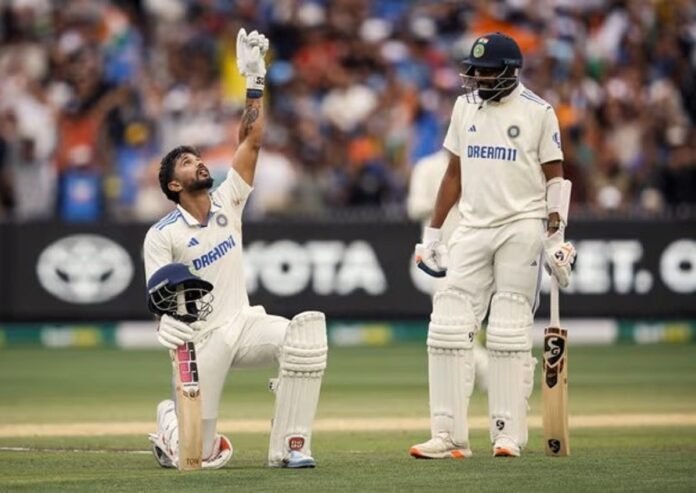
Indian allrounder Nitish Kumar Reddy apparently enacting the famous ‘Shourangya’ style from Prabhas-starrer ‘Salaar’ on completing his maiden hundred on the third day of the Boxing Day 4th Test match for the
B-G Trophy, at MCG, on Saturday (28.12.2024)
His 127-run partnership with fellow allrounder Washington Sundar not only rescues India from follow-on but also shifted it to competitive mode
Still unbeaten, Nitin Reddy has now become the second highest run-getter in the series from both sides, though far behind Travis Head in terms of runs scored
The challenging tours Down Under have one big upside for India. Young blood is proving itself equal to the challenge, and stepping up to claim its rightful place in the Sun. So, if young wicketkeeper-batsman Rishab Pant was the standout performer during the previous Test series there for the Border-Gavaskar trophy back in 2020-21, rookie allrounder Nitish Kumar Reddy has claimed that space in the underway 2024-25 series.
With his massive rescue effort in partnership with fellow allrounder Washington Sundar on one of the biggest and highest stages of world cricket – the Melbourne Cricket Ground – before 83,073 spectators, the 21-year-old, making only his fourth Test appearance, has etched his name in the cricket history books in glowing letters.
Reddy’s 105* and Sundar’s patient 50, and their 127-run 8th-wicket partnership in a pressure cooker situation, not only saved the visitors from the ignominy of a follow-on but also placed them in a competitive position.
India, with 358/9 at stumps on the third day of the Boxing Day Test, though still in arrears of the massive Aussie first innings total by 116 runs, are in a much stronger position to make a match of it.
A natural stroke-maker, Reddy displayed remarkable composure, technique, and situational awareness by deftly picking the balls and gaps in the field to unleash his array of shots, unlike Rishab Pant earlier, who was roasted by commentators, especially the great Sunil Gavaskar, for throwing away his wicket attempting reckless shots, at a time when India needed him to occupy the crease and make a big score.
On reaching his maiden international hundred in copybook style, with a picture-perfect lofted straight on-drive off Scott Boland, an elated Reddy expressed his gratitude to the Indian dugout and the crowd also in style. He balanced his helmet on his grounded bat and took a knee, apparently enacting the famous ‘Shourangya’ style from Prabhas-starrer ‘Salaar’. He received a standing ovation for his extraordinary feat.
Earlier, on reaching his half century too, he had apparently enacted the famous ‘Pushpa’ gesture from the Allu Arjun-starrer.
Mutyala, Reddy’s father, and his staunchest supporter through the challenges of a family with humble means in making his cricket career, was seen tensely watching and praying for his son nearing the 100-mark in the front row of one of the spectators’ stands. And, when the son hit the final runs, he was overwhelmed with emotions, unable to hold back the tears of joy, with equally overjoyed family members and other Indian fans flocking around him in congratulation.
Coming under the circumstances it did, Nitish Reddy’s innings could be considered more significant than the sensational batting on the opening day of the Test match by debutant teenage opener Sam Konstas (60 off 67 balls) to break Indian speed sensation Jasprit Bumrah’s shackles on the Aussie top order right through the previous three Tests, and Steve Smith’s innings of 140.
Nitish Reddy appears to mimic the famous ‘Pushpa’ gesture from the Allu Arjun-starrer on reaching his half century at the MCG on Saturday (28.12.2024)
In the process, Reddy also rewrote several entries in the record records.
He became the third youngest player from India to score his maiden Test century in Australia, and the first Indian cricketer to score a century Down Under at No. 8. With Washington Sundar, he also posted the highest partnership for India for the 8th wicket in Australia.
There are many more, which we’ll share later in this write-up.
Congratulatory messages
Congratulatory posts from former cricketers, film stars, politicians and fans flooded social media soon after Nitish crossed the triple-digit mark.
“What an innings, dear Nitish. To become the third youngest Indian to score a [maiden] Test hundred in Aus and what an occasion to do it with the team in trouble. I am sure this will be first of many. Enjoyed your positivity and fearless stroke play. Keep it up. God bless you always,” former cricketer VVS. Laxman posted on X.
Sachin Tendulkar too chipped in, congratulating Nitish on his achievement. “A knock to remember by Nitish. He has impressed me right from the 1st Test and his composure and temperament have been on display right through. Today he took it a notch higher to play a crucial innings in this series. Wonderfully and ably supported by @Sundarwashi5 (Washington Sundar) as well. Well played!”
“Congratulations to Visakhapatnam youth K. Nitish Kumar Reddy for scoring a century in the fourth Test match of the Border Gavaskar Test Trophy 2024 against Australia in Melbourne. I sincerely wish him to achieve more such victories and to be part of the Indian cricket team and strengthen the country’s reputation,” Andhra Pradesh Chief Minister N. Chandrababu Naidu said on X.
Fans and denizens flocked to Nitish’s residence to celebrate the century. While the family was in Australia for the match, scenes of jubilation were witnessed at the cricketer’s house in PM Palem, Visakhapatnam, with fans bursting firecrackers and distributing sweets.
Andhra Cricket Association (ACA) and Visakhapatnam District Cricket Association (VDCA) heaped praise on Nitish. ACA president Kesineni Sivanadh (Chinni), who also represents Vijayawada in the Lok Sanbha, announced a cash prize of ₹25 lakh for Nitish. He said that the Chief Minister will hand over the prize money to Nitish on his return from the Aussie tour.
Brickbats for Rishab Pant
Publicly branded as irresponsible under the critical circumstances for India: Rishab Pant playing his trademark falling scoop shot. A skied edge off a Scott Boland delivery landed straight in the hands of Nathan Lyon at deep third man.
Taking the field on Saturday in the company of Ravinder Jadeja, with India precariously placed at 164/5 chasing a daunting Aussie total, Rishab Pant quite expectedly came out blazing, hitting proper cricketing shots.
But soon overconfidence got the better of him, and after missing his trademark falling scoop shot off Scott Boland, and taking an apparently painful blow on the stomach, he attempted it again the next ball, intending to clear the deep fine leg fielder, only to sky a thickish edge straight to Nathon Lyon on the other side of the wickets at deep third man.
Rishab was roasted on social media for the irresponsible manner he literally gifted his wicket to the opposition at a critical moment in the match.
Indian great Sunil Gavaskar was particularly severe in his comments while commentating on ABC Sport. “STUPID! STUPID! STUPID! You’ve got two fielders there and you still got for that [shot]. You’ve missed the previous shot and look where you’ve been caught, you’ve been caught at deep third man. That is throwing away your wicket. Not in the situation that India was. You have to understand the situation as well. You cannot say that it is your natural game. I am sorry it is not your natural game.”
Nitish Reddy’s MCG century – in numbers
Nitish Reddy has been by far India’s most consistent batter in the series, and the maiden Test century couldn’t have come at a more opportune time and that too at an iconic venue.
He is now the second highest run-getter in the series so far from both sides. In six innings he has played, the right hander has amassed 284 runs so far, posting scores of 41, 38 n.o., 42, 42, 16 and now 105 n.o. Though he is way behind the top scorer Travis Head in terms of runs scored (The Aussie left hander has a tally of 409 runs, with two centuries, from as the same number of innings), Reddy with two unbeaten knocks has a better average of 71.00 against Head’s 68.16.
That represents the best average of any India batter making his maiden Test tour of Australia, and the best of any visiting batter (minimum two Tests) since Pakistan’s Azhar Ali returned 81.2 from his three matches in 2016-17.
His 105* at the MCG is the highest for a batter from No. 8 or lower in Tests at the venue. Australian Reggie Duff’s 104 at No. 10 in 1902 was the previous highest.
He is among five visiting batters to score Test hundreds batting at No. 8 or lower in Australia. It is also the first century by a No. 8 (or lower) batter for India in Australia, with Anil Kumble’s 87 in 2008 at Adelaide the previous highest.
Reddy is only the second Indian to reach a century while batting at No. 8 or lower against Australia, after Wriddhiman Saha’s 117 in Ranchi in 2017.
The 127-run partnership runs between Reddy and Washington Sundar for the eighth wicket is the joint-third highest for India against Australia, behind the 140 between MS Dhoni and Bhuvneshwar Kumar for the ninth wicket in the 2013 Chennai Test and 129 by Sachin Tendulkar and Harbhajan Singh for the eighth wicket in the 2008 Sydney Test.
The 127-run stand is also the fourth highest for India in away Tests for the eighth (or lower) wicket in Tests.
At 21y 214d going into the Test, Reddy is the third-youngest Indian player to score a Test hundred in Australia, after Tendulkar (18y 253d) and Rishabh Pant (21y 91d). Reddy is the also the third-youngest visiting batter to score a Test hundred in Melbourne.
Nitish Reddy is the second Indian batter to score his maiden Test hundred at MCG after Vinoo Mankad in 1948. He is the first visiting batter to score his maiden Test hundred at the venue since JP Duminy in 2008.
The 8 sixes he has hit so far in the series are the joint highest by a visiting batter in a Test series in Australia. Michael Vaughan in the 2002-03 Ashes and Chris Gayle in 2009 also hit eight sixes each.
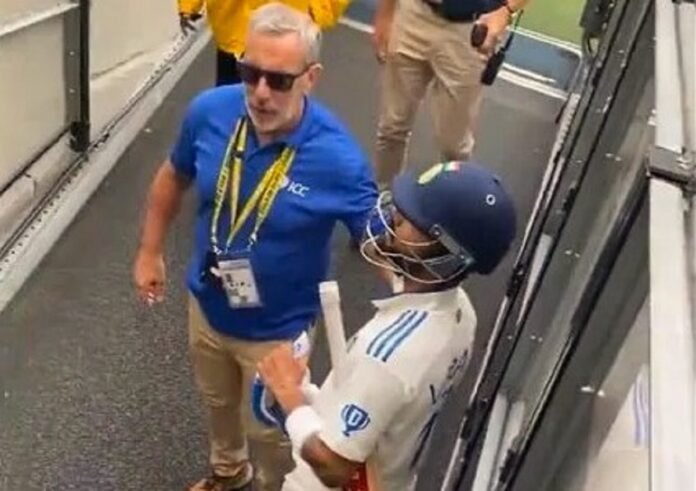
A security official trying to pacify Virat Kohli who was miffed apparently at demeaning comments made against him from a section of booing crowds on his dismissal at the MCG on Friday.
Run-in with journalist at Melbourne Airport over family privacy issues
Fined by ICC on charge of shoulder-bumping Sam Konstas on the opening day of the Test
Blamed by at least one broadcast commentator for disastrous runout of his well-set batting partner Yashasvi Jaiswal
Heavily booed, and apparently shamed, by a section of the crowd as he walks past them into the pavilion following his dismissal
Virat Kohli has always had an aggressive intent around him on the field in whatever he does, whether it is aggressive gesturing over on-field events, his batting style, running between the wickets or verbal exchanges with opposition players. And fans loved him for that trait. That was when he was ‘King Kohli’, at the peak of his game.
But now that he is no longer in peak form, he is running into controversies because of this very trait. The current tour of Australia, and more pertinently the Melbourne Test, is proving to be a near nightmare for him.
First, the run-in with a journalist of an Australian broadcaster at the Melbourne airport when he objected to his family being filmed without his permission; then the mid-wicket shoulder bump he gave the then rampaging Aussie debutant opener Sam Konstas during the changeover between overs on the opening day of the Boxing Day Test, for which he was heavily penalised by the ICC; and today’s confrontation with the booing crowd following his dismissal.
He was also squarely blamed by at least one broadcast commentator for the disastrous runout of set opener Yashasvi Jaiswal, just before his own dismissal, which triggered a mini batting collapse and dented India’s spirited fightback close to stumps on Day Two.
At close of play on Friday, India wee 164/5, still trailing Australia’s first innings total by 310 runs with Rishab Kant and Ravindra Jadeja at the crease on 6 and 4 runs respectively.
Earlier in the day Steve Smith completed his well-deserved century, his second successive ton in the series, and went on to compile 140 runs (197 balls, 13x4s, 3x6s), and aided by a near half century by captain Pat Cummins (49, 7x4s) and valuable contributions from other bowlers, Australia amassed 474 runs.
Bizarre dismissal
Smith’s dismissal was as bizarre as it can get. He charged at a delivery from Akash Deep to hit it out of the ground, got a thick inside edge to ball, which after ricocheting from his pad, rolled quite a distance onto the stumps, knocking off the bails.
Captain Rohit Sharma, under tremendous pressure with his string of failures with the bat, back in his slot as opener alongside young Yashasvi Jaiswal, disappointed fans once again, misjudging and mistiming his favourite pull shot against Cummins for a simple running catch at mid-on. His contribution just three runs.
Worst tour with bat by a captain
Statistically, Rohit Sharma is reportedly enduring the worst tour with the bat by a touring Test captain ever to come to Australia. His dismissal for 3 today saw his series average fall to 5.50, the lowest by a visiting skipper to have played at least two Tests in a series on Aussie shores. His failure against today also called into question his decision to elevate himself from No.6 and break up the successful Jaiswal-KL Rahul opening partnership.
KL Rahul, who revelled as an opener in previous innings, came in next and he along with Jaiswal looked in fine nick. They stitched together a good second wicket partnership of 43 runs before Rahul’s stumps were knocked over by a peach of a delivery from Cummins at the stroke of tea when he was on 24.
Kohli also set into his groove quite comfortably, consciously leaving alone the outgoing deliveries. As the comfort level grew, Jaiswal started to free his arms. The duo posted a century partnership, and all looked good for India in their gritty fightback, before disaster struck close of stumps.
Run out that added to Aussie momentum
Yashasvi (at 82, 118 balls, 11x4s, 1×6) ) punched one from Scott Boland to mid-on and called for a quick single, to which Kohli appeared to respond initially, taking a couple of steps, before inexplicably looking back at the ball and shouting NO!
By this time Jaiswal, darting for the run, was more than halfway down the pitch and could not break his momentum. Both batsmen found themselves on the same end making it easy for Cummins and wicketkeeper Alex Carey to do the rest.
A dejected Jaiswal while walking away appeared to gesture to Kohli that it was his call.
Apparently unsettled by the mix-up, Kohli, due to a lapse in concentration, did what he was diligently avoiding all this while, fending at a Scott Boland delivery outside the off stump and edging it straight into the gloves of Carey. His patient knock yielded 36 runs (86 balls, 4x4s).
Akash Deep, sent in as a night watchman, too perished for a duck. He faced 13 balls.
India lost three wickets for just 6 runs (Jaiswal 153/3, Kohli 154/4 and Akash Deep 159/5).
With 310 runs still in arrears, responsibility rests largely on seasoned campaigners Rishab Pant and Ravindra Jadeja to play long innings, though India have the additional cushion in the batting prowess of Washington Sundar and Nitish Reddy, the latter having had an outstanding run with the bat so far in the series.
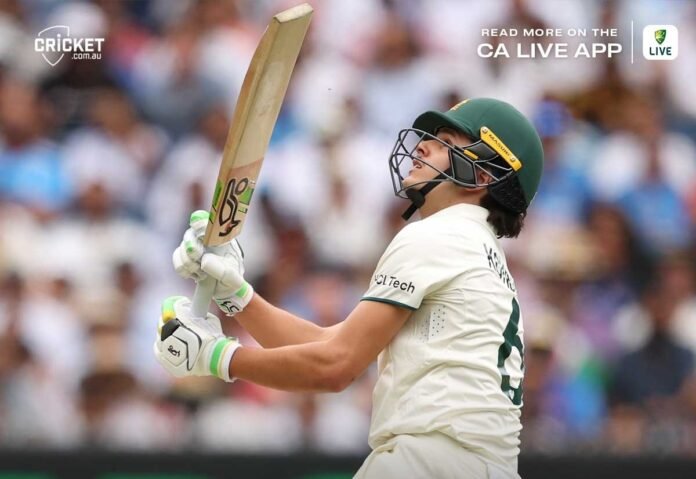
Breaking the shackles: Aussie debutant Test opener Sam Konstas freely employed his destructive scoop shots to break Jasprit Bumrah's rhythm. PHOTOS Credit: X/@cricketcomau
The courageous 19-year-old takes fight back to Bumrah with masterly scoop shots and step-out lofted drives; smashes 60 off 65 deliveries
The deft Bumrah returns with a vengeance, scalping three Aussie wickets in quick succession, including stopping the golden run of Tavis Head, clean bowling him for a duck
With all four of Aussie top order batsmen completing half centuries, hosts comfortably paced at 311/6 at stumps on Day One of Boxing Day Test at Melbourne Cricket Ground
Day One of the Boxing Day 4th Test for the Border-Gavaskar Cup series went exactly by Aussie script. Debutant and the youngest ever batsman to open the innings for the hosts, 19-year-old Sam Konstas, drafted into the squad to replace Nathan McSweeney, did exactly what was expected of him. He broke through the shackles, that tormentor-in-chief Jasprit Bumrah had tied the Aussie top order in right through the series, with a blistering counterattack giving confidence to the others too to express themselves freely.
Not afraid to take chances with unorthodox shots straight up, Konstas, despite initially attempting and missing some of these dangerous shots, backed himself and unleashed a flurry of fours and sixes, with remarkable scoops and reverse scoops as well as lofted shots in front of the wicket, to race to his half century. He was eventually trapped lbw by Ravindra Jadeja but not before he had plundered 60 runs of just 65 balls (6x4s, 2x6s).
The great Bumrah however extracted sweet revenge later in the day, sending back three Aussie batsmen in quick succession in the third session of play, including the precious ‘head’ of the most prolific batsman of the series Travis, whom he tactfully bowled for a duck with the batsman not offering a shot. The three wickets went down in 23 balls for the addition of only 9 runs.
At stumps on day one, Aussies were comfortably placed at 311/6 with all their top four batsmen reaching half centuries. After Konstas, Steve Smith (68 n.o.), Marnus Labuschagne (72) and Usman Khawaja (57) provided solidity to the Aussie innings.
This is reportedly for the first time on home soil in a decade that every member of Australia’s top four passed fifty in an innings. The only other time that has happened since the 2014-15 SCG Test (also against India) was in 2022 against Pakistan in Rawalpindi.
Opening partner Usman Khawaja congratulating Sam Konstas on completing his half century
Konstas completely dominated the 89-run opening partnership, which was not only Australia’s highest in 12 months, but also their longest lasting of the series.
He took a rare 18 from a single Bumrah over enroute to his half-century, and for just the second time in the series (after Australia’s first innings at the Gabba) the home team had survived the pace ace’s initial spell without losing a wicket.
Not only did Konstas post the highest maiden score by an Australia Test opener since Will Pucovski’s 62 (also against India) at the SCG four summers ago, his strike rate of 92.3 was the best by any Australia batter to have passed 50 on debut since Ashton Agar’s equally memorable 98 from 101 balls (97.03) at Trent Bridge in 2013.
It was also the third-fastest half-century posted by an Australia batter on debut behind Agar and Adam Gilchrist (against Pakistan at the Gabba in 1999).
India made one change in their playing XI, replacing No. 3 batsman Shubman Gill with allrounder Washington Sundar to give themselves an extra bowling option.
With honours even, India having trounced the hosts by 295 runs in the opener of the 5-Test series at Perth, Aussies hitting back with an equally commanding 10-wicket win at Adelaide in the 2nd, and the third Test in Brisbane ending in a draw due to frequent rain interruptions, whoever takes the lead in the Melbourne Test will be at an advantage to win the series.
Melbourne stats
India have so far played 14 Tests in Melbourne, starting from 1948, and won 4 of those matches while losing 8. The remaining two were drawn.
There have been only two instances when India have won a Melbourne Test on two consecutive tours – in 1977 and 1981 & again in 2018 and 2020.
If India were to win this Test match, it will be their first instance of making a hattrick of victories in Melbourne on consecutive tours.
Australia’s record at MCG: In 116 Tests at the Melbourne Cricket Ground, Australia have won 67 and lost 32, while 17 matches have been drawn.
Australia’s Recent 5 Test Results at MCG: Australia have lost only once in their last five Test matches at the Melbourne Cricket Ground, where the Boxing Day Test is traditionally being hosted since 1968.
Here is a look at Australia’s last five results at the venue:
Australia vs Pakistan: AUS won by 79 runs in 2023
Australia vs South Africa: AUS won by innings and 182 runs in 2022
Australia vs England: AUS won by innings and 14 runs in 2021
Australia vs India: IND won by 8 wickets in 2020
Australia vs New Zealand: AUS won by 247 runs in 2019
Other highlights
With three wickets in his kitty so far at Melbourne, India’s fast bowling wizard Jasprit Bumrah leads all bowlers in the series with 24 wickets, while Aussie pace masters Pat Cummins and Mitchell Starc have 14 each.
If Australia cannot beat India in both Melbourne and Sydney, the side will need to win at least one Test on Galle’s turning wickets in Sri Lanka next month to keep its World Test Championship title defence alive.
The Galle tests are scheduled to begin on Jan. 29 and Feb. 6.
Virat Kohli’s on-field misconduct
Midway through Konstas’ run riot, while crossing over following end of the 10th over, Virat Kohli was seen quite deliberately taking a collision course and shoulder-nudging the debutant Australian opener in front of a 90,000-strong sellout MCG crowd. It led to an exchange between the players with the other opener, Usman Khawaja, trying to cool things down. The on-field umpires also had to intervene to disengage Kohli from Konstas.
On-field umpires Joel Wilson and Michael Gough, third umpire Sharfuddoula Ibne Shahid and fourth umpire Shawn Craig charged Kohli with misconduct, following which Kohli was fined 20 percent of his match fee and awarded one demerit point for his misdemeanour. The decision was arrived at by the International Cricket Council (ICC) after a hearing conducted by match referee Andy Pycroft after stumps. Kohli admitted to inappropriate conduct.
Though commenting on the incident Konstas himself just said, “It happens”, Kohli’s act drew instant outrage with Aussie great Ricky Ponting calling for sanctions against the Indian batter. Commentator and former India coach Ravi Shastri also did not approve of Kohli’s act and said it was unnecessary. “There is a line, and you don’t want to overstep that line,” he said.
This was Kohli’s first offence in 24 months. The Thursday’s demerit point will remain in force in Kohli’s record for the next two years.
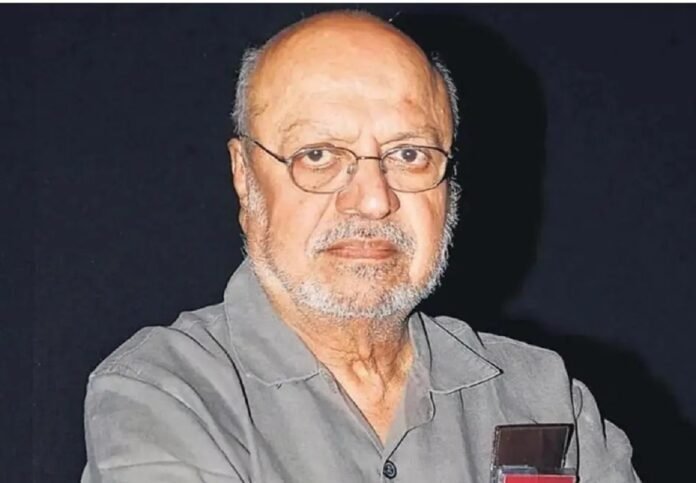
His 1974 highly acclaimed debut feature film ‘Ankur’ marked the beginning of a new wave in Indian cinema, which would later come to be known as ‘Parallel Cinema’. The film, portraying the reality of economic and sexual exploitation in his home state, Andhra Pradesh (now Telangana), introduced actors Shabana Azmi and Anant Nag. For the film, the director won the 1975 National Film Award for Second Best Feature Film and Shabana won the National Film Award for Best Actress. The man, Shyam Benegal, widely regarded as one of the finest film makers of all time, has passed away, aged 90.
Known for his socially conscious storytelling and deep exploration of human emotions, through his works like Ankur, Manthan, Mandi, Netaji Subhas Chandra Bose: The Forgotten Hero, Zubeidaa, Sardaari Begum, Well Done Abba, and more, the veteran filmmaker breathed his last at Wockhardt hospital in Mumbai on Monday after a prolonged battle with chronic kidney ailment.
Benegal, most of whose notable films were released in the mid-70s and 80s, received several accolades, including 18 National Film Awards, and a Nandi Award during his film career.
In 2005, he was honoured with the Dadasaheb Phalke Award, India’s highest award in the field of cinema. In 1976, he was honoured by the Indian government with the Padma Shri and in 1991 the Padma Bhushan for his contributions in the field of arts.
The filmmaker is reported to have celebrated his 90th birthday just over a week ago, on December 14, with friends and family. Actors Kulbhushan Kharbanda, Naseeruddin Shah, Divya Dutta, Shabana Azmi, Ranjit Kapur, Atul Tewari, filmmaker-actor and Shashi Kapoor’s son Kunal Kapoor, and others, were in attendance.
Shyam Benegal, born on December 14, 1934, in Hyderabad, began his career in advertising before transitioning into the world of cinema. His father, Sridhar B. Benegal, originally from Karnataka, was a photographer who inspired Shyam’s early interest in filmmaking.
At just 12 years old, Shyam created his first film using a camera gifted by his father. He went on to earn a master’s in economics from Osmania University, Hyderabad, where he also founded the Hyderabad Film Society, marking the beginning of his illustrious journey in cinema.
Film industry admires, condoles
The film industry expressed its admiration and sorrow.
Among the first to pay tribute was filmmaker Shekhar Kapur, who took to Twitter to reflect on Benegal’s pioneering influence on Indian cinema. “He created ‘the new wave’ cinema,” Kapur wrote. “#ShyamBenegal will always be remembered as the man who changed the direction of Indian cinema with films like Ankur, Manthan, and countless others. He created stars out of great actors like Shabana Azmi and Smita Patil. Farewell, my friend and guide.”
Bollywood actor Manoj Bajpayee also expressed his deep sorrow, saying, “A heartbreaking loss for Indian cinema. Shyam Benegal wasn’t just a legend; he was a visionary who redefined storytelling and inspired generations. Working with him in Zubeidaa was a transformative experience for me, exposing me to his unique style of storytelling and nuanced understanding of performances…..”
Actor Akshay Kumar also shared his grief, saying, “Pained to know of Shyam Benegal ji’s demise. One of the finest filmmakers in our country, truly a legend. Om Shanti.”
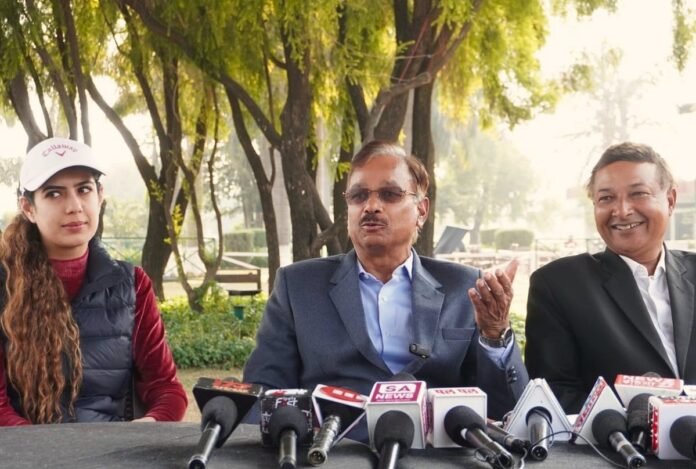
SS Prasad, Patron, Amateur Golfers Society, addressing the media, flanked by Suresh K. Gupta, Founding Trustee, and Tavleen Batra, Director (Events), at the Panchkula Golf Club on Friday (20.12.2024)
Plans afoot to establish a golf range over 2.5 acres of land in Panchkula to hone budding talent
Nearly 100 amateur golfers, including at least 6 women golfers, will vie for honours in three handicap categories in the 7th edition of the golf tournament to be organised by the Amateur Golfers Society (AGS) on the Panchkula Golf Club course on December 16.
Sharing details with the media at the club on Friday, AGS Founding Trustee Suresh K. Gupta, Patron SS Prasad, and golf instructor and Director (Events) at AGS Tavleen Batra said the handicap categories in which competitions will be held are 0-9 handicap, 9-16 handicap and above-16 handicap.
The competing amateur golfers will tee-off at 7:30 a.m. on December 22.
The tournament is supported by Alpine Towers.
This will be the second of the three such AGS tournaments being held in quick succession. The 6th edition was held on December 1 and the next, which will be the 8th edition, will be held on Feb 9 next year at the same venue.
Suresh Gupta and SS Prasad shared that the golf tournaments organised by AGS are central to its efforts at nurturing golfing talent in the Chandigarh capital region. To boost the golfers’ morale, the winners and runners-up in each handicap category, as well as the women’s category separately, will be presented awards. Overall winners in both the men’s and women’s categories will also be declared.
Suresh Gupta also revealed AGS’ ambition to establish Panchkula as a premier golfing destination, for which it has plans to establish an Amateur Golf Range over 2.5 acres of land along a motorable road in Panchkula. A tentative site has also been identified and process is underway for acquiring it in the coming months, he added.
The proposed state-of-the-art Amateur Golf Range with residential facilities, and equipped with cutting edge training infrastructure, will not only attract golfers from the Chandigarh tricity area, but will become a hub for golf tourism, he added.
Adding to this, Tavleen Batra said AGS’ aim is to train 500-odd budding golfers in a year under a 21-day fast track programme at the Amateur Golf Range.
Prasad said, apart from the Amateur Golf Range in Panchkula, AGS has chalked out an ambitious plan to create golf ranges across all districts of Haryana to hone golfing talent.
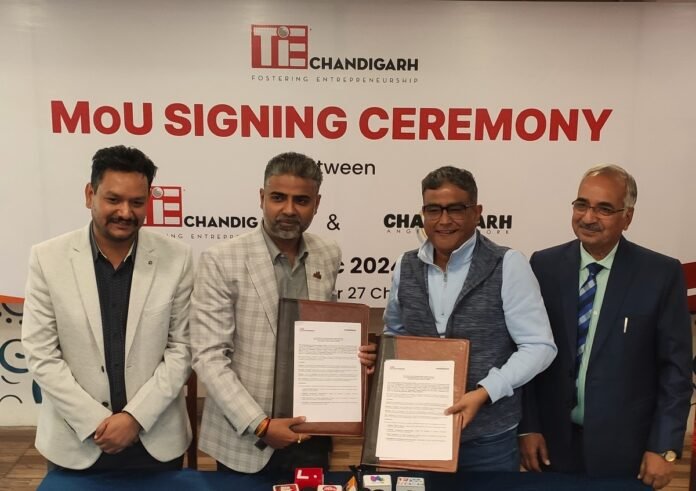
(Left to right) Puneet Verma, Satish Arora, President TiE Chandigarh, Ajay Tewari, President, Chandigarh Angels Network, and CA Baldev Garg pose with copies of the MoU signed between the two organisations, in Chandigarh, on Wednesday (18.12.2024)
Joint platform will add easy funding to mentoring, incubating and educating for startups, which were already available to TiE Chandigarh members
Partnership comes ahead of the much-awaited TiE Chandigarh’s flagship event TiEcon Chandigarh 2025, scheduled to be held on March 6-7, 2025
There’s greater cheer for startups from the Chandigarh region and beyond as two formidable organisations – TiE Chandigarh and Chandigarh Angels Network (CAN) – have formalised a tie-up to strengthen the entrepreneurship ecosystem for them.
The strategic Memorandum of Understanding (MoU) between the two, announced at a press conference in Chandigarh on Wednesday, will further boost opportunities for startups in funding, mentoring, incubating, and educating.
TiE Chandigarh is part of the leading global organization fostering entrepreneurship through mentoring, networking, education, and funding opportunities; and Chandigarh Angels Network (CAN) is a prominent not-for-profit angel investment network focused on supporting innovative startups by providing them with funding and strategic guidance.
The partnership comes ahead of TiE Chandigarh’s much-awaited flagship event TiEcon Chandigarh 2025, scheduled to be held on March 6-7, 2025, at Hyatt Regency, Chandigarh, which serves as a marquee platform for startups, investors, and industry leaders to connect, share insights, and explore opportunities.
The event will feature keynote sessions, panel discussions, startup pitches, and networking zones, further solidifying TiE Chandigarh’s role as a catalyst for innovation and entrepreneurship.
According to senior functionaries of TiE Chandigarh and CAN, the collaboration between the two will help bridge the gap between innovative startups and potential investors while creating a supportive ecosystem for business growth. Through this partnership, the two organizations will be better equipped to empower startups from diverse sectors, irrespective of their revenue stage, pre-revenue or post-revenue.
Commenting on the partnership, Satish Kumar Arora, President, TiE Chandigarh, said: “This MoU reflects our commitment to building a robust ecosystem for startups. By combining TiE Chandigarh’s extensive network with CAN’s investment expertise, we aim to create a thriving hub for innovation. Events like TiEcon Chandigarh 2025 further amplify our mission by providing startups with a global stage to showcase their ideas.”
Ajay Tewari, President, Chandigarh Angels Network, added: “We are thrilled to collaborate with TiE Chandigarh. Together, we will not only help startups secure funding but also provide them with the tools and connections they need to grow and succeed.”
Key highlights of the MoU
Funding Opportunities: Startups will have access to a network of investors, including chapter members of TiE Chandigarh, enabling them to secure capital for scaling their ventures. Inclusivity: Applications are open to startups from all regions, fostering a global and diverse entrepreneurial ecosystem. Sector Agnostic: Entrepreneurs from any business segment can apply, ensuring broad inclusivity. Dedicated Platform: An exclusive link will be generated for startups to submit their funding requirements, enhancing visibility and accessibility to potential investors. Comprehensive Support: Beyond funding, the collaboration offers startups mentorship, networking opportunities, and incubation support to fast-track their journey to success.
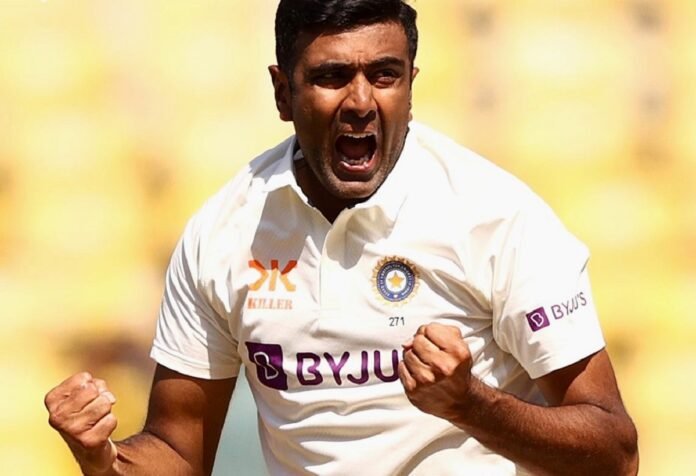
Ravichandran Ashwin: The GOAT will be missed in International cricket. PHOTO Credit: X/@cricketcomau
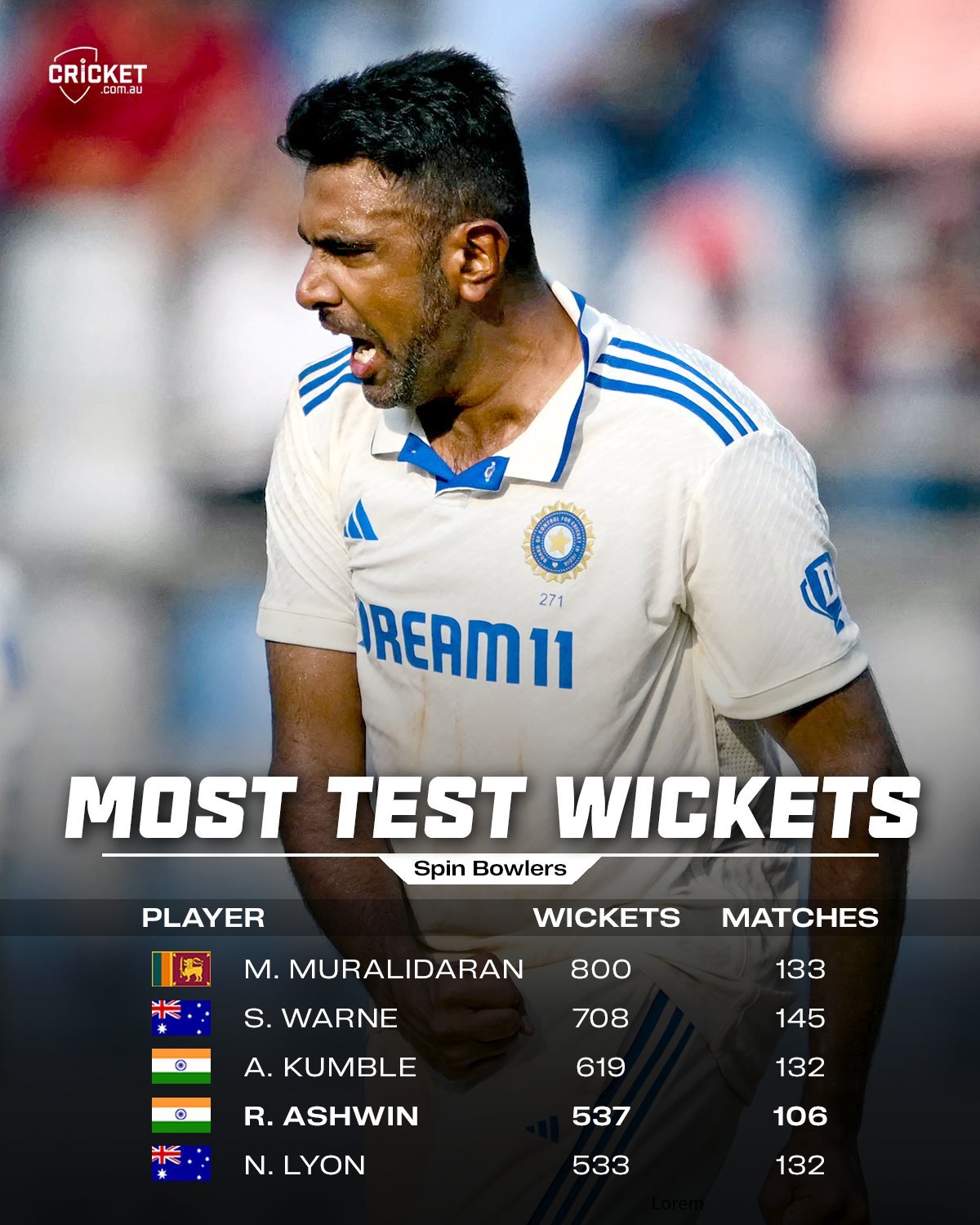
Leaves as second highest wicket taker in Tests among Indian bowlers, world’s fourth highest among spin bowlers
Finds place among 11 allrounders in the world with more than 3000 runs and 300 wickets in Test matches
Won a record 11 Player-of-the-Series awards, sharing the honour with Muttiah Muralidaran
At a time when the future of Indian batting greats Rohit Sharma and Virat Kohli in the team in the wake of their continuing string of poor performances was a subject of intense speculation in the public domain, comes a surprise announcement.
One of the world’s bowling greats, Ravichandran Ashwin has drawn curtains on his international career spanning 15 years with immediate effect in the middle of the ongoing 5-match Test series between India and Australia for the Border-Gavaskar Trophy 2024-25.
He made his decision public while accompanying captain Rohit Sharma to the post match press conference after the third Test at the Gabba in Brisbane was declared drawn prematurely due to incessant rain on the final day, Wednesday.
Ashwin, who found a place in the Indian playing XI only in the second of the first three Test matches of the ongoing series – the pink ball day-and-night fixture in Adelaide – taking 1 for 53, said: “This will be my last day as an Indian cricketer in all formats at the international level. I do feel there’s a bit of punch left in me as a cricketer, but I would like to express that and probably showcase that in club-level cricket, but this will be the last day (for India).”
With India fielding three different spinners in the first three Tests, 38-year-old Ashwin, the second highest wicket-taker for India in Tests and the fourth highest among spin bowlers worldwide, who is reported to have been contemplating retirement back in 2021 due to a troublesome knee, apparently must have felt it was the right time to quit instead of just hanging around.
India’s next Test engagement after this series is in July, when they travel to England for a five-Test series. The last time Ashwin played a Test match in England was in the 2021 World Test Championship (WTC) final against New Zealand in Southampton. Before that it was in 2018. During the 2021 England tour, prior to the WTC final, too Ashwin did not feature in India’s playing XI in any of the five Tests.
He is understood to be leaving for India on Thursday.
Ashwin’s achievements
PHOTO Credit: X/@BCCI
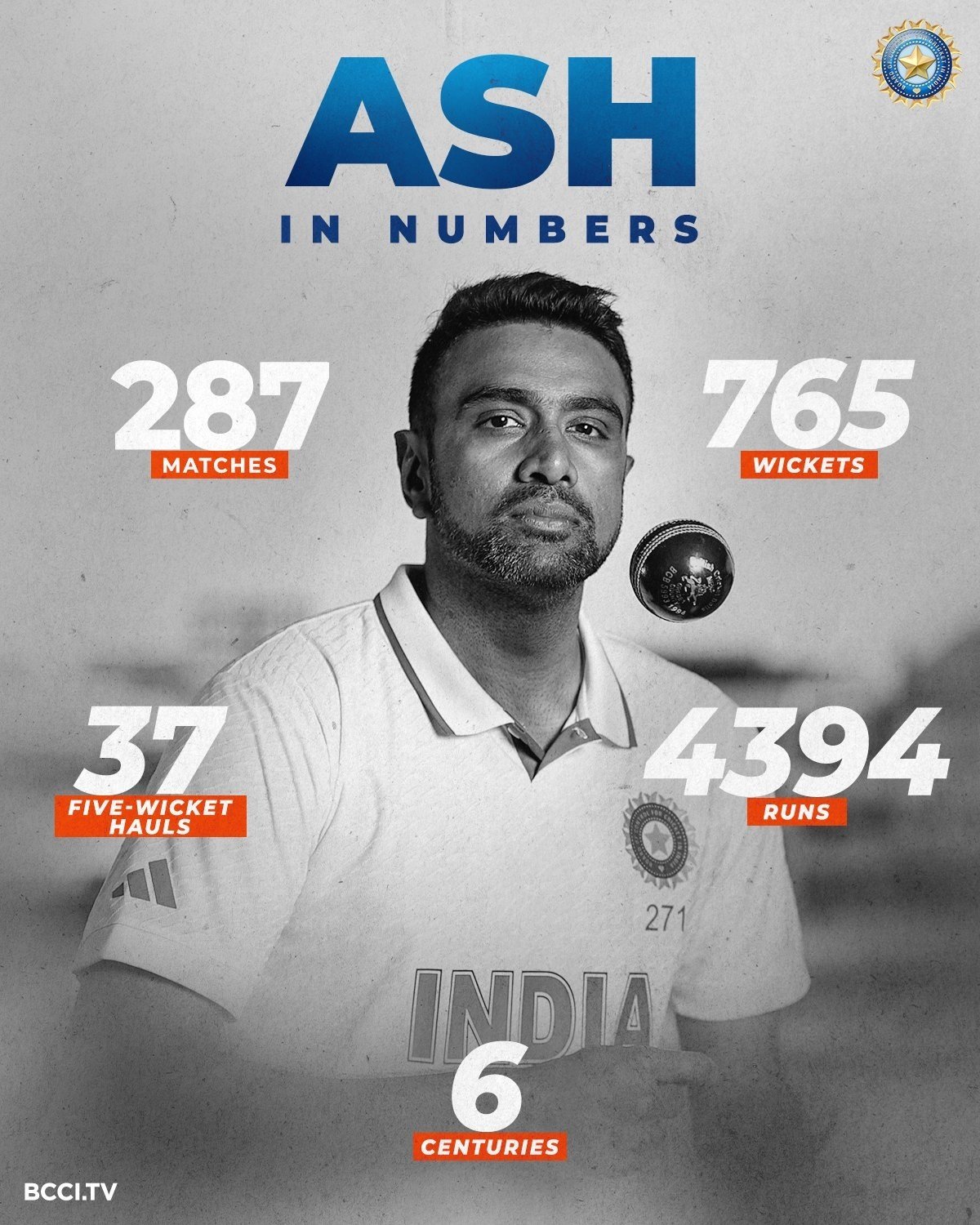
As mentioned earlier, Ashwin is the second highest wicket taker among Indian bowlers (with 537 scalps in 106 games at an average of 24), only behind Anil Kumble (619 wickets in 132 games). He is also the fourth highest Test wicket taker among spin bowlers worldwide, behind Muttiah Muralidaran (800), Shane Warne (708), and Anil Kumle (619). Ace Aussie off spinner Nathan Lyon (533) trails him by just four wickets in fifth place.
His Test record in SENA nations (South Africa, England, New Zealand and Australia) taking 72 wickets from 26 Tests, is however, a far cry as compared to his performances at home, where he took 383 wickets in 65 matches.
PHOTO Credit: X/@BCCI
As one of the 11 allrounders in the world with more than 3000 runs and 300 wickets, Ashwin scored 3503 Test runs with six hundreds and 14 fifties. He also won a record 11 Player-of-the-Series awards, sharing the honour with Muttiah Muralidaran.
Starting his international career in 2010, Ashwin was part of the Indian team that won the ICC Men’s ODI World Cup in 2011 and the Champions Trophy (ODI) in 2013. He played 116 ODIs and 65 T20Is, picking up 156 (average of 33.20) and 72 (economy rate of 6.90) wickets in the two formats respectively.
PHOTO Credit: X/cricketcomau
Tributes poured in from teammates and opposition players alike.
Some of these messages on social media are reproduced below
BCCI (sharing info of his retirement)
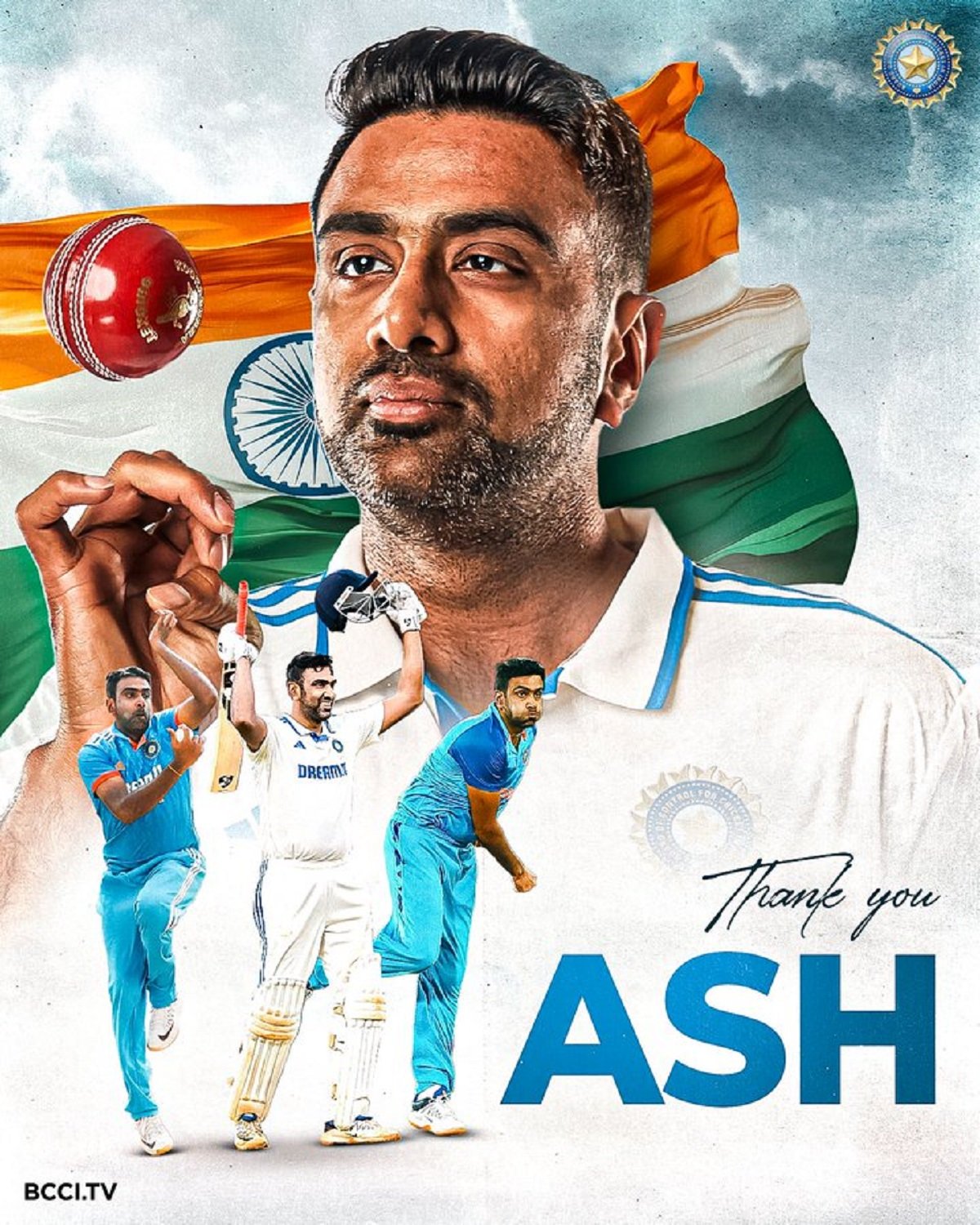
“Thank you Ashwin
A name synonymous with mastery, wizardry, brilliance, and innovation
The ace spinner and #TeamIndia’s invaluable all-rounder announces his retirement from international cricket.
Congratulations on a legendary career, @ashwinravi99”
Cricket Australia (sharing info of his retirement)
“One of the all-time greats
Ashwin calls time.”
Sachin Tendulkar
“500 Test wickets for a one-in-a-million bowler!
In AshWIN the SpinNER, there was always a WINNER. 500 wickets is a huge milestone in Test cricket.
Congratulations, Champion!”
Virat Kohli
“I’ve played with you for 14 years and when you told me today you’re retiring, it made me a bit emotional and the flashbacks of all those years playing together came to me. I’ve enjoyed every bit of the journey with you Ash, your skill and match winning contributions to Indian cricket are second to none and you will always and always be remembered as a legend of Indian cricket …..”
Dinesh Karthik
“a GOAT retires
Well done on what’s been an outstanding career. Proud to have played with you, and definitely the greatest ever to have played from TAMILNADU…..”
Ravi Shastri
“Hey Ash, congratulations on a magnificent career, old boy. You were an invaluable asset during my tenure as coach and enriched the game immensely with your skill and craft…..”
Herschelle Gibbs
“Only one on the list with 6 test 100s” (sharing the comment with the list of top five among the highest wicket takers in Test cricket)
Harbhajan Singh
“Congratulations @ashwinravi99 on a phenomenal cricket career. Your ambition as a test cricketer was admirable. Well done for being the flag bearer of Indian spin for more than a decade….”
Anil Kumble
“@ashwinravi99, your journey has been nothing short of extraordinary! With over 700 international wickets and a keen cricketing mind, you are one of the finest to have graced the field. Congratulations on a stellar career….”
Ian Raphael Bishop
“Thank you Ravi Ashwin. Glad you came, and that you were a part of the international game for so long, with such excellence. You taught, you educated and you entertained.”
Gautam Gambhir
“The privilege of seeing you grow from a young bowler to a legend of modern cricket is something that I wouldn’t trade for the world! I know that generations of bowlers to come will say that I became a bowler coz of Ashwin!…..”
Mohammad Kaif
“Sharpest cricketing brain and very skilled bowler. For me R Ashwin is the greatest Indian off-spinner, true Test all-rounder and a modern day great. Somehow I feel he deserved a much better farewell. @ashwinravi99”
Ajinkya Rahane
“Congratulations on an incredible journey, @ashwinravi99! Standing at slip was never a dull moment with you bowling, every ball felt like a chance waiting to happen…..”
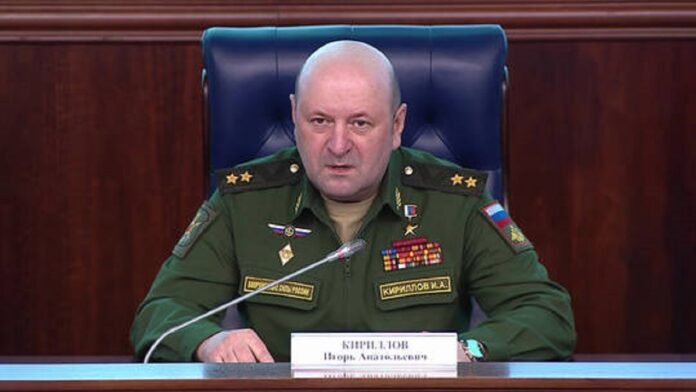
File photo of Lieutenant General Igor Kirillov, heading Russia's Radiological, Chemical, and Biological Defence Forces, who was killed along with an aide in a bomb blast in Moscow, early Tuesday (17.12.2024). PHOTO Credit: RT
Hand of Ukraine’s Security Service (SBU) suspected, though no official response from Kyiv yet
Embarrassed, Moscow’s response could be catastrophic
Cities across Ukrainian have already been hit by unprecedented Russian barrage of missile and drone attacks in the last few weeks, hitting military-linked fuel and energy infra
In what can be viewed as another grave provocation by Ukraine and its US-led allies, a top ranking Russian general, heading its Radiological, Chemical, and Biological Defence Forces, was killed along with an aide in a bomb blast, apparently trigged by a remote control, outside an apartment building in southeastern Moscow early on Tuesday. Investigators suspect that the bomb was hidden inside the handlebar of an electric scooter.
Though Ukraine did not officially respond immediately to the killing of Lieutenant General Igor Kirillov, western media was quick to attribute responsibility to Ukraine’s Security Service (SBU), quoting unidentified sources in the service.
Earlier, in another grave provocation, Ukraine had twice fired salvos of US-supplied Army Tactical Missile System, or ATACMs, deep inside Russia, the latest one targeting a Russian air base, after receiving the much-sought permission from US President Joe Biden.
The attacks evoked massive and brutal response from Moscow, hitting critically important fuel and energy facilities, fuelling the Ukrainian military industrial complex, in several cities across the country, including its capital Kyiv, with an unprecedented barrage of missiles and drones.
These apparent acts of desperation by Kyiv come at a time when Biden is pushing through military aid for Ukraine in his final weeks in office, amid concerns that president-elect Trump’s presidency could alter the trajectory of US support for Kyiv.
Igor Kirillov’s killing took place hours after the general was accused by Kyiv of being linked to the use of chemical agents on the battlefield, a claim Moscow outrightly denies.
According to Russian media outlet RT (Russia Today), “Reuters, the BBC, and Ukrainian media outlets have cited what appears to be the same statement by an SBU source describing the 54-year-old Russian officer as ‘a war criminal and an absolutely legitimate target’ for assassination.”
RT further said Dmitry Medvedev, the deputy chair of the Russian Security Council, has called the killing of Kirillov a sign of “agony” of the Ukrainian government, “which uses its remaining strength to justify its worthless existence to Western masters, prolong war and death, and explain away the catastrophic situation on the front line.”
The leaders in Kyiv cannot terrorize the Russian people and will be held accountable for their crimes, Medvedev was further quoted as asserting.
RT said Lieutenant General Igor Kirillov took the helm of the Russian military branch in 2017. He was involved in investigating alleged Ukrainian use of chemical weapons against Russian troops, and provided regular reports about American labs in Ukraine which he claimed were involved in biological warfare research.
Kirillov, 54, is the most senior Russian military officer to be assassinated inside Russia.
Russia says Ukraine has carried out a string of targeted assassinations on its soil since the start of Moscow’s special military operation in Ukraine in February 2022.
The most high-profile cases include the 2022 killing of Darya Dugina, daughter of Russian nationalist ideologue Alexander Dugin, in a car bomb attack; the murder of pro-war blogger Vladlen Tatarsky in a 2023 cafe bombing; and the shooting last year of a Russian submarine commander accused of war crimes by Kyiv.
A profile of General Kirillov carried by RT
• General Kirillov dealt with anti-terrorism both domestically and abroad. He exposed the provocations of the controversial White Helmets volunteer organization in Syria and participated in mitigating the consequences of natural and man-made disasters.
• Since the beginning of the special military operation against Ukraine in February 2022, Kirillov had spoken at briefings held by the Ministry of Defence, where he shared information about Ukrainian developments in the areas of radiological, chemical, and biological weapons. In March 2022, he announced that Ukrainian biolaboratories were studying the potential for transferring highly dangerous infections through migratory birds.
• The same month, Kirillov presented copies of documents that, according to him, confirmed the Pentagon’s funding of biological laboratories in Ukraine.
• In June 2024, Kirillov stated that spent nuclear fuel and hazardous chemical waste were being imported into Ukraine for a potential “dirty bomb” creation. He added that radiochemical substances were still being brought into Ukraine for disposal. According to him, these supplies were overseen by Andrey Yermak, Vladimir Zelensky’s right-hand man, with primary routes passing through Poland and Romania.
• In October 2024, the UK slapped Kirillov with sanctions after he accused Ukraine of preparing a false-flag chemical weapons attack with the aim of framing Russia and undermining its position at the OPCW (Organisation for the Prohibition of Chemical Weapons). Kirillov noted that NATO had provided Ukraine with a much larger amount of chemical protective equipment than the country needs, calling it further evidence of an impending plot.
• In November 2024, Kirillov said that Ukraine planned to seize a nuclear power plant during its large-scale incursion into the Kursk Region of the Russian Federation.